Also: see details of Chadar Expedition in January 2012, lead by tour leader Manish Lakhani
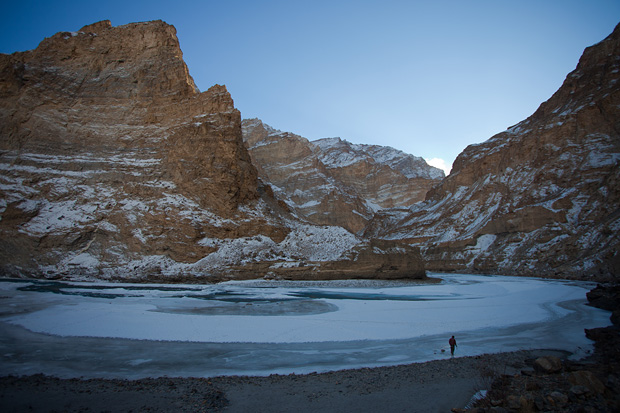
I am just back from a fourteen-day trek in Ladakh, walking on the ice-shelf of Frozen Zanskar River. They were fourteen amazing days of walking in the depths of the narrow gorges through which the river often flows. The beautiful and clear blue river flowed gently next to us all the way, sometimes disappearing into the depths of the ice shelf and again emerging a little while later. To each side of the river were tall walls of Zanskar Ranges that cut us off from rest of the world. We mostly walked on solid ice but sometimes climbed up the rocks where the ice-shelf (or chadar, as they usually call it) was broken. Here is a picture from the trek, taken from our camp on Day 2. More images and stories from the trek will follow in the coming days.
I got down from the train at Agra Fort on a cold November morning and took a bus towards Bharatpur. Somewhere just after crossing Agra and driving past the villages and fields, I suddenly saw three mammals sprinting away and crossing the road quickly ahead of the bus. I could not see them clearly and thought it may be cows, but they were too fast for cows and had a more slender and agile body. Was it some kind of a deer that roamed free in unprotected areas like villages and farmlands? It seemed unlikely. How often in India do you see wild animals living far away from the forests and getting integrated with human habitat? I kept wondering what they are for a long time until I wandered into Keoladeo National Park.
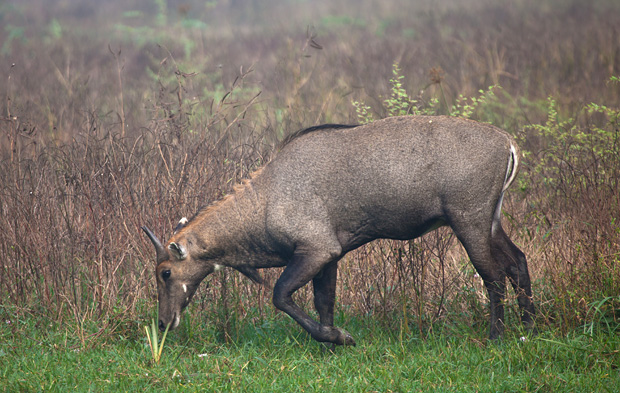
Those were Blue Bulls or Nilgai. There were plenty of them in the small protected region of the park and perhaps a few roamed freely in the region around it. I do not know if these animals had learned to live with humans or were forced into it due to loss of habitat, but it was surprising to find them so far away – about 40km from Bharatpur. I doubt if there was any other forest land in the vicinity that would have given them shelter.
Though Nilgais are in large numbers in Bharatpur, they wander far and wide into the marshes and are not always seen close to the park roads. I did not see even one of them on my first day in the park and saw them from a distance on the second. However, on my last morning in the sanctuary, this fine fellow came closer to the shore and allowed me to take a few pictures.
Turtles in the swamp were one of the highlights of my trip to Bharatpur. Soon after returning from Bharatpur, I wrote an article on Harmony Magazine about life in the park. Here is an excerpt on turtles.
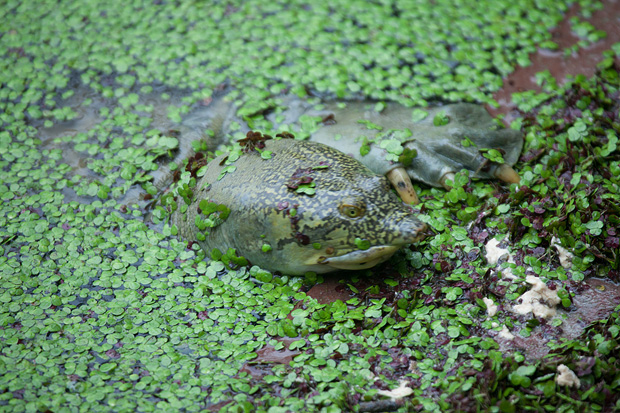
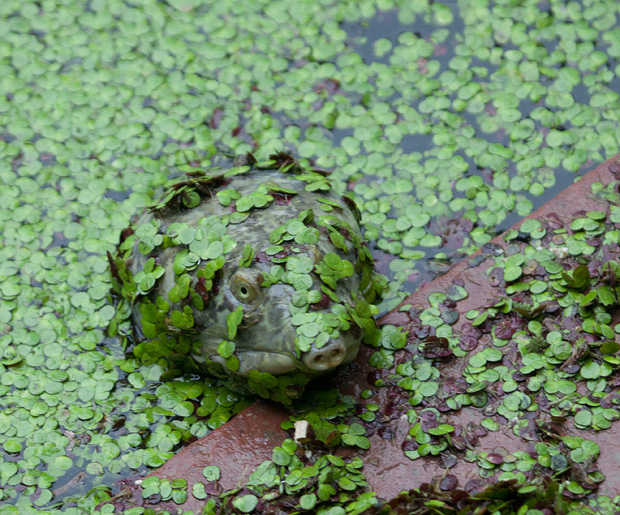
“The large water body makes an ideal habitat for flap-shell turtles that gently swim just below the water surface. I kept seeing a dark and dome-like thing moving slowly in the water for two full days, never getting a chance for a face-to-face encounter with the owners of these shells.
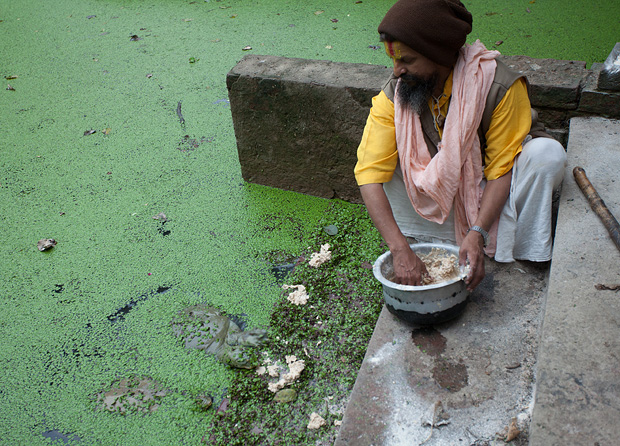
It is only after three days that I found an easy way to get a good look at them, thanks to the generosity of Seetaram Baba. Baba lives at the Hanuman Temple in a corner of the park, located next to a deeper part of the marsh. He has been feeding the turtles for many years now and has become such good friend with them, they respond instantaneously when he calls them. One of the evenings when I was there, Baba took a vessel full of dough and took us to the waters. As we watched standing on the steps leading to the pond, he started calling them “aa.. aa.. aa..”. In just a few seconds, I saw something move slowly in the water. A small snout and two tiny eyes popped up next to the steps. It was soon followed by another one and another one, all of them coming out in a characteristically turtle-like sluggishness. They fed on the wheat balls slowly and cautiously, coming out of the water only for a short while to take a gulp before disappearing again. They looked gentle and harmless, but Baba told me that they can collectively tear apart any animal that makes the mistake of getting into the water.”