It is not easy to convince myself that people actually live in these places. My GPS continuously recorded altitudes above 13,000 feet. We did not sight even one tree despite walking for hours together. The sun happily burned every inch of unprotected skin, peeling away flakes of epidermis. Oxygen levels were so low that climbing even a hundred feet felt like a day long arduous task. At times we climbed over 15,000 feet, where the thinning air laughed at our struggling bodies. Winter temperatures apparently fall twenty below zero or even lower. For the people of Spiti Valley, this was everyday life.
Before we started the long walk from Komic to Dhemul, Tenzin Lama, a monk at Komic monastery (altitude – 14,700 feet) said it takes about two hours. “We normally start after lunch,” he mentioned casually, “and walking slow and easy, we reach Dhemul (altitude – 14,200 feet)well before dark.” He was trying to assure us that there is absolutely no need to hurry, or worry about the walk. While he talked, he was making Maggi and tea for all of us – an early lunch before we begin the long walk.
We had an amazing variety of estimates on the time it takes to reach Dhemul. Tenzin’s was the shortest, and he made it appear like a child’s play. The man who suggested us to make this walk had estimated five to six hours. The guide who accompanied us — Thekpa — was more cautious. He was watching over us and had assessed our strengths better. He thought we will require about eight hours.
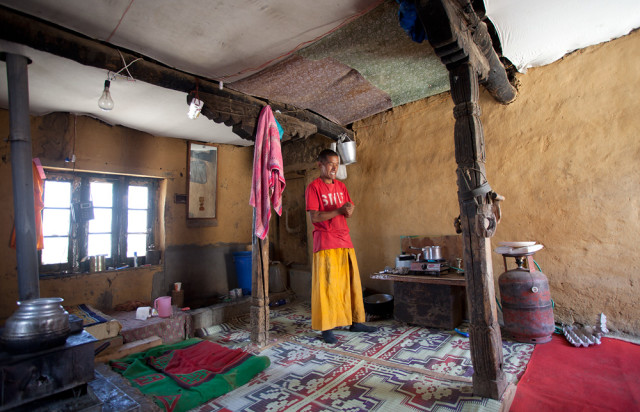
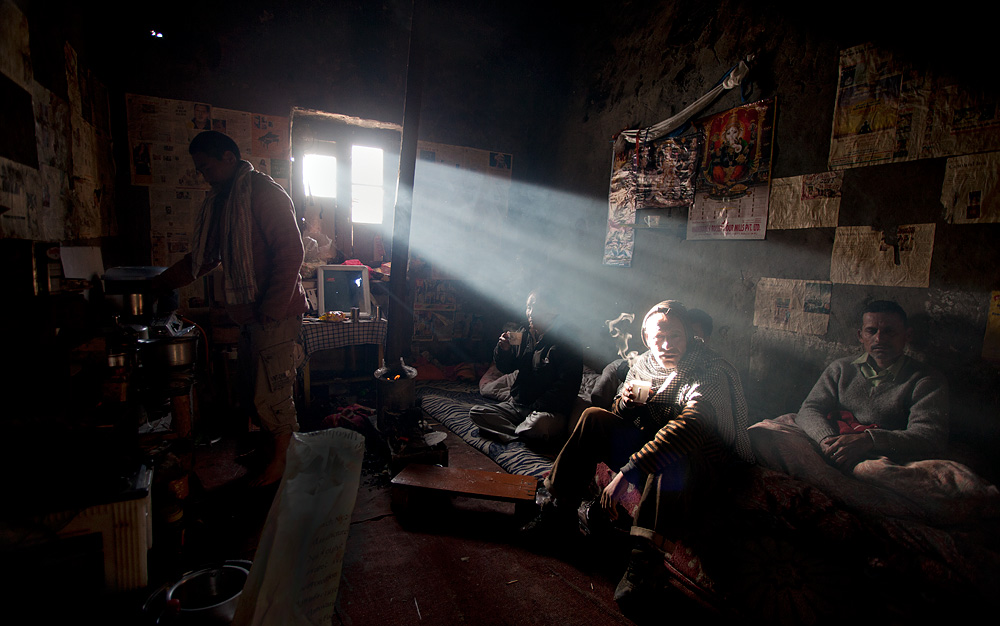
Lama Tenzin offered us tea and maggi before we embarked on the trek
It was eleven in the morning when we began conversations at Tenzing’s cozy little room at Komic Monastery. He was a cheerful chap who never seemed to stop talking, occasionally offering weird poses for our trigger happy group. When someone aimed the camera at him making tea, he would stand on one leg, other leg dangling in the air and his hands mimicking someone pouring tea from a kettle into a cup. The gang loved him instantly.
The good times lasted only as long as we were having Maggi with Tenzin. The struggle for oxygen began soon after we left Komic. On ascents, no matter how gentle it was, every step seemed like an attempt to carry a big ball of steel tied to the shoes. Descents were much bearable, but much of our way that day was a gradual climb. The views however, were something that justified the effort. Whenever we paused and looked back, Komic village appeared like a bunch of match boxes against a gigantic line of mountains that challenged the sky.
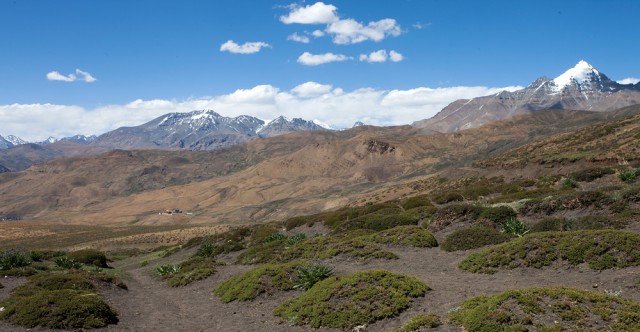
Komic was a small dot on the landscape. The snow-capped Chau Chau Kang Nilda Peak dominated the views.
With very little precipitation in the previous winter, many of the peaks far behind the village were unusually bare and brown. The tall Chau Chau Kang Nilda rose much higher than its neighbours and wore a shiny white that was worth the envy of its counterparts. On the opposite site, the mountains plunged steeply for more than two thousand feet into the valley of Spiti River, rising again to form another chain of snow-capped peaks. But most importantly, ahead lay a path that seemed to keep going upwards forever!
It must be about two hour’s of uphill journey before a short descent made a kind appearance. After the descent was a plateau-like area, full of a variety of thorny plants that had carpeted the earth. Thekpa, our guide, said that all those plants will begin flowering after the first rains in August and the earth turns purple with the efflorescence. The plants were so numerous and widespread in the plateau, it would be worthwhile coming here again to fill that scene in the eyes.
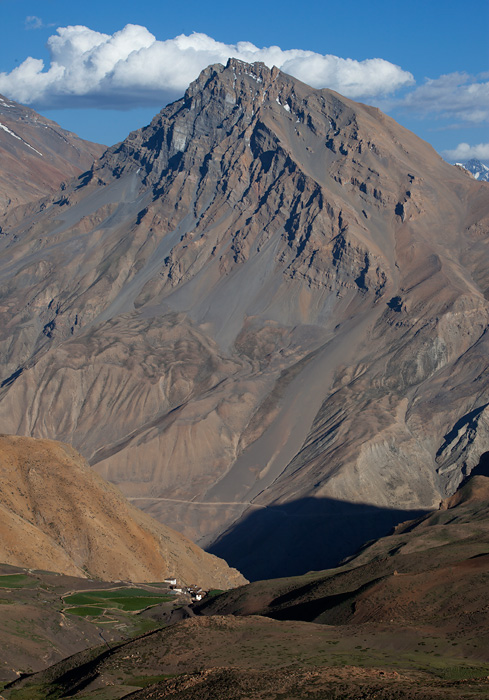
From the highest point of the trek, Dhemul Village appeared like a small spot trapped in the mountains.
After a short break and a short eat at the end of the plateau, it was time for a long and final ascent. It was nearly 5pm when we reached the highest point of the trek at 15,700 feet. Beyond the pass, we could see Dhemul village as a small spot trapped in the mountains. Now, it was a steep descent that we estimated to be a twenty minutes walk. The ever-cautious Thekpa suggested an hour. It turned out, he was right.
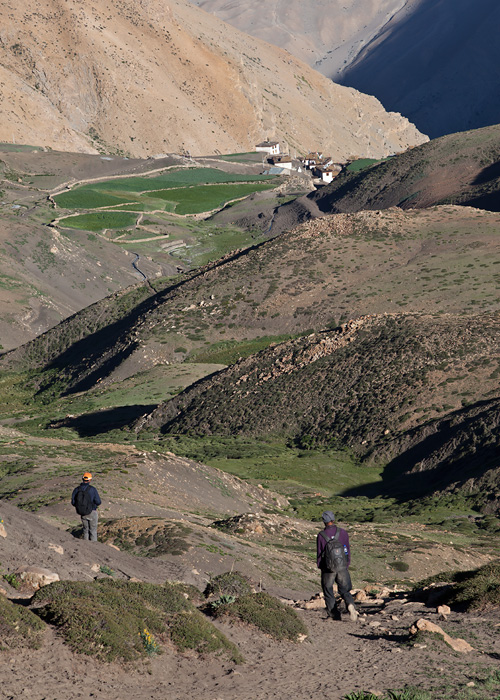
So near, yet so far. We thought it takes 20 minutes to get to the village. Our guide Thekpa suggested an hour. He was right!
We reached Dhemul at 6pm, a walk that took us a total of seven hours that included an hour of careless gallivanting off the path. Thekpa’s estimates turned out to be more reasonable than Tenzing’s.
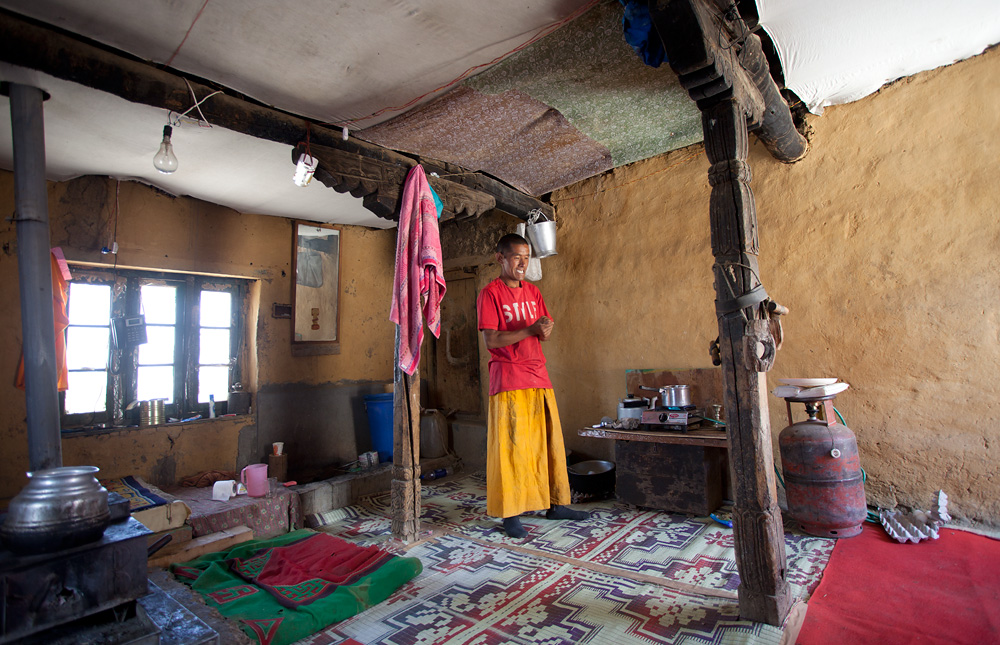
Dhemul, much like Komic, was a village that appeared out of nowhere. It is amazing how people sustain in these villages, high up in the mountains and faraway from every other place. A hundred years ago when they weren’t touched by modernity, they lived an almost self-sustained life with the help of their flock of animals and subsistence farming. Sheep and yak provided them with milk, butter and meat while the barley fields gave them cereals. The fields are usually spread very close to the village and the villages are usually located next to a perennial stream that never dries up. Perhaps only salt and spices had to come from outside, may be from a long southern route via Kinnaur Valley. Their houses too, were built with locally available materials. The walls were of mud, while the roof was held in place with poles of willow that were grown all around the village. Every village in Spiti has a similar ecosystem, which looks like a verdant escape in the otherwise desert landscape.
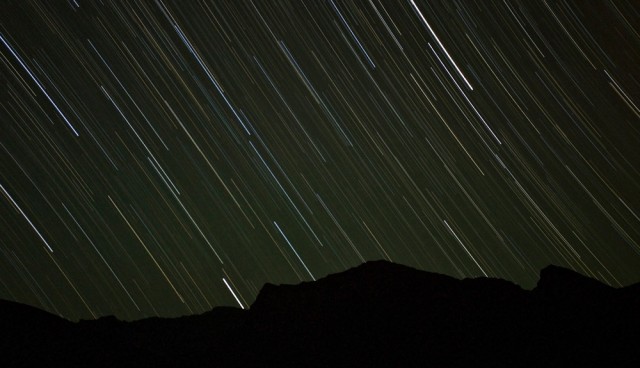
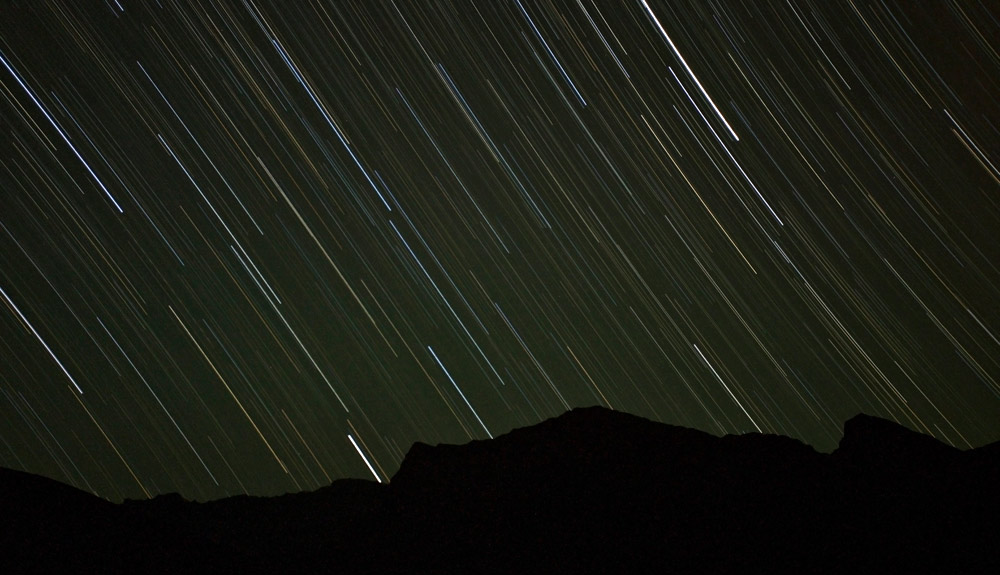
A starry night at Lalung Village
Today, many of these villages are connected by road. A road is perhaps the most important thing that changes the lives of people forever. People still rely a great deal on their yak, sheep and barley fields. But they now have access to comfortable clothing that comes from outside, get to sleep in more comfortable mattresses, cook with LPG, eat rice and wheat besides barley and buy vegetables that they would never have access to earlier. Electricity poles too have made their way to many villages. Power supply is limited and erratic and is often backed by solar panels, but more often than not, people can cook their dinner under a bulb watching television. A more recent phenomenon – direct to home television – has invaded the homes rapidly, thanks to the receivers given away by Prasar Bharati.
Despite all these modern comforts having arrived in Spiti, I still can’t stop wondering how people ever lived here. The extreme weathers and limited resources still governs their frugal and efficient lifestyle. In the last two decades, Spiti’s Villages have routinely broken several records, such as the highest village in the world with permanent habitation, highest village with motor roads, highest village with access to electricity, highest fuel pump in the world, highest village with a post office and so on. While we get to hear about some of these statistics at every turn, not every one of them may be necessarily true.
Perhaps these harsh conditions of living have made Spitians understand human sufferings better than anyone else, and be of assistance to everyone in need. At the village, after we had comfortably settled in, I realized that we did not know where our guide was staying. An attempt to look for Thekpa alerted the entire village and the news spread quickly to wherever Thekpa was, who came to meet us. The moment someone got to know, several villagers had gone looking out for him, taking up the task as a personal mission. Later that night, the kind lady of the house took out the best vegetables in the house (aubergines, at 14,000 feet) to make our dinner. The villagers took care of us like a bunch of old relatives who were visiting after a long time.
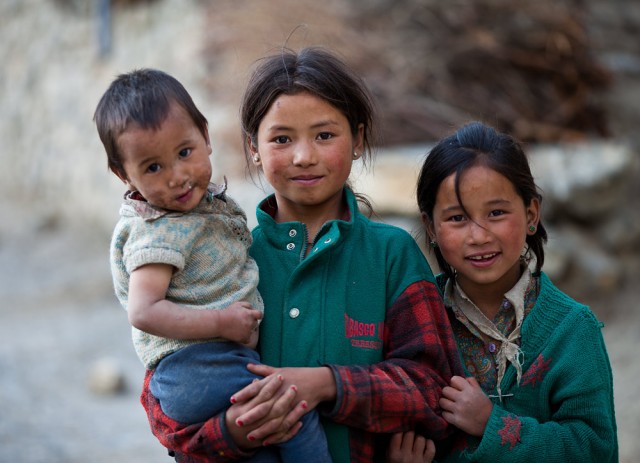
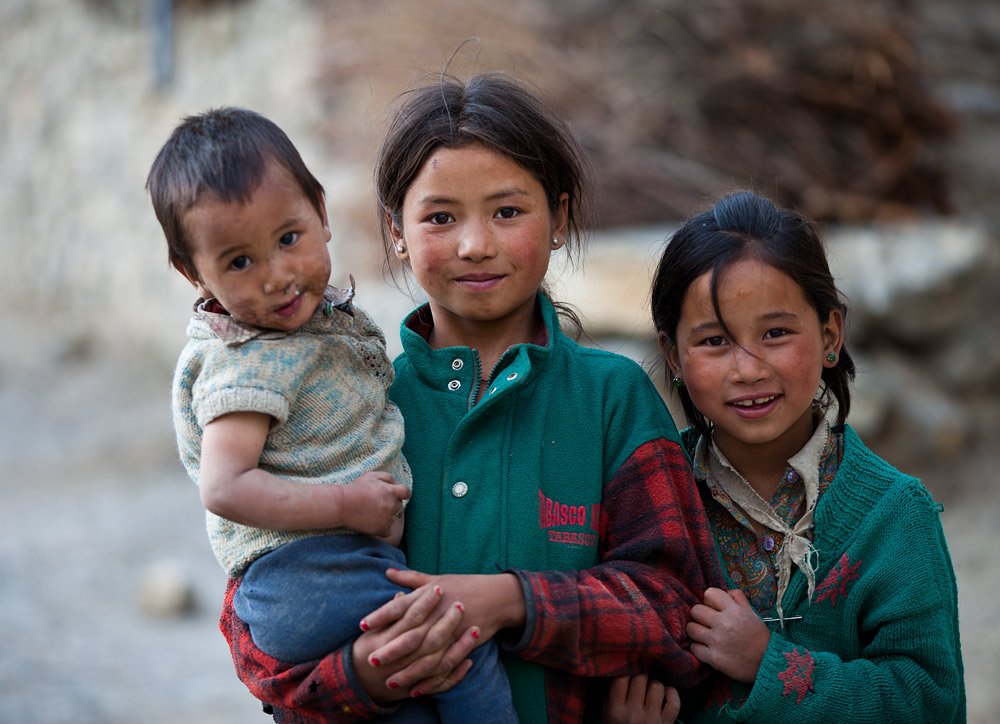
These girls posed for a picture at Lalung Village.
The next morning, we were scheduled to make another long walk – this time thankfully downhill all the way – to Lalung Village (altitude – 12,300 feet). But the news had arrived that the annual festival at the monastery in Ki Village is scheduled on the same day. We changed our plans and boarded a vehicle to Ki, spent the day at the festival and took the road to Lalung Village in the evening.
The festival deserves another complete post, but the images and a brief report is available here – images of festival at Ki Monastery.
WordWeb defines ‘conference’ as “A prearranged meeting for consultation or exchange of information or discussion.” How does one go about unconferencing? The name appears unintutive when you try to bring people together to ‘unfonference’.
When I was invited along with a bunch of bloggers for an unconference, titled ConCLAY, to Club Mahindra Resort at Baiguney, Sikkim, I was unsure of what we do there. It was going to be a prearranged meeting; it was likely to be exchange of information and perhaps a discussion. In that case, what is it about unconference that makes it not a conference? Do we just get there and talk at will without anything specific in mind? How does that really serve a purpose? The friendly folks at Club Mahindra tried to ease the questions, but the answers did not entirely assure me. In any case, I went ahead, decided what I will talk about. But to make it an ‘unconference-style’, I did not work on a tightly prepared presentation and nor did I put my ideas into a powerpoint slideshow. Finally when we were gathered out there, the doubts vanished quickly. It turned out I was with a bunch of people who were doing odd and interesting things because they enjoyed doing it, and the unconference happened to be a wonderful platform to share those odd and interesting things.
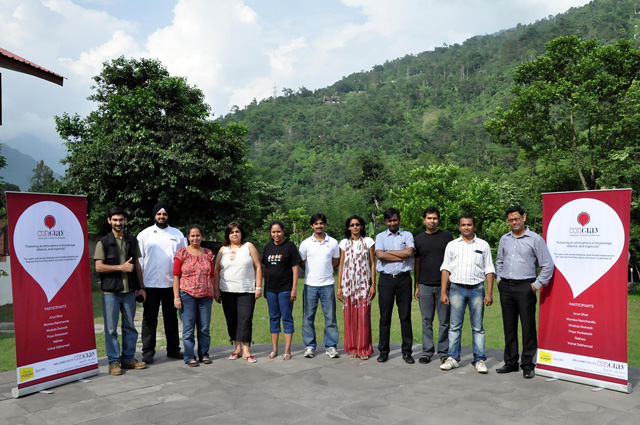
There was Mridula, for example, who taught in a university in Delhi and lived to travel. She shared her experiences from her recent trek to Everest Base Camp, narrating her what seemed to be a life-changing experience. ‘Nepal did something to me,’ she said, probably a hundred times in the two days we were there and made me strongly consider a visit to Nepal very soon.
Nepal is not faraway and a trip to Everest Base Camp is perhaps a low hanging fruit that I just have to decide to pluck. But Priya Venkatesh‘s narration of her journey to Antarctica with Sir Robert Swan was something that made me wish I was in her shoes. Priya’s journey was with an important intent, trying to spread awareness on a moratorium to keep the frozen continent unexploited, which will expire in 2041.
Monica Manchanda spoke about her love for food and travel, which made her quit her desk-job in the information technology industry, take timeout to travel and eventually start her own baking business. She showcased images of her preparations, which were tempting enough that we decided to break for lunch soon after her presentation.
And there was Rakhee, an Australian, who once decided to take time off from her work to wander around India and could not leave. Her six months backpacking trip extended to nine, and now she has set up base in Mumbai which may offer her more opportunities to explore the country. Rakhee showcased her images from her travels across the country.
The last presentation was from yet another person who quit his desk job in favour of something else. Vishal Sabharwal bid adieu to his day job to pursue photography and has been spending a lot of time capturing the faces of North East India. He took us through his brilliant collection of portraits of tribes from North East India, which he has been compiling for many years.
I happened to be the first in line to talk during the unconference, thanks to an arbitrary decision to sequence the talks by alphabetical order of names. A decision collectively made by all those people whose names do not begin with ‘a’. I showcased my images from across the Himalayas, which I have been compiling in the last few years.
By the end of the unconference, it was fairly clear to me why it was called an unconference. The atmosphere was not stiff. Each person spoke about a topic he or she liked and there wasn’t any binding common thread. We broke into related and random discussions anytime in the middle, without worrying about any protocols. We went on telling stories without worrying too much about sticking to a crisp agenda. There were no goals to be achieved or targets to be met, except just to share information and have a healthy discussion. And despite this free-talk, we all came out wiser at the end.
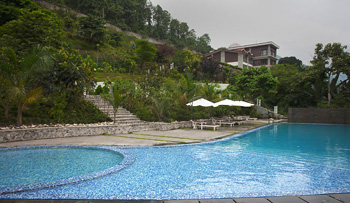
The unconference was one of the few gatherings where I truly enjoyed being part of. It was a gathering of good people who were working on interesting things, and were keen to spread awareness of what they were doing. The whole day of the unconference seemed too quick and too short; we could have continued this forever. The Club Mahindra team of Arun, Akshat and Saurabh did an exceptional job in conceiving and organizing the program.
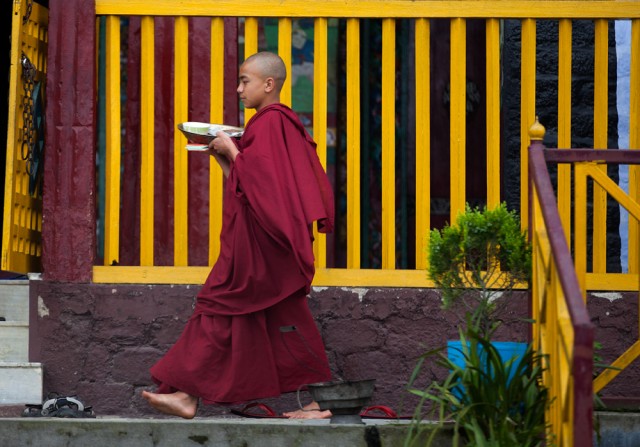

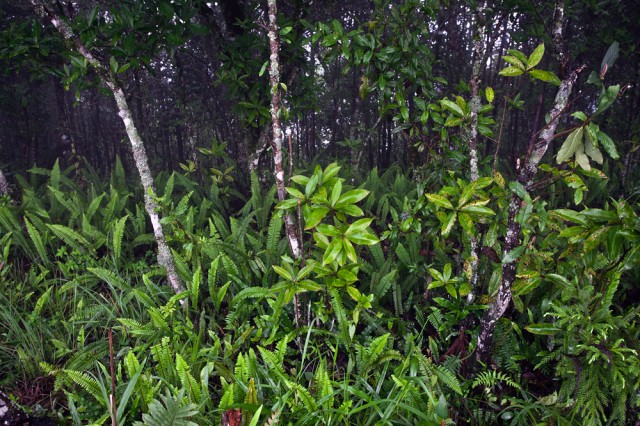
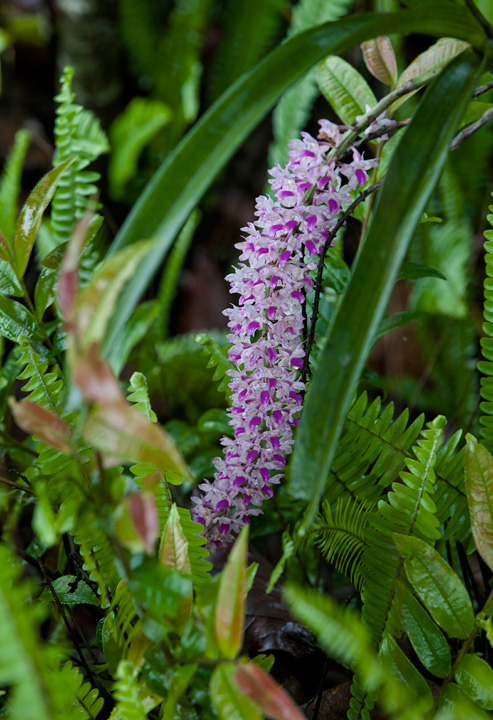
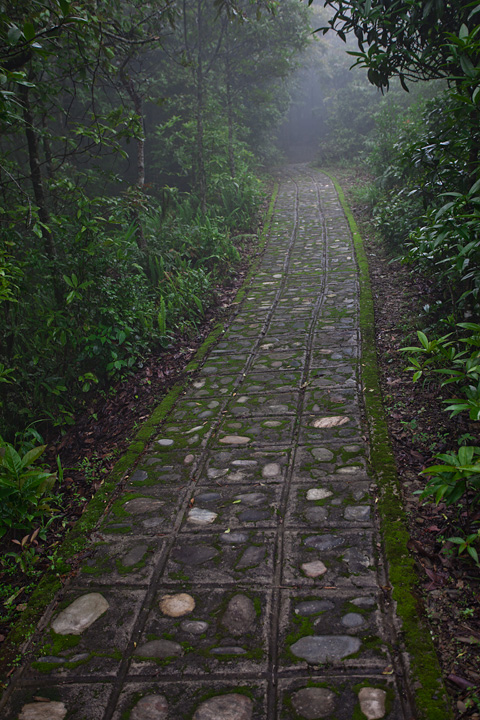
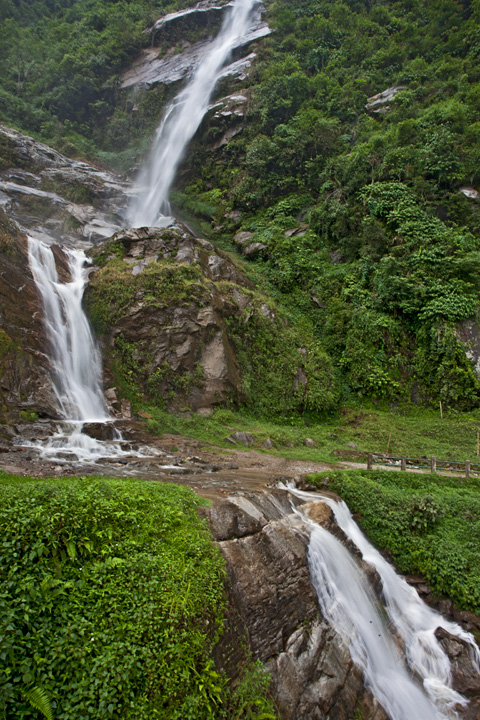
There was, however, much more to the visit to Sikkim besides the unconference. Chef Gagan kept us craving for his delicacies all the time. We spent a morning on a beautiful walking trail at nearby Chakung Village, and an afternoon at Pelling. The pictures above tell much about those places, so I will let the words be. The location of Club Mahindra Baiguney, Sikkim, by itself was charming, next to a river in a green valley. I spent a full morning sitting by Rangeet River next to the campus, and watching a thin strip of fog dancing over the flow.