Lahaul and Spiti
+ This is an article on Lahaul and Spiti earlier published by Kansai Timeout, Japan
+ Also see: Our tour to Lahaul and Spiti every year in July
“It is so beautiful that you will find it difficult to come back,” said our cab driver Mangal Singh as we drove towards Lahual and Spiti region in the highlands of Indian Himalayas. I looked up and saw his beaming face and wondered if it was just a marketing pitch or a genuine remark. His brightly lit eyes expressed confidence that we would have a good time, and his warm smile and friendly gesture melted my doubts away.
Driving over the last mountain pass on our way at over 13,000 feet, we are suddenly led into no man’s land as we enter into the valley of Lahaul. Civilization and hustle bustle of the everyday world is left behind and completely forgotten in its silence. There are no houses, no people, no vehicles to give way to, or anything to remind of the world we have left behind. A narrow road barely good enough to drive reminds that we are still connected with the world, and also gives us access to the terrain that almost feels uncharted.
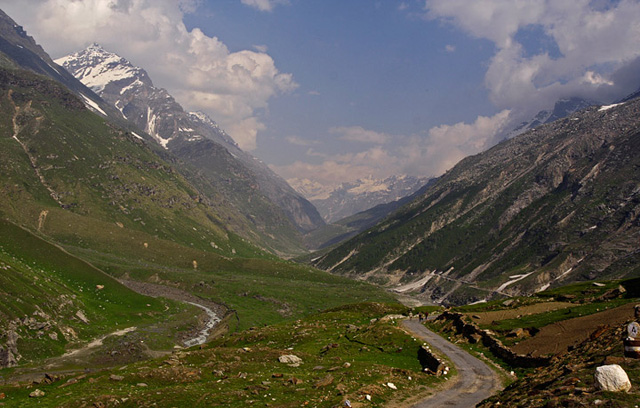
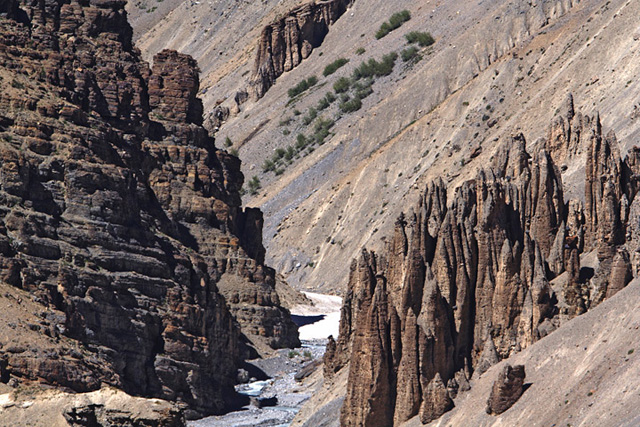
Lahaul and Spiti region is a desert in the higher ranges of Indian Himalayas, where nothing more than tiny grass a few inches tall grows. Muddy brown mountain surface stretches as far as the eyes can see, and the peaks keep growing taller and taller as we look ahead. Moisture laden clouds from the south are blocked by Pir Panjal ranges of the Himalayan mountains, ensuring that it never rains in these parts.
Condition of the road deteriorates quickly on entering Lahaul. Soil is loose and keeps shifting, ensuring that freshly laid tarmac doesn’t even last for a year. Driving involves wading through streams originating from melting snow, which run across the road in a bid to meet Chandra River far below in the valley. Sections of the road are narrow enough to barely let a jeep pass, and any error in judgment would only mean tumbling down the valley and into the fast flowing river. Yet, there are hardly any accidents, thanks to little traffic and the drivers who are used to these roads.
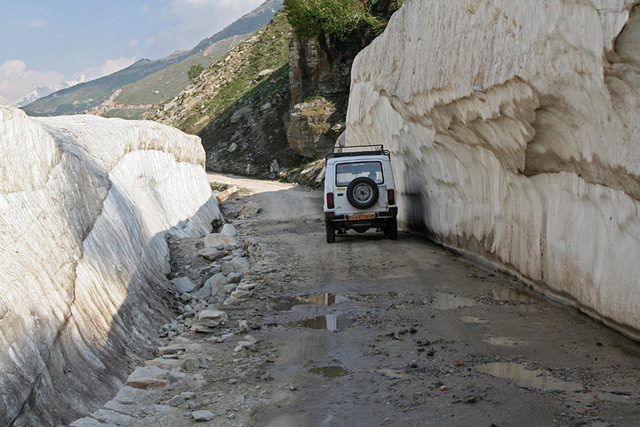
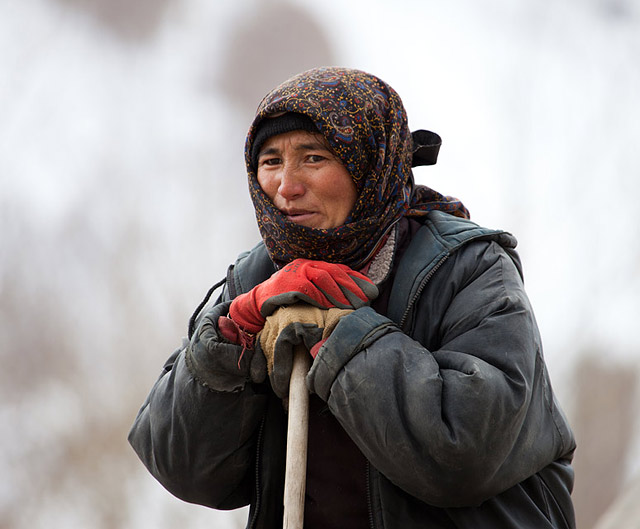
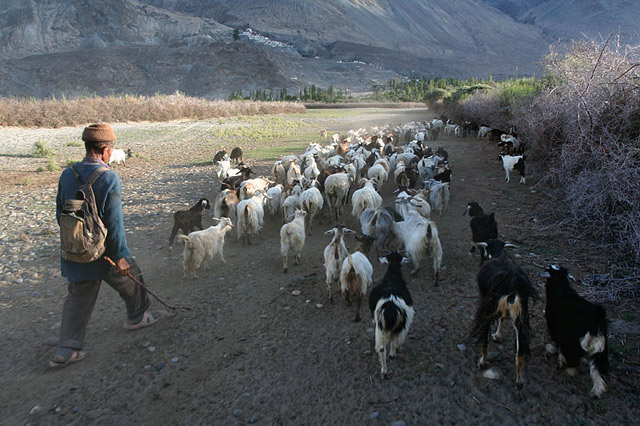
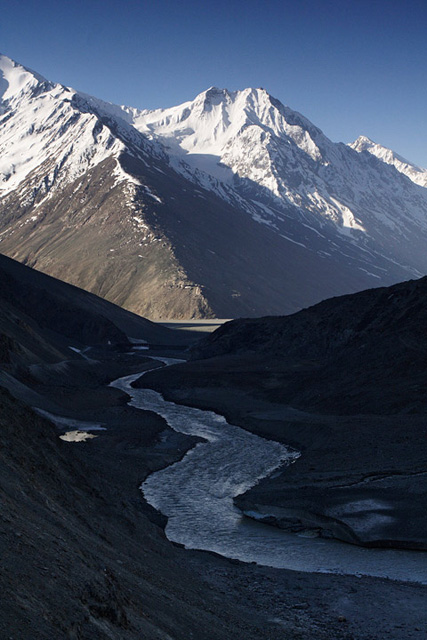
There was no permanent habitation sighted on the journey for next eight hours of our drive. The road passes along lines of tall mountains forming a narrow valley bisected by Chandra River. Mountain peaks are dressed in snow that would soon melt and bare it all in high summer. Nomadic shepherds wander this forbidding land during the warm seasons in search of narrows plateaus where nothing more than bits of tiny grass grows. Herds of sheep seem to be content with just this grass and survive effortlessly, and the shepherds survive on sheep.
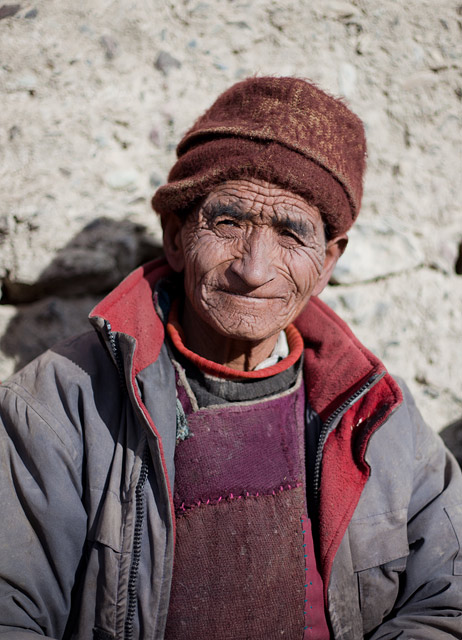
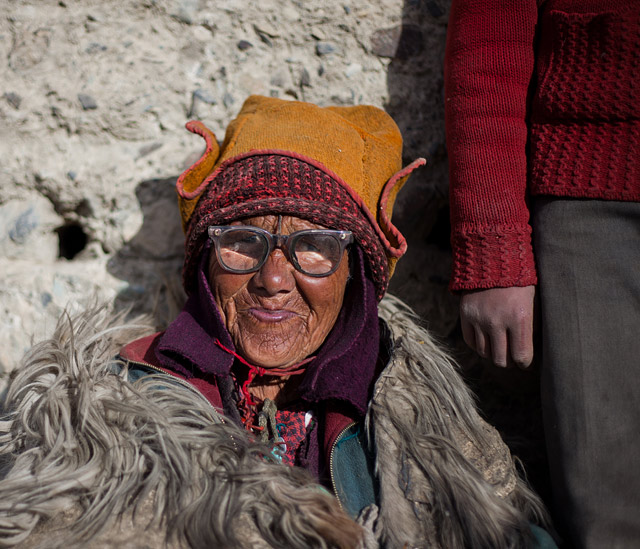
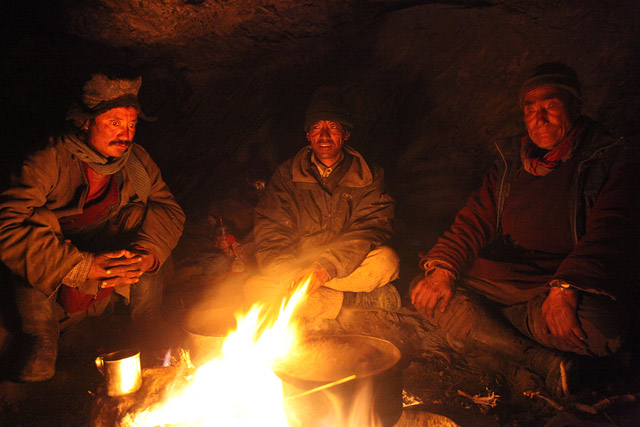
Our accommodation for that night was very basic, in a tiny one-family village called Batal. An elderly Buddhist couple and their helper who ran the place had arrived here for the summer from warmer climes and had re-opened the hotel only a week ago. They were a friendly lot and effortlessly broke into conversations even as they cooked our dinner. They made us burst into spells of laughter with their jokes every now and then, and kept us in good spirits despite the cold weather. “You are too early in the season,” said the man of house, “you should come here after a few more weeks, it will be nice and warm.” He pointed to my thick sweater and woolen cap and laughed out loud when I told him I was feeling comfortable.
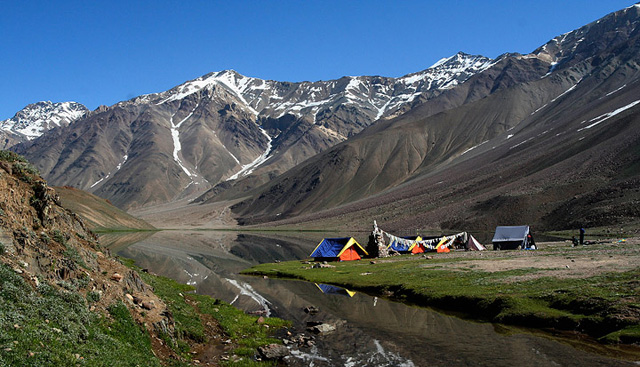
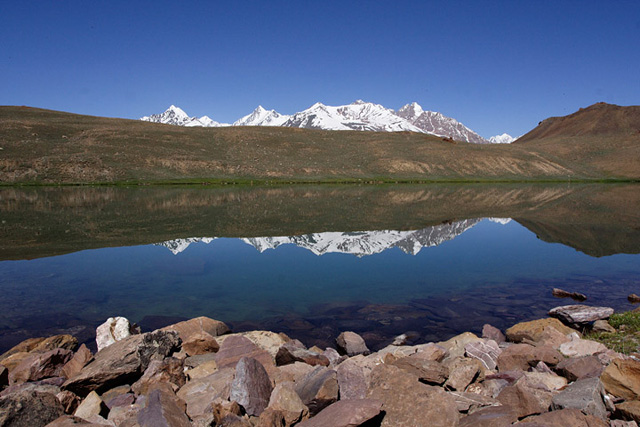
Our next morning drive to Chandratal – a high altitude lake – left me with an interminable affection to the region. The turquoise blue lake is surrounded by mountains all around it but for a narrow passage that drains its waters. Its calm surface reflects the snowy peaks and clear blue sky like a perfectly polished mirror. Its clear water is transparent and the ground far below in its depths is easily visible. An urge to jump in for a swim is curtailed only by the temperature of the water, which is close to freezing point.
Further, we crossed-over the mountains of Lahual into Spiti Valley through Kunzum Pass at nearly 15,000 feet, the highest point in our journey. The mountain pass hosts a small temple for the local goddess Kunzum Devi. Whether the pass derived its name from the temple or the other way is not known, there was no one to tell us about it and neither did our driver Singh know. Walking barefoot on the cold ground was not exactly my idea of fun, but I could not resist going inside to have a look, for which I had to remove the shoes. The temple was empty and there was no evidence of anyone having been there in the past few days.
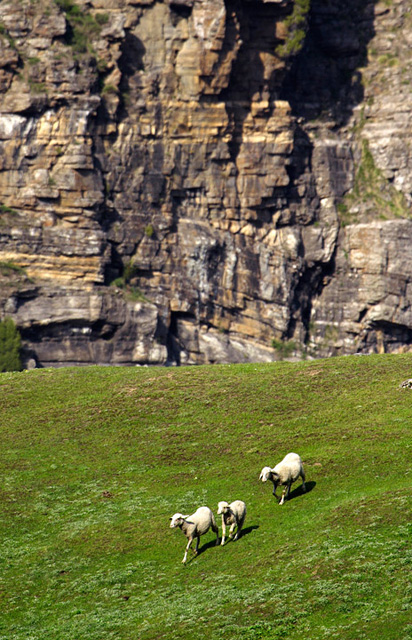
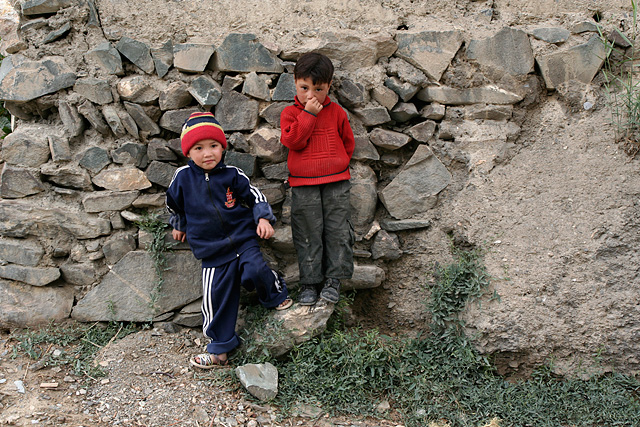
Landscape of Spiti Valley is remarkably different from Lahaul. The floor of the valley is wide and has a lot more vegetation. Straight, easy to drive asphalted roads took us through Losar, the first village in Spiti and then to Kaza town. Villages appeared on the road every now and then, and there were a few people waiting on the road for transport to Kaza. This was a complete change from the uninhabitable terrains of Lahaul.
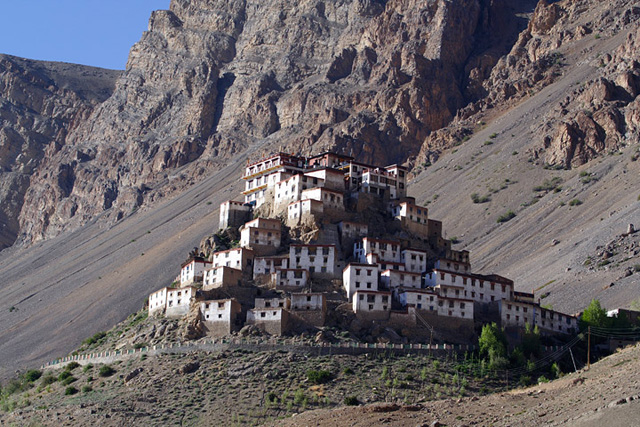
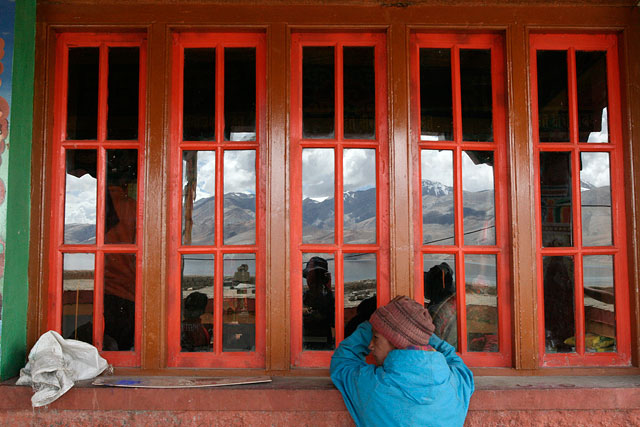
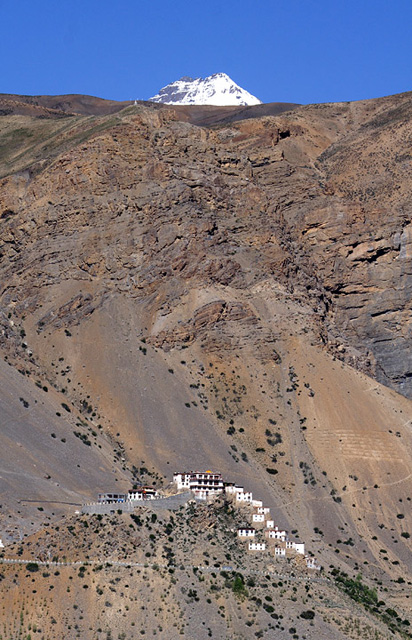
Spiti is a land of ancient Buddhist monasteries that are as old as thousand years. One of those, Ki Monastery is over 800 years old, but most of the buildings are new and there is no visible evidence of its past. The buildings that stand today are made of white washed mud plaster and wood to support the roof. More buildings, built with concrete, are coming up in the periphery to accommodate more students as well as travellers.
A friendly monk with a round mongoloid face, small blood-shot eyes and bugling cheeks welcomed us and escorted us inside. He spoke with a deep high pitch voice that seemed to be coming from the bottom of his larynx.
The monastery is spread around a prayer hall where the monks assembled. A few deities of worship, a kitchen and smaller prayer room surround the prayer hall. An old kitchen built many centuries ago still exists, though not used anymore. Our escort monk showed us the utensils of yesteryears and asked to take a seat on a bench in the center. ‘These days we use this room to honor the guests,’ he said and poured us tea from a pot. Over the tea, I questioned in him length about the past and present of the monastery.
‘Life was much difficult before,’ he explained and spoke in length, ‘it was not easy to procure food and other daily needs, but now the government helps us. Procuring fuel and wood was a big problem, since there are no trees here. Things are much better these days; we are well connected and well provided. There is a problem of good teachers though, Tibetan preachers don’t get visa easily and we will have to manage with local ones.’
I barraged him with many question. ‘Why is your monastery located in such remote place? Why are you so far away from civilization? Why do monasteries tend to be in some far away mountain or top of a hill?’ There were simply too many questions I wanted answers for.
The rain of questions was probably hard on him, but he was patient. He took some time to think over it and said, ‘it is to escape from the everyday world.’ I waited for him to continue but he did not seem to have more to say on it.
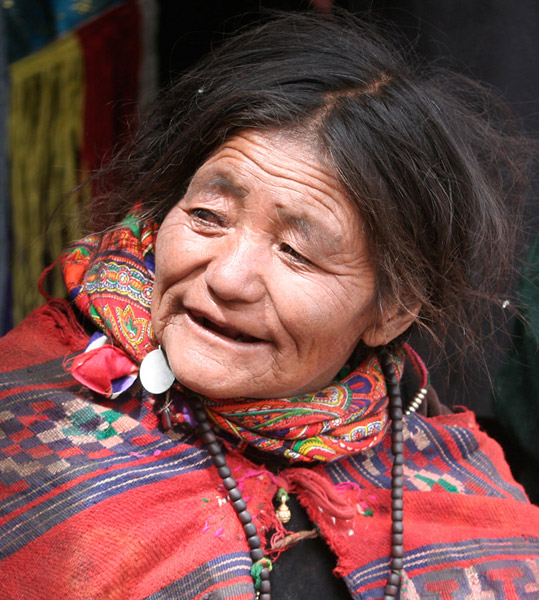
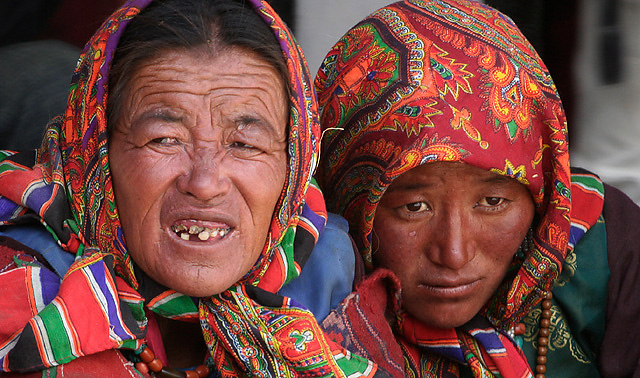
He escorted us back to the entrance after the tea, and humbly welcomed us to visit again. The goodness and hospitality of the people of hills never ceases to amuse me. ‘We have rooms to stay for tourists,’ he said, ‘next time you come, do stay with us.’ Despite the hardships of the terrain and difficult conditions they live in, they are congenial and helpful even to strangers.
At Tabo village, a couple of hour’s drive from Ki is another monastery that is more than a thousand years old and is known for its well-preserved frescoes. The monastery’s prayer hall, called Tuglhakhang, is richly decorated with frescoes in vibrant colors. A set of nine small temples built with mud surround the prayer hall, each decorated with paintings of incarnations of Buddha and Tibetan deities. The daily activities of the monastery are performed in a new building built beside the temple complex, leaving the ancient structure preserved. The remains of the old monastery and the frescoes are now declared as a UNESCO world heritage center.
We drove further from Tabo next day and into lower regions of Himalayas, exiting Spiti from other end of the valley. But in the next few days we were on the road, we kept repenting about having left the majestic valleys of Lahaul and Spiti so early, and yearned to be back there. Mangal’s words – “It is so beautiful that you will find it difficult to come back”, kept haunting us all the way.