I spent a week traversing the highlands of Ladakh in last winter. When we were on the way to Pangong Lake, we stopped for a while at an ice field formed on either side of a gently flowing stream. The place looked beautiful, with a large patch of ice covering the ground and often forming curious patterns created from trapped air bubbles, flowing water or brown grass sticking out from the solid surface of ice. On either side of the stream, melting ice trickled gently into water from the ice bed, allowing icicles to form. Along with the distant mountains covered in snow, the patterns in the ice and the flowing water offered excellent photography opportunities. So, our short stop extended for more than 30 minutes.
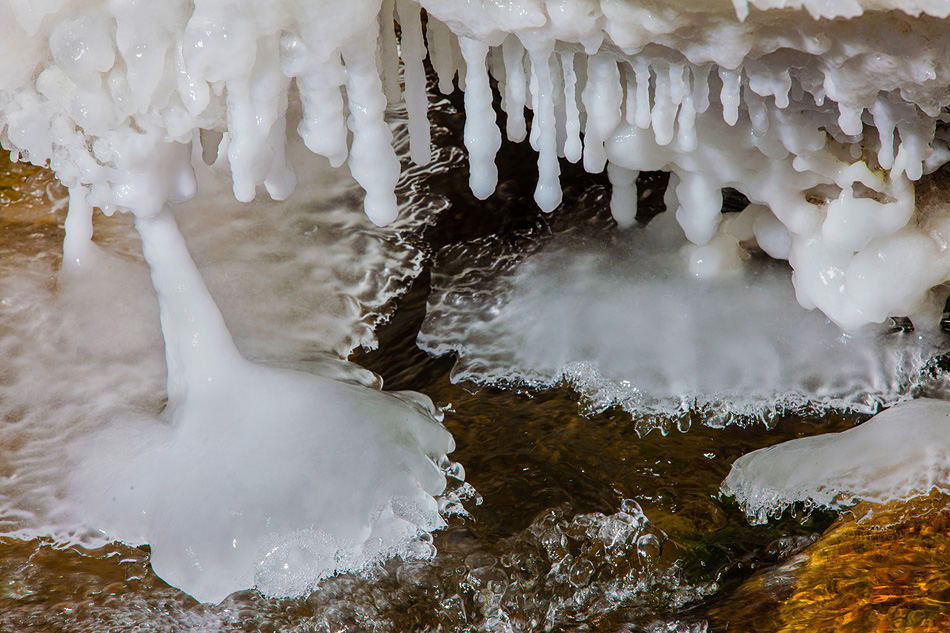
Here is one of the many images made at the ice field. I was so delighted and so happy to see the beauty of this place, that I felt it was worth my money on the trip, even if we did not make it to Pangong. Of course, we reached Pangong Tso in the next few hours, after many photo-stops on the way.
Somewhere in the process of admiring the icicles and photographing them, I got carried away and lied down on the ice for a few minutes to get that perfect image that I had created in my mind. Our outspoken driver Angchuk and the sober cook Norbu found this very amusing. For rest of the tour, they would tease me whenever we found ice-fields along the way, asking me if we should stop the car for and let me lie down.
Ever since I visited Bhutan for the first time in the summer of 2012, I have always looked forward to going back. I returned again in September ’12 and am looking forward to another visit in October 2013. There is a certain charm about Bhutan that makes me look forward to these trips. The country’s lush green Himalayan slopes, its high mountains, predominantly rural and agrarian population, a very laid back and careless nature of its people and an endearing Buddhist tradition and culture have filled my senses and have never failed to bring me peace from within. Here is a quick look at places and experiences that I look forward to, during my trips to Bhutan.
Hiking Paro Taktsang (Tiger’s Nest Monastery), Paro Valley
Let’s begin with the most well-known and most-visited place in Bhutan. Despite the effort of climbing, Paro Taktsang is visited by almost every person who makes it to Bhutan. The monastery is known for its magnificent setting, located half-way down a vertical cliff at an altitude of 10,000 feet. It is also one of the most sacred Buddhist sites of pilgrimage in the country. Legend has it that Guru Padmasambhava, wh0 brought Buddhism to Bhutan, flew here on the back of a tiger and meditated for many months. A temple was first built here in the 17th century, but the current building is as recent as 1998, rebuilt after a fire destroyed the older structure.
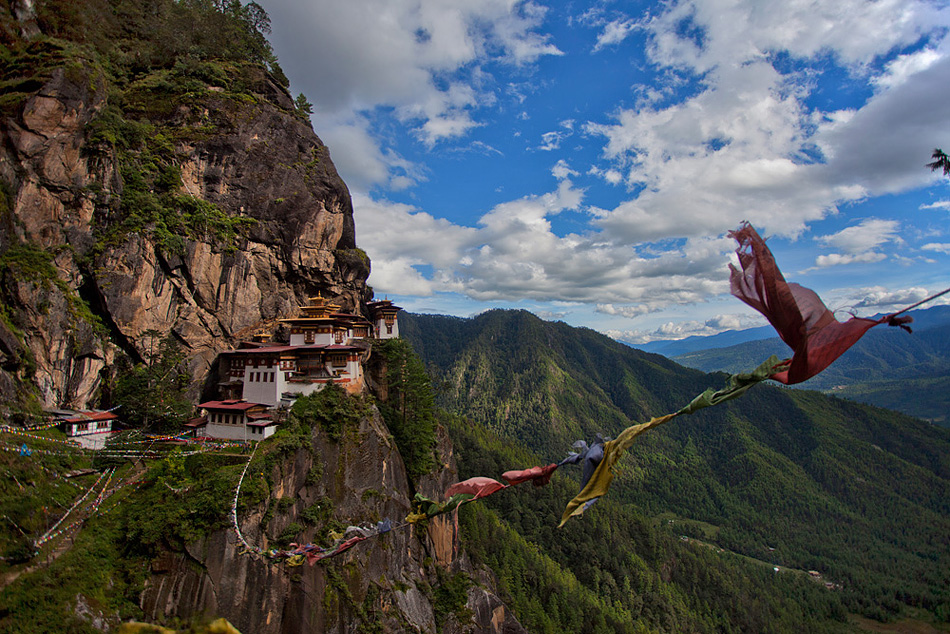
It takes a climb of three to four hours to reach the monastery through a thick coniferous forest on a well-defined path tread by tourists as well as many locals on a pilgrimage. Rhododendrons and pine trees keep your company all through the climb. Somewhere half-way up on the way is a restaurant run by Bhutan Tourism, which offers tea and snacks through the day and a buffet lunch during the afternoon hours. The strategically located restaurant also offers excellent views of the monastery. The steep climb, especially after a heavy lunch, can be very tiring. No wonder it’s a cliche among travel writers that it would be easier to fly there on a tiger.
A life dedicated to Buddha in Kyichu (Kichu) Lhakhang, Paro Valley
Kyichu (Kichu) Lhakhang is one of the oldest Buddhist Temples in the country and a place believed to have been visited to Guru Padmasambhava. An ancient cypress tree in the temple premise is known to have sprouted from the Guru’s walking stick.
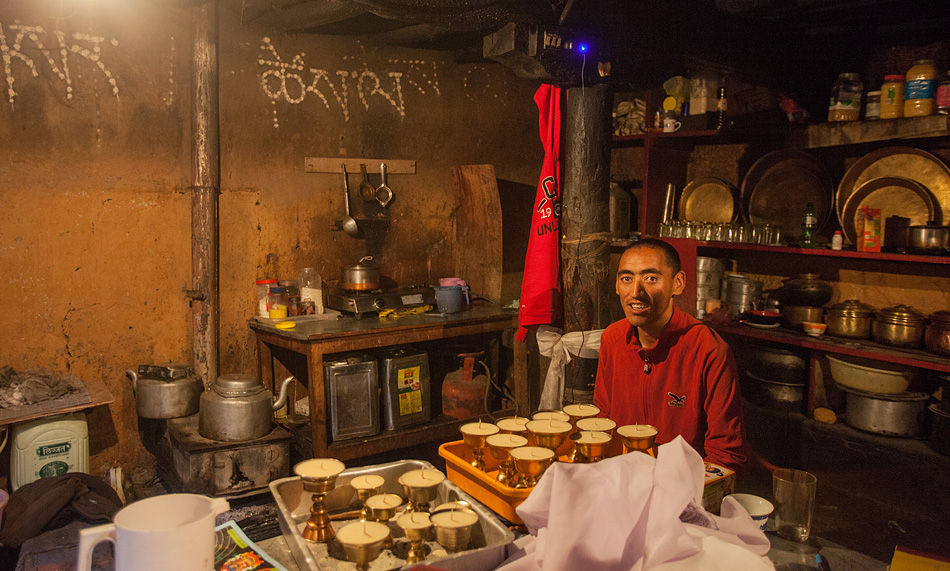
Environmental portrait of a monk at Ki Monastery in Lahaul & Spiti region of Himachal Pradesh. Photographed during a recent photography tour that I was leading to the region.