A long row of Chinese fishing nets are an iconic landmark of Fort Kochi’s sea front. Every evening, small groups of fishermen standing on thick, long dead tree trunks of this curious contraption are seen pulling a bunch of ropes that gently lifts the half-immersed nets, bringing out a handful of fish that seem too small for the size of the net. In the winter months, when plenty of tourists trot the shore in search of amusement, the fish are sold almost as soon as they are lifted. A bunch of restaurants that shout out ‘you buy the fish, we cook it,’ make up all the market required for the little bounty secured from the nets. One summer evening, I walked into one of the very few nets that was functioning even when the tourists were away, and spent an hour taking pictures and talking to ‘P Samuel’ who was happy to show me around. Some images from the visit.

A ship moves towards Cochin Harbour on the shore opposing the Chinese fishing nets.

The nets are pushed into the water when some one walks on the mast and increases the weight on the far end of the assembly that stretches into the water. To bring the net back up, four to five people pull a bunch of ropes attached to the mast, in a way similar to drawing waters from the well using a pulley.
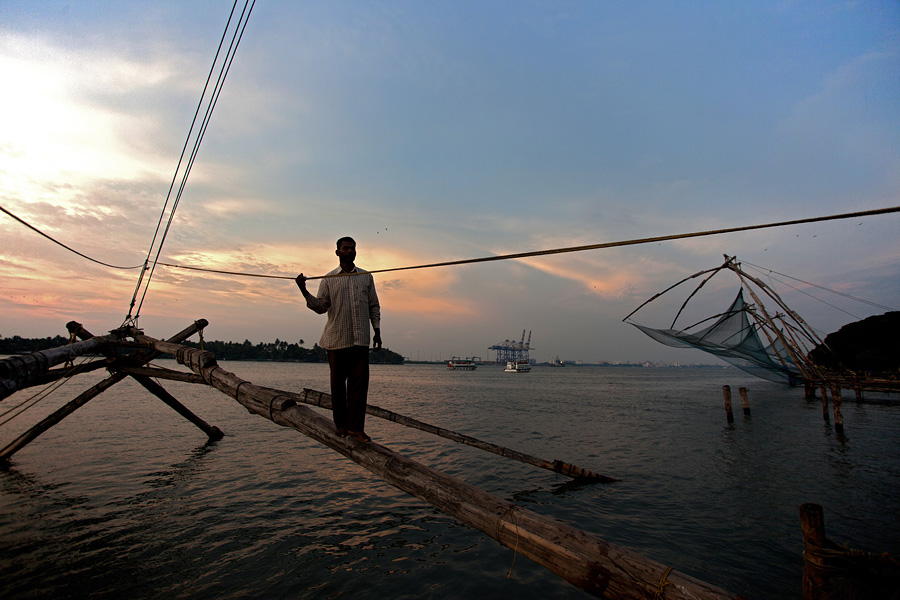
One of the fishermen in the group walks up the pole to push it down the water and returns after the job is done.
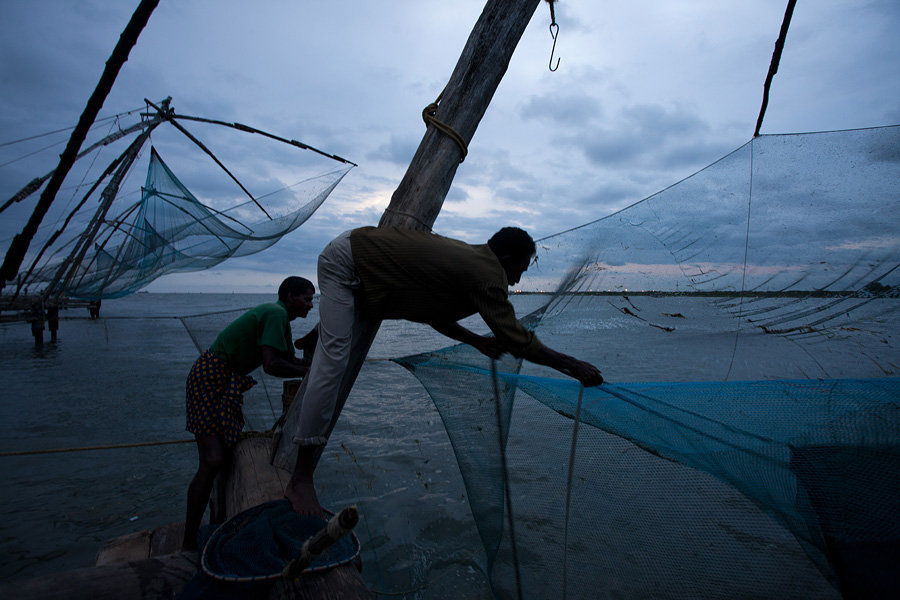
Pulling the booty of fish after lifting the nets. The net is usually kept immersed for a duration of ten to fifteen minutes. During the summer months when I was there, an immersion typically brought back a haul of one to two kilos of fish.
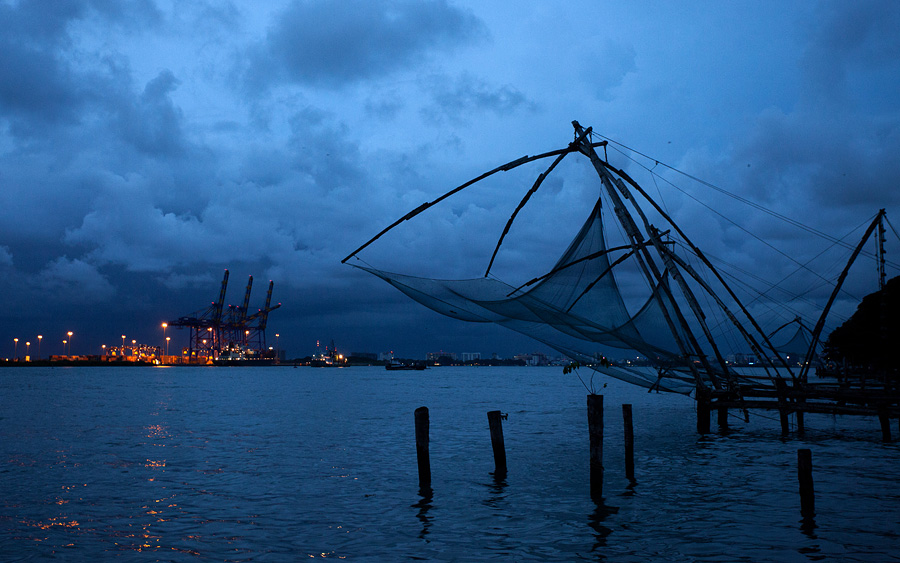
The lights of Kochi Harbour on the faraway shore come on after sunset.
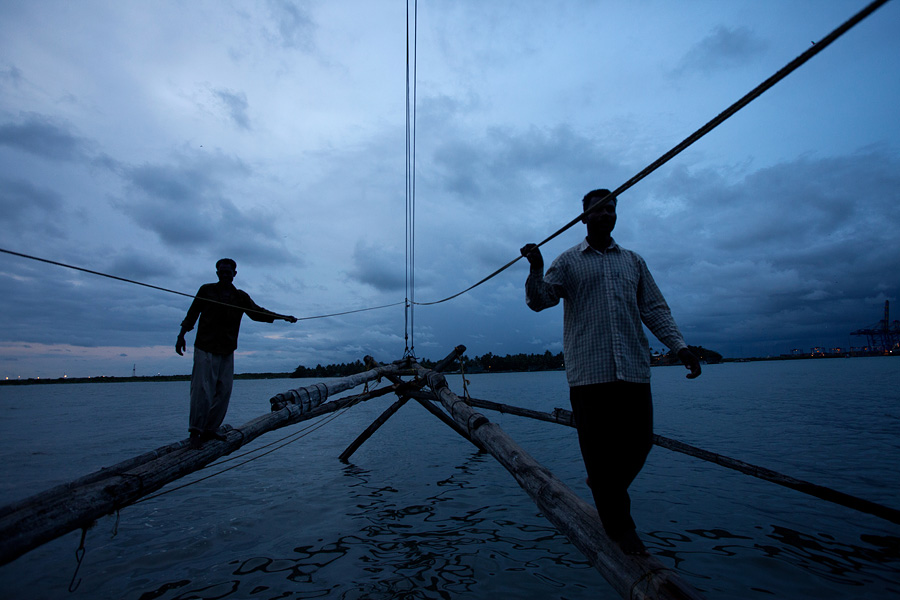
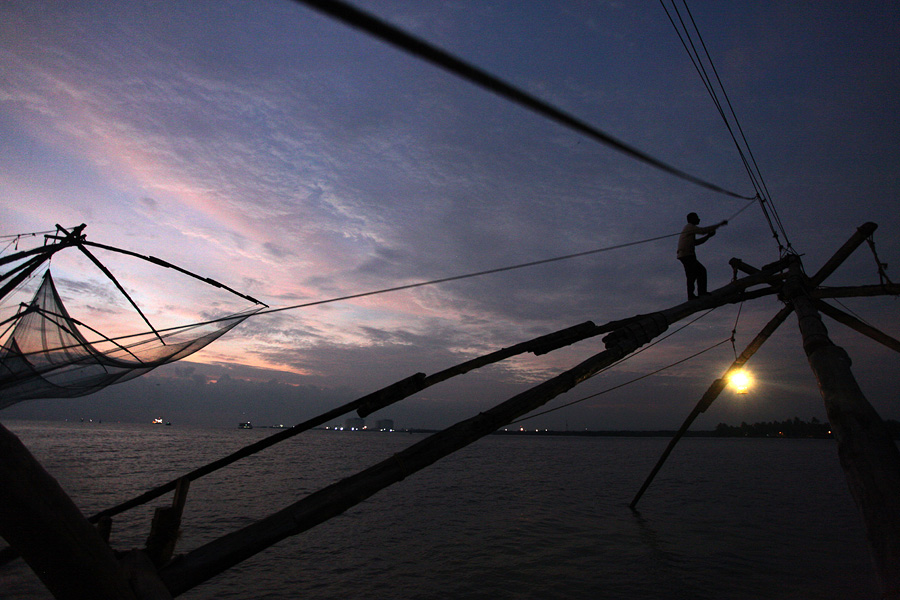
Some time after the sunset, fishermen light a lantern that hangs over the water and attracts more fish. The colourful skies, the lights from the other shore and the bright lamp hung with a rope suddenly transform the atmospehere around the nets.
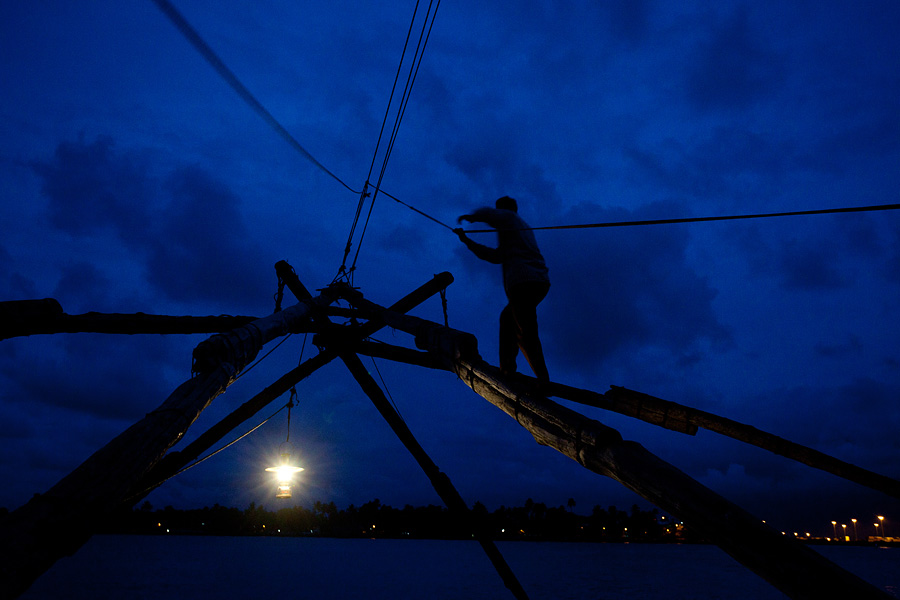
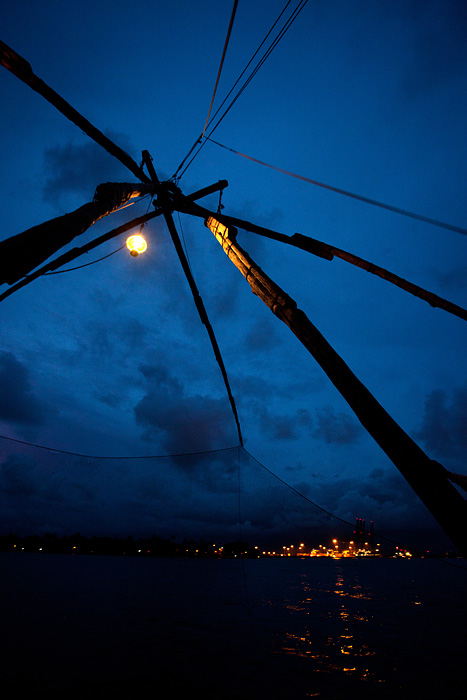
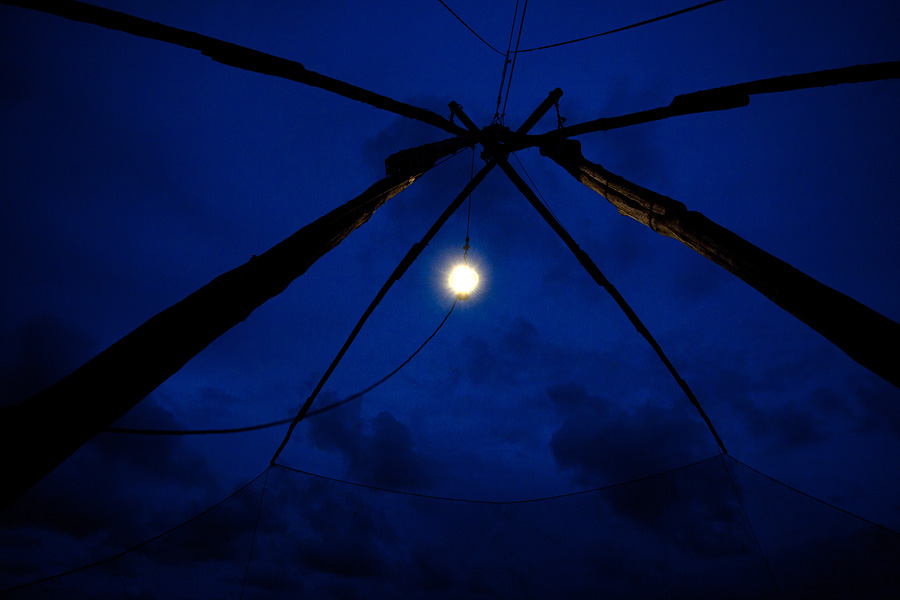
The colours change quickly after sunset, into a deep hue of blue on cloudy days or into deep orange colours in the clear days of winter months.
The pink hues of hawa mahal’s facade brings many thoughts into the mind – the simple and elegant beauty of the palaces of Rajasthan, Jaipur’s fetish with the deep reddish hues carefully preserved over a century, the confined lives of women in the palaces and mostly – the ultimate symbol of Rajasthan Tourism. On my first visit to Rajasthan, Hawa Mahal was in the beginning phase of a long lasting renovation, taking its time as any government project would. About four years later, on my second visit a month ago, the process was finally complete. It was the right time to be there, before the paint faded, before coloured glasses lost its sheen, before its fountain left to die and before the vandals arrived to scribble the details of their love life. The insides of the Hawa Mahal were gleaming with fresh paint, coloured glass (or are they stained glasses? there is no easy way to find out) and spotless interiors – as if the Maharaja had just gifted the palace of winds to the members of his harem.
We loved it, and almost refused to leave. A spree of photography lasted for four hours. We left, only to allow some time for other charms of Jaipur’s old city, but haven’t had enough of the Mahal yet. Here is a compilation of images made in and around Hawa Mahal in this brief period. But Hawa Mahal deserved more time; and more, better, beautiful images.
The typical image of Hawa Mahal in tourist brochures shows it standing alone and isolated, as if it is located in a pristine undisturbed location, waiting for you to discover it. Far from so, it is right next a busy road. A national highway to be precise. In fact, the whole idea of building Hawa Mahal was to let the royal women a glimpse into the outside world, the city’s busy life, and processions during the festival. And it is this reason, that the windows of Hawa Mahal face a busy street but the entry to it is from the other side. It is a relatively lackluster entrance that doesn’t give clues to all the glory that the palace possesses.
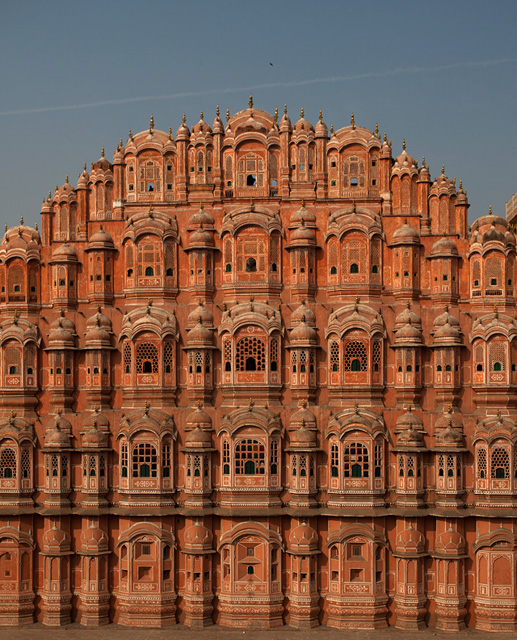
The facade of famous Hawa Mahal – the palace of winds
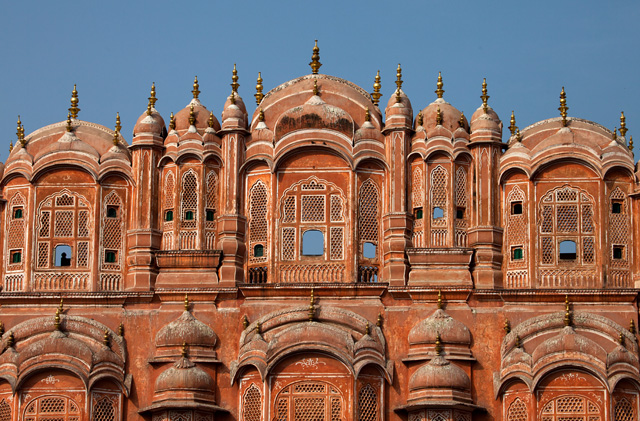
A closer look at the facade.
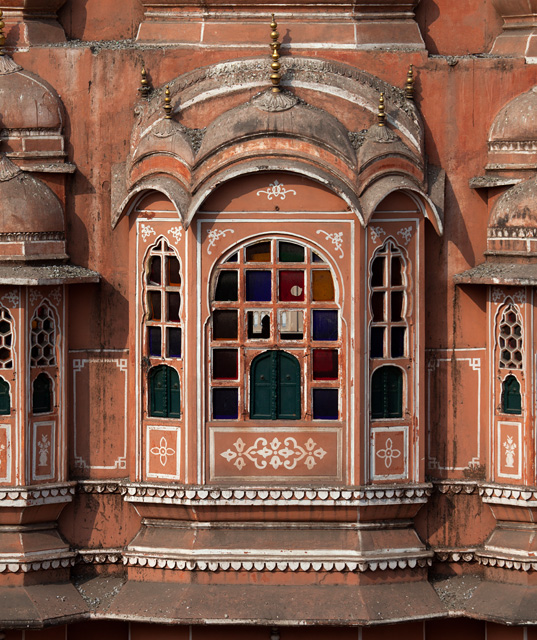
One of the colourful windows of Hawa Mahal that are spread over five stories. The colours of the glass are not apparent here; see the images from inside Hawa Mahal below.
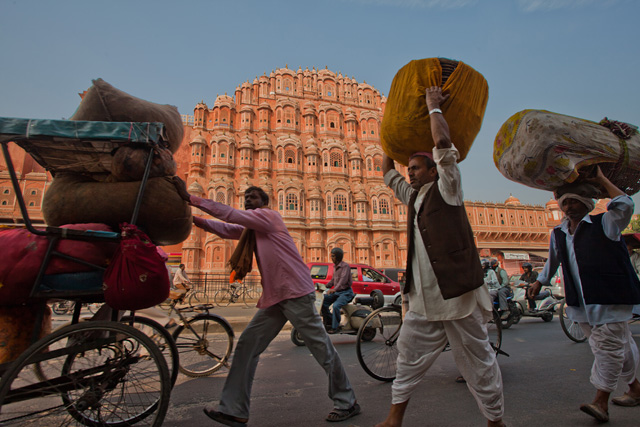
Life goes on the street in front of Hawa Mahal, not stopping by to admire the beauty of the palace that is an everyday affair for the people of Jaipur.
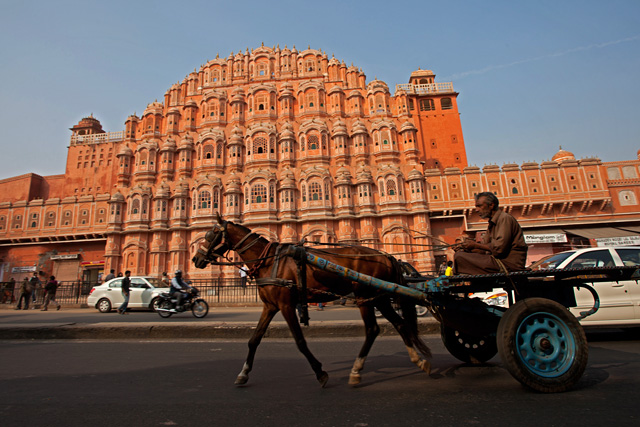
Life goes on in front of Hawa Mahal, on the busy National Highway 8.
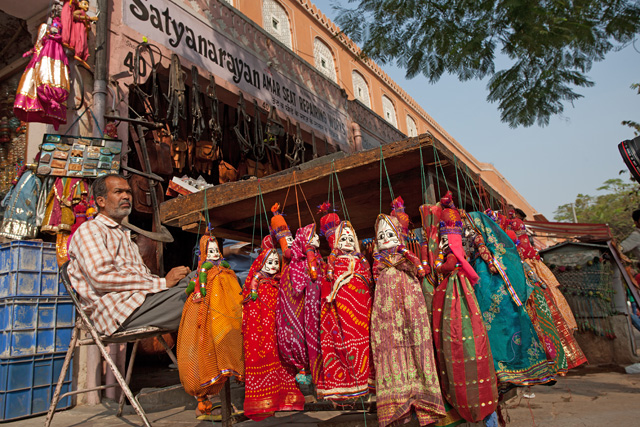
A shop selling wares for tourists near Hawa Mahal.
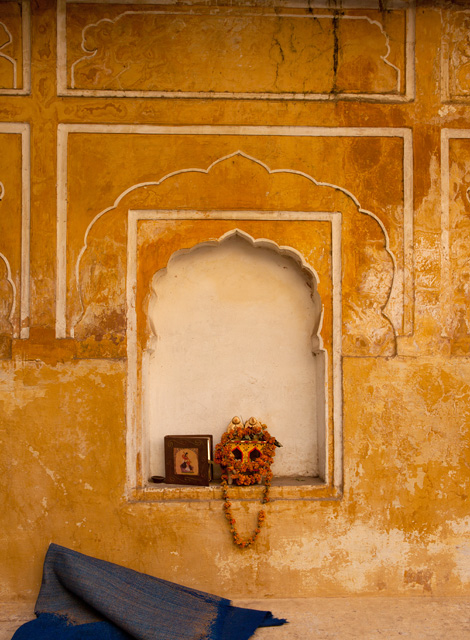
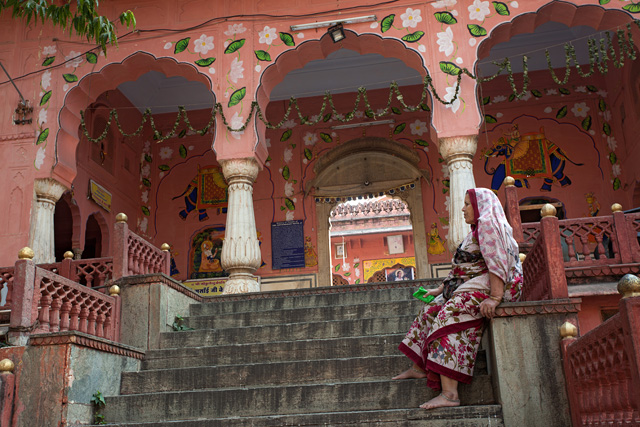
At the quiet and peaceful alleys behind Hawa Mahal.
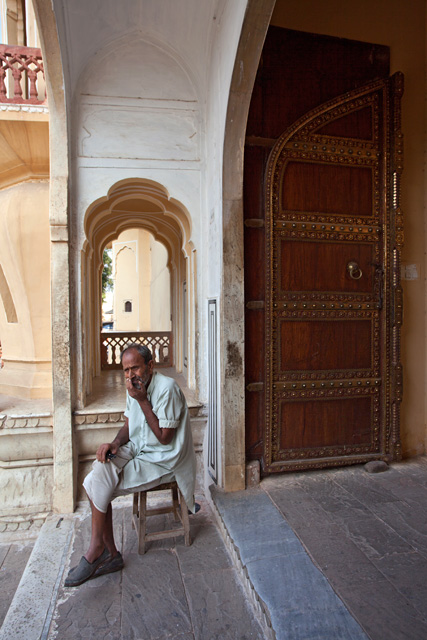
The relatively lackluster entrance to go inside Hawa Mahal is on the side opposite to its colourful facade. On entering, the inside appears ordinary at first, until you go past a few doors.
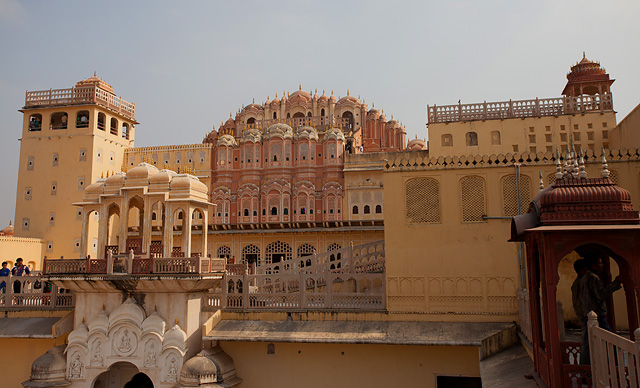
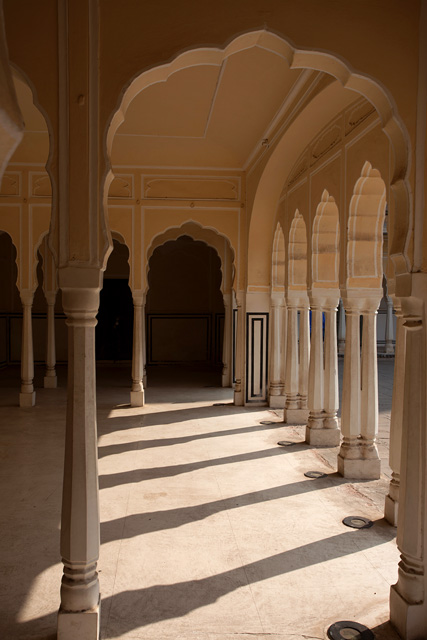
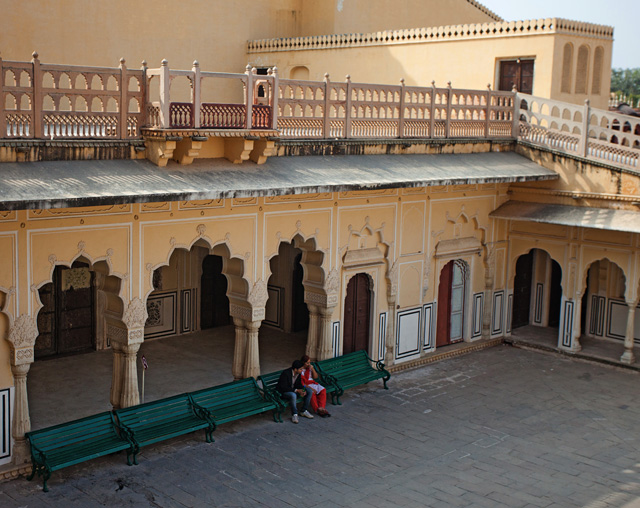
The arches and the galleries inside Hawa Mahal are as charming as its facade is.
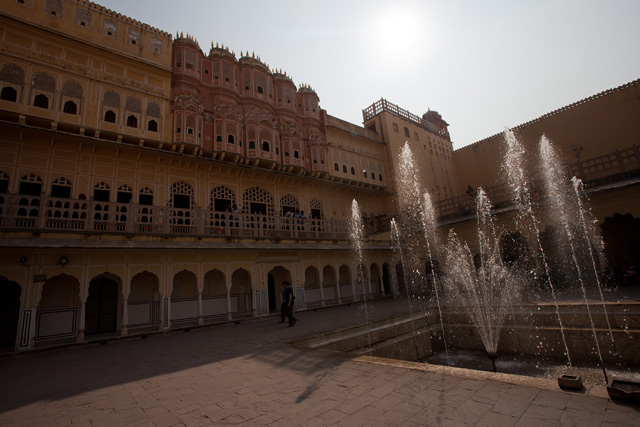
The fountains add to the glory of the building. The morning of our visit to Hawa Mahal, we had seen a photograph in the newspaper showing the springing fountains. But to our disappointment, they were turned off when we arrived. As luck would have it, someone turned it on just for a minute, barely long enough for me take this picture.
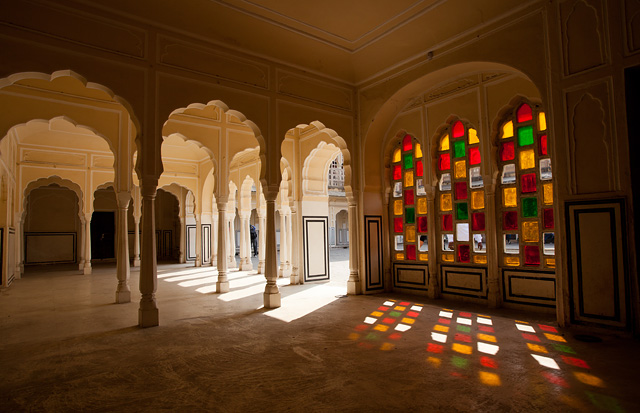
I almost missed this hall with colourful glass windows, located on one side of the entrance. It would have been a great loss, not seeing this.
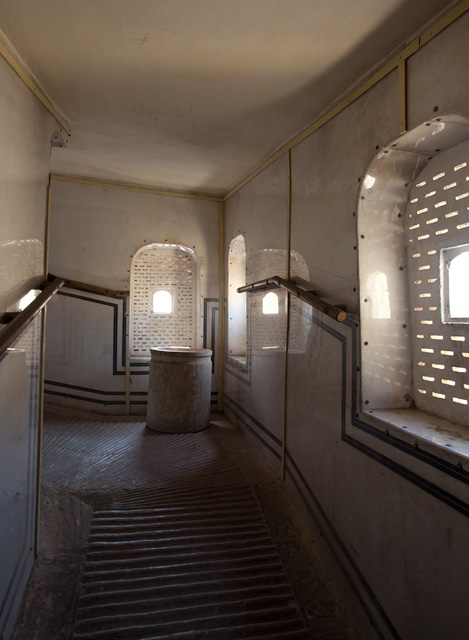
Play of light on the ramp leading up.
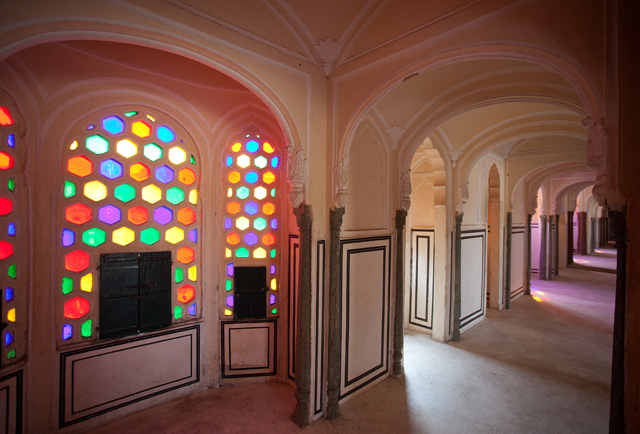
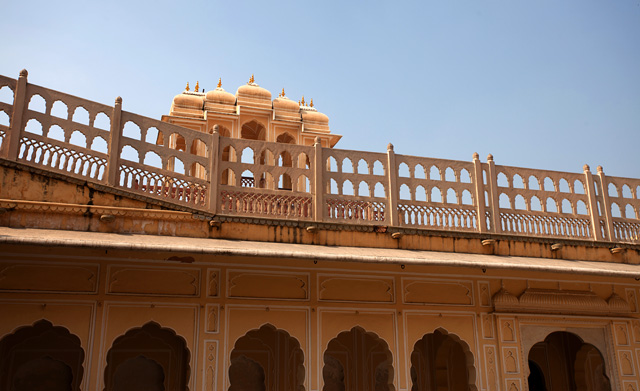
The galleries on the upper floors.
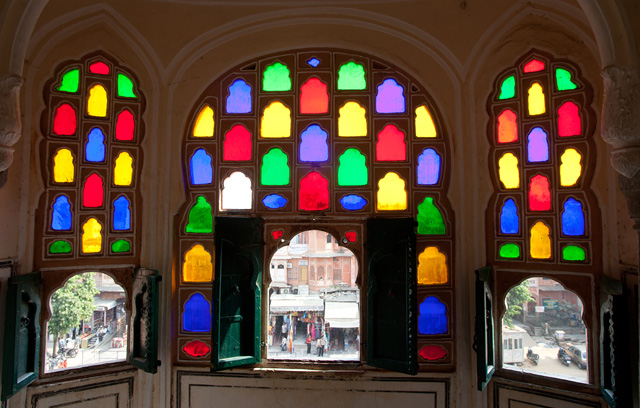
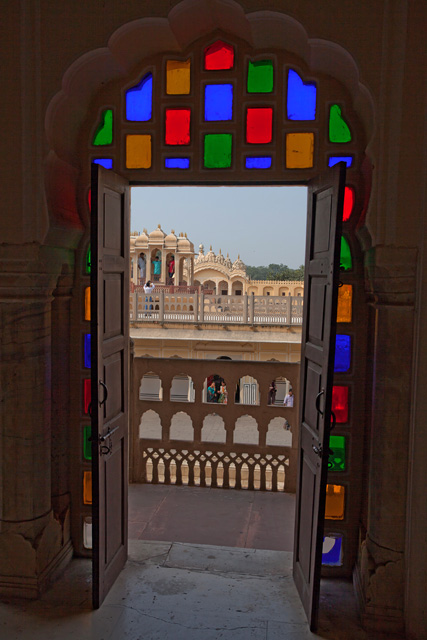
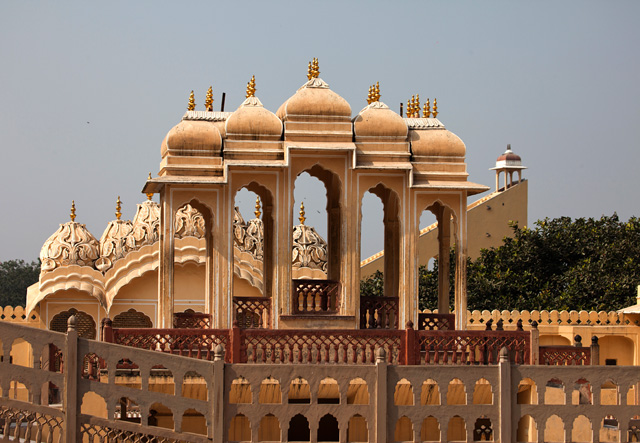
The insides of Hawa Mahal, seen from the first and second floor galleries.
For a very long time, I was unsure about all the great things one gets to hear about the well-known backwaters of Kerala. Is it really as awesome as it is projected to be? Is it really as beautiful as depicted by the photographs or is it just the photogenic nature of water that makes it look so good? Is it simply great marketing or is there enough dough in in the place that is worth all the marketing? Is it worth all the money that you pay for the backwater cruises and houseboat trips? There were many doubts in a corner of my mind that refused to go away. I wasn’t very convinced. At least until work took me to a few places in these famed backwaters and offered me a glimpse this watery expanse. In my first houseboat cruise, I was completely sold. A row-boat trip helped add to the charm. Another trip on a small shikara boat on a day when it was raining cats and dogs made me a total fan of this rural landscape. No landscapes seemed more charming, no experience was parallel to this romance with water.
While I gear up for two more trips to the backwaters in the next few months, thanks to work that takes me there, a few pictures here from my earlier visits.
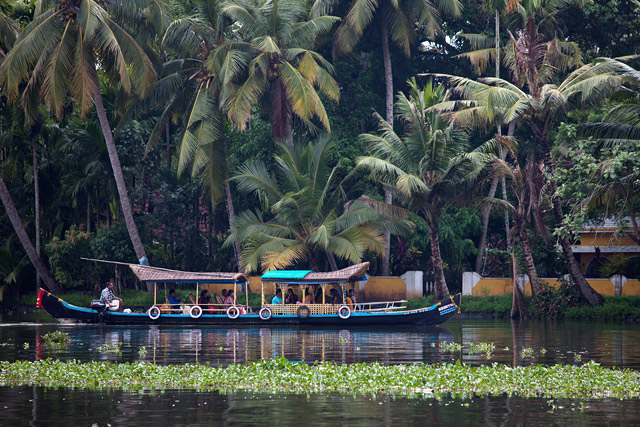
Deep in the interiors, the backwaters are so picturesque that it appears like a fairytale land. The coconut trees, the green expanse, colourful houses and beautiful boats – all reflected in the calm waters.
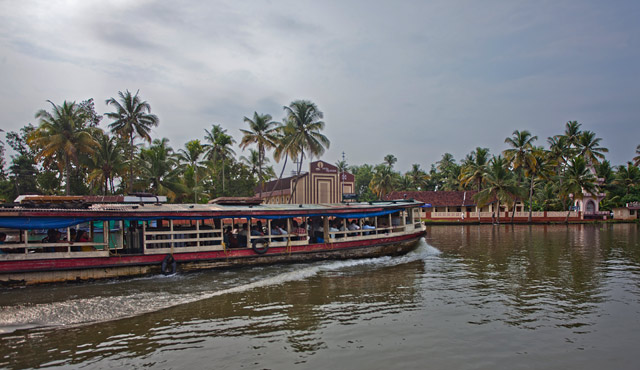
A large number of people live along the backwaters, some parts of which are islands and do not have connectivity by road. A transport network operates on the waters, very similar to roads. There are main waterways that are like highways, connected by large ferries, while the smaller channels are supported by rowboats and shikaras. A public transport network exists along the backwaters, managed by the water transport department of Kerala.
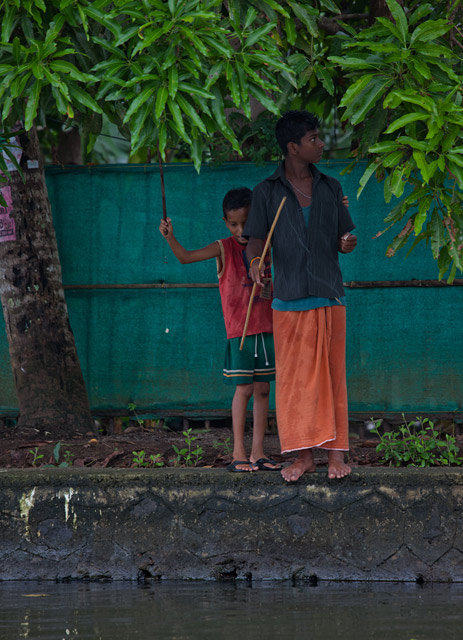
For people living in the backwaters, much of their life depends on the lake. There are many houses that face the canals, where you are right on the bank the moment you step out of the house. Some times it makes one wonder what happens to the houses when the water level rises. But since the backwaters are connected with the see, it is rare that you see the water levels rising. What is really interesting is to see some houses built below the level of water at places, protected by bunds to stop water from rushing in.
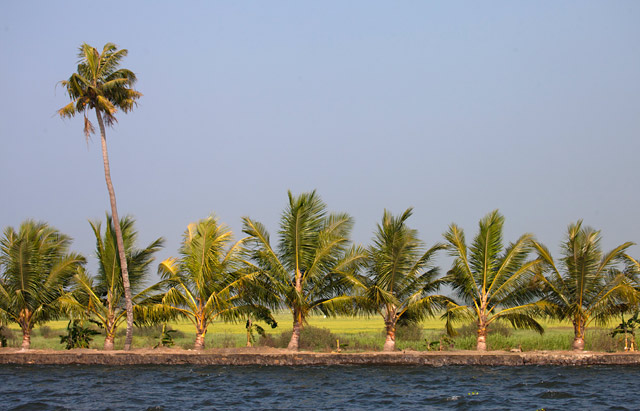
Several islands are built artificially all along the backwaters, where land is reclaimed from the lake and people have settled in to grow paddy or to rear fish. Water from some such reclaimed lands has to be routinely pumped out to keep it dry. In a curious occurrence, while farmers across the country work to bring in water and let it stagnate in the paddy fields, here in the backwaters they need to pump out excess water from the fields. Sometimes, you see just a narrow bund separating two parts of the waterways, and the strip used for growing coconuts.
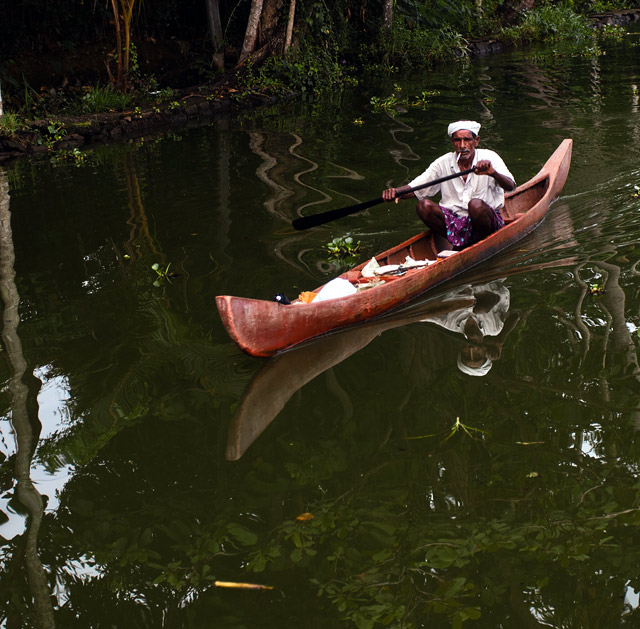
Where there are people, there will be vendors. The backwaters also serve as a marketplace. You see restaurants facing the canals, some serving the locals and some positioned for the tourists. There will be vendors selling fish, food and several type of household materials, rowing their tiny boat with their wares. People use boats of different sizes – motored and non-motored – to move goods from place to place. It is amazing how the canals are not very different from roads.
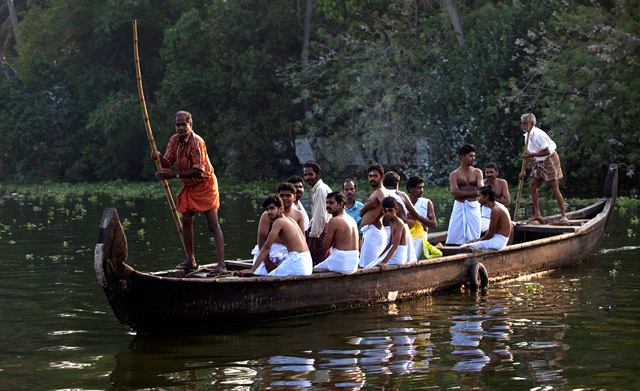
The evening sun in the winter makes the backwaters appear glorious, adding more colours to the already picturesque countryside. On my brief houseboat cruise, when I was searching for some dough for a writing assignment, I came across several interesting aspects of life along the backwaters. Here is one such moment. While I did not get a chance to speak to people in the boat, it seemed like a ritual performed for the departed soul.
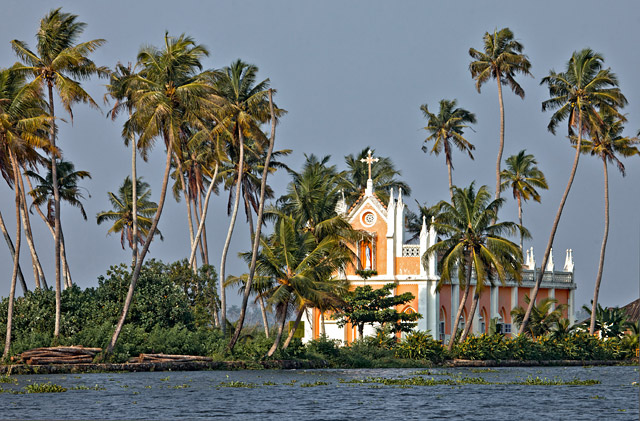
Temples, churches and mosques add a sudden burst to otherwise blue and green expanse of the backwaters. Sometimes they appear to be in a place nowhere and completely inaccessible, which is true to some extent because a lot of places in the backwaters can only be approached by a boat, with no road access to the places.
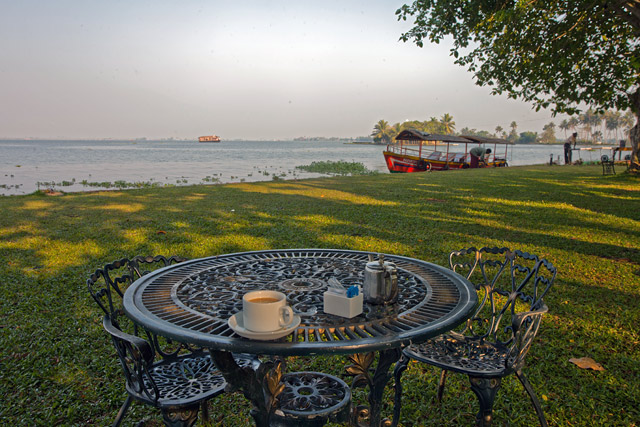
Tourism, of course, is now one of the biggest activities in the backwaters. Houseboats that once used to transport rice to the markets now troll the backwaters with tourists on board. Luxury resorts line the edge of the backwaters, offering their guests an uninterrupted view of the lake all through the day. There are many factors that might have contributed to this, including an amazing marketing effort from the government of Kerala besides the fact that this is indeed a beautiful location.
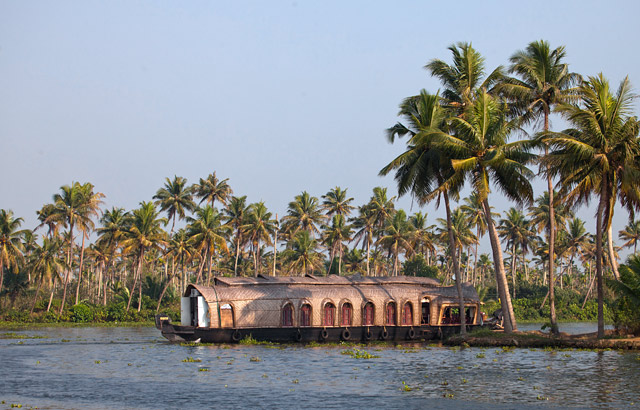
The houseboats are a great way to explore the expanse of backwaters. They come with all creature comforts – well equipped rooms and kitchen – and can effortlessly move through the vast stretch of Vembanad Lake. However, these big boats can only cruise along the major channels and are not capable of reaching the islands in the interior. To compare, travelling on them is like moving on a highway (a picturesque one this time), but missing out everything that happens along the smaller roads, where life usually unfolds closer to you. A better way to to explore the region and get up-close to the everything is to take small shikaras or row boats that can go into the smallest of the canals.
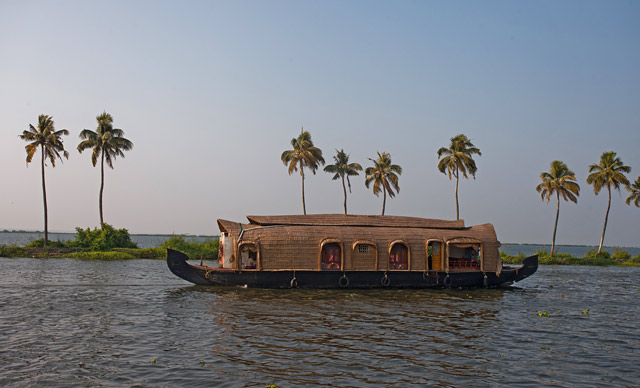
The backwaters also suffer from their share of problems, thanks to growing population, human control over water and growing tourism activity. Rules of construction are relaxed on the resorts springing up next to the lake, which are often permitted to build right next to the lake. The houseboats release many pollutants into the lake. Agricultural activity releases a large amount of fertilizers and pesticides into the lake, resulting in diminishing population of aquatic life. Water hyacinth, which strives on water with fertilizer content, is seen everywhere. Because the salinity of water is controlled artificially by bunds and locks, the variety and diversity in aquatic life has reduced over the years. However, for a visitor who is spending a brief holiday floating in the water, these problems remain faraway occurrences.