From my vantage point in the caves up in the hill, I could see the Bhoothanatha Temple at the edge of Agastya Lake. Unlike the caves that are full of people, the temple premises was empty, save for occasional drifting visitors. Sitting in the temple courtyard one evening, I watched the cool breeze ruffled the lake surface and the evening sun disappear behind the town.
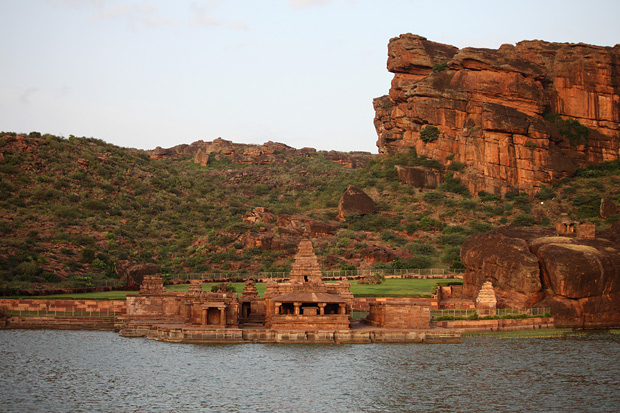
The temple is the last place I visited in Badami. I have a strange apprehension about approaching places that are beautiful beyond description. I admire them from a distance for a long time and feel good about being in its vicinity. Sometimes I feel contented just to be able to see it from far than approaching it from close quarters and observing its cross sections. I spent many hours walking along the lake, keeping the temple in the view and postponing the visit till the last day. May be I was afraid that it would not live up to my expectation. Or may be I was afraid that the experience is complete on being there, leaving me with nothing further to look for.
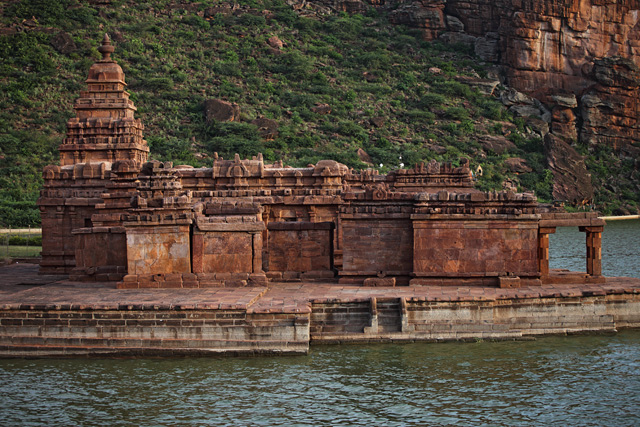
The setup of Bhoothanatha Temple is grand. Surrounded by walls of red sandstone rocks on three sides and the waters of the lake lapping up the steps in the front, it seems like a magical land that could only be imagined in a painting. The temple itself is a simple structure with an array of round pillar enclosed by a parapet in the front and a small room forming the sanctum. The sandstones walls kissed by the gentle waves from the lake glow brightly in the evening sun.
During my wanderings along the lake shore, I drifted towards the hills and climbed a series of steps that took me up the table land above. The steps climb through narrow gaps in the rocks that are wide enough at places just to let in a few people at a time. Sunlight peering through the gap and flaring up small sections of the wall make a colourful play of light and shade in these fissures.
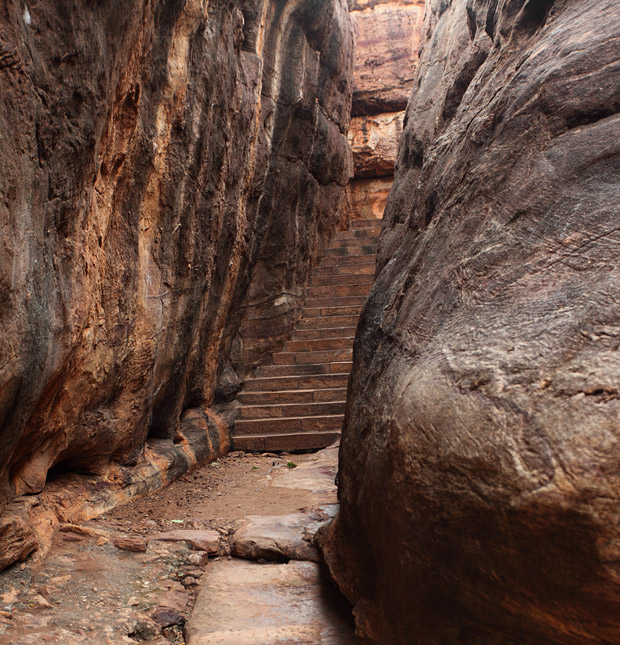
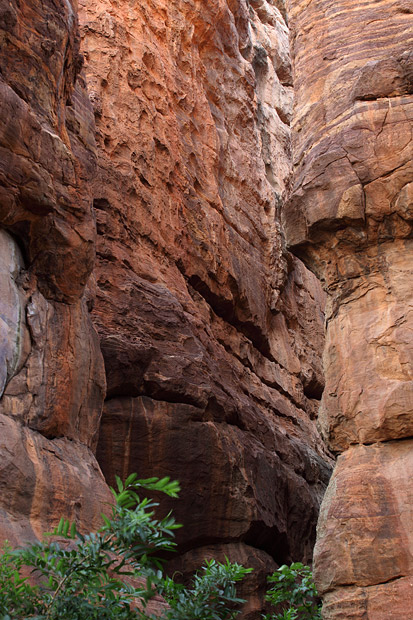
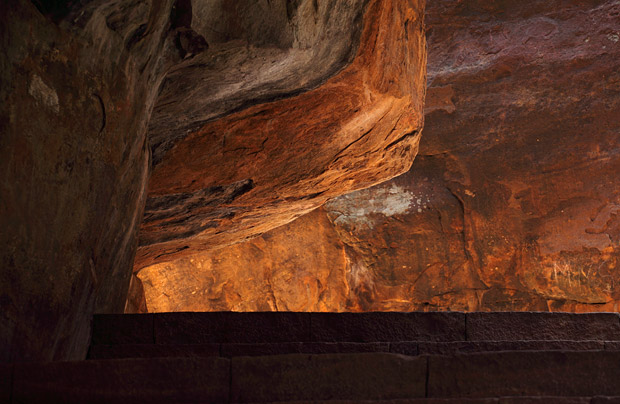
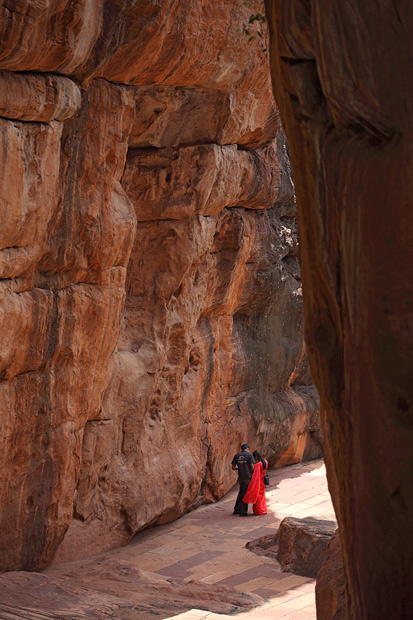
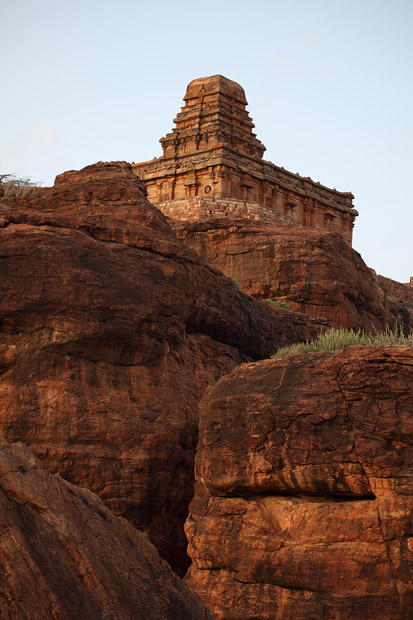
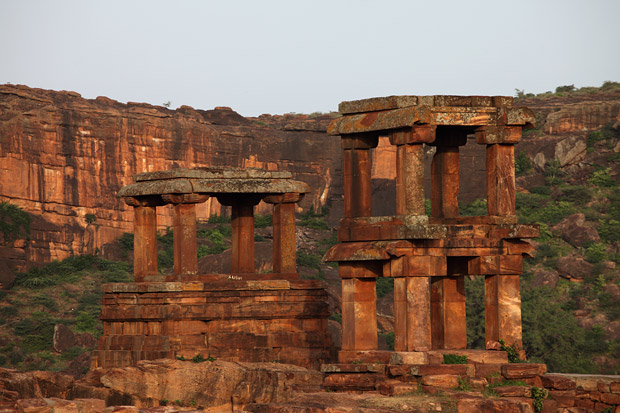
Up on the hill are a few temples, a few pillars and remains of a fort. Fortification of the hill must have been an easy task, as it mostly involved building walls to restrict entry through the cracks in the rock. I was hoping to see some bird life in the scrub vegetation that spread along the plateau, but the area seemed lifeless, save for the monkeys. Next day, I walked for a few hours along with a local guide who took me deeper into the hills, seeing no more than a handful of birds of common species.

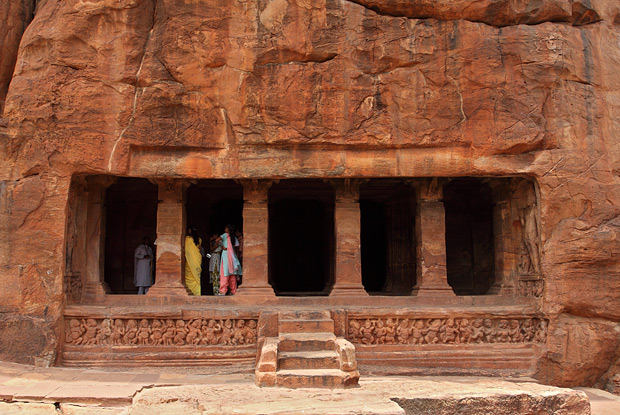
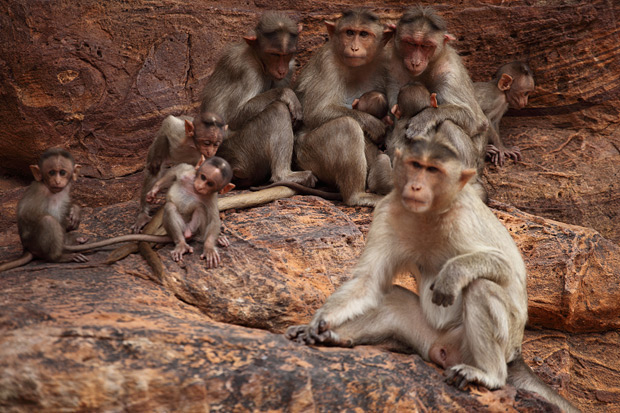
Four cave temples carved halfway up a cliff are the hallmark of Badami. This is where most tourists are and hence this is where Badami’s monkeys also prefer to hangout. They snatch cameras from people, sneak behind them to look for stuff to eat and simply pull away anything that can be pulled away. That means being occasionally disturbed from your indulgence into the carvings when a woman screams or a man shouts at these mischievous creatures. ASI displays a prominent warning sign, but monkeys need more than a warning sign to deter them.
I watched the macaques climb down the cliff and carefully sneak behind people as I waited for a guide to be available. They were not always stealthy; when they found someone visibly vulnerable, they simply snarled and openly looted what they desired. In the thirty minutes of wait for the ASI guide, I had seen a footwear stolen, a bag nearly snatched and a bunch of crossanda flowers pulled out from a lady’s braids.
My guide Chandru was knowledgeable and articulative. He stood in dance positions and held his hands in mudras as he described how the 18-handed statue of nataraja can form 91 mudras by choosing any one of the left hands in combination with any one of the right hand.
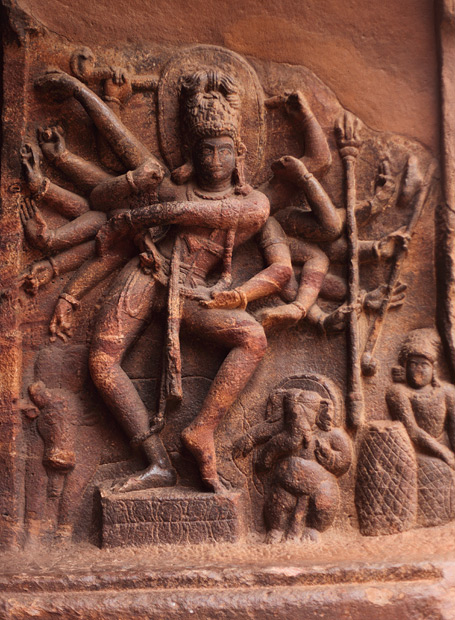
There are four cave temples in Badami with three dedicated to Vedic gods. The fourth one is a Jain Temple. The first three temples have some elaborate sandstone carvings of Hindu Pantheon such as Vamana stepping over Bali, dancing Nataraja, Varaha carrying Bhudevi and Vishnu seated on Vasuki. The Jain temple, smallest of the four has a series of Tirthankaras carved along the walls.
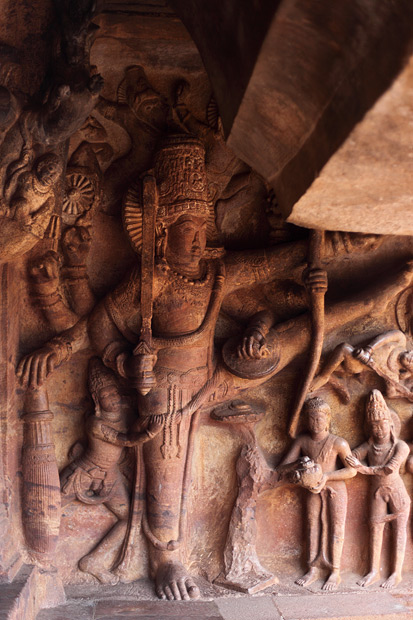
We moved through caves as Chandru described the iconography and architecture, but my questions to him were mostly related to history. The inscriptions in Badami and surrounding areas are a key to rediscovering most of the Chalukyan history. An inscription carved somewhere high up the rocks on the cliff opposite to the caves describes the times of the first Chalukyan Kings. Another inscription by Pallava King Narasimhavarman I informs of the brief occupation of Badami by Pallavas, while one in faraway Kanchi’s Kailasanath temple inscribed by Chalukya Vikramaditya II indicates the reversal of fortune for Pallavas. A detailed inscription on a pillar in nearby Mahakoota Village, carved in the time of king Mangalesha, provides much needed information about the lineage of Chalukyas and the spread of their kingdom. An inscriptions in Aihole Village describe the victory of Pulikeshi II over Harshavardhana and another one gives vague clues about the time period of poet Kalidasa.
The early Chalukyas ruled Badami from 6th to 8th century before the region was annexed by Rashtrakutas. In 12th century, Rashtrakutas were overpowered by later Chalukyas, whose lineage from the earlier Chalukya Kings is still debated. Badami was later ruled by Hoysala Kings, Vijayanagar Dynasty, Adil Shahis from Bijapur, Tipu Sultan and the British.