This article appeared in March issue of Terrascape, a travel magazine for which I am an editorial consultant and also write a column on photography. Read all the earlier earlier travel photography articles on India Travel Blog.
Monuments, heritage sites and artworks can be tricky subjects to photograph. Although the subjects can be beautiful in itself and it may not take much effort to make them look good (Taj Mahal, for instance), photographers often commit the mistake of merely reproducing the work of art. A simple photograph of a mural becomes just a replica of the original work of art even if it is looking good, where the photographer is not really adding any value. Unless great care is taken, picture of a sculpture or a monument may end up becoming a two dimensional repetition of the subject and may even loose the charm in the original work. The photographer must make an effort to showcase a monument or sculpture from different perspectives. Let’s look at ways to overcome these challenges.
Lighting. When the light falling on an object is incident from a side of the object and not directly from the front or behind the object, it casts shadows at the edges and at the depressions. When the light is directly on the subject, all shadows are eliminated, making it flat and two dimensional in your image. Backlit objects appear dark in the picture. Take photographs at the time of the day when you have sidelight, which helps create the third dimension in your photograph. At the same time, make sure you are not shooting in very harsh light, when shadows cast are very dark and you may not be able to capture details in the shaded areas.
Some monuments managed by Archaeological Survey of India have ‘Sound and Light Shows’ in the evenings. Carry a tripod and photograph them in the colourful floodlights.
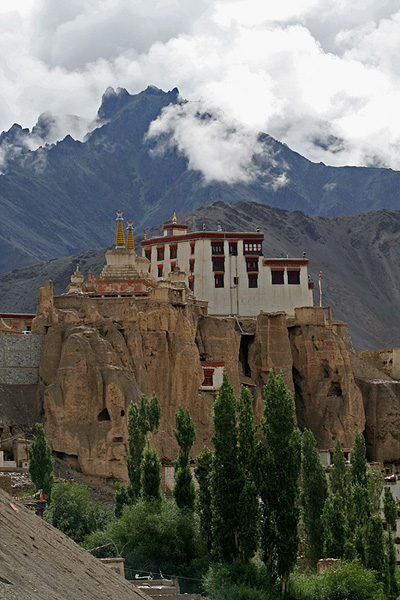
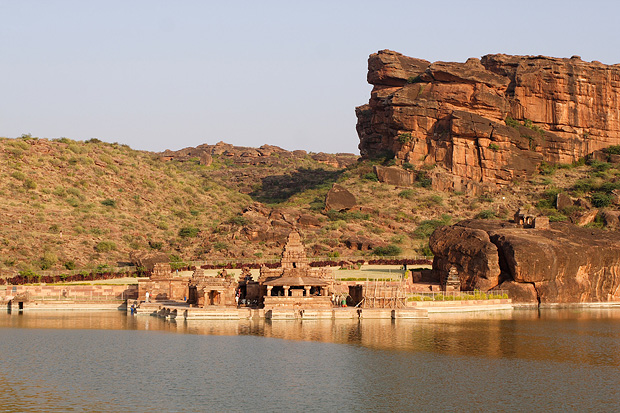
Environment. If the monument is in a dramatic location, include its environment. Take a picture of Taj Mahal with River Yamuna in front of it. Photograph Hampi’s monuments against the boulder strewn landscapes or Mandu’s structures against the water bodies. A good surrounding can enhance the beauty of the monument by manifolds in your photograph.
Variations. A few guidelines that apply in making any subject look good in a photograph can also be applied to photographing monuments. Try to capture multiple perspectives by going around the monument. Shoot in early morning light. Capture not just the details of a monument, but silhouettes as well. Include people in the frame to show scale and infuse some life into the image. Remember that every subject offers endless possibilities in capturing it. Study the subject well; come back in another time of the day or in a different seasons and see variation in the moods of the monument. The variety you will then see in your photograph will surprise you.
Also: see details of Chadar Expedition in January 2012, lead by tour leader Manish Lakhani
Some of you might have been seeing images from my Chadar Expedition – walking on frozen Zanskar River on paintedstork facebook page. I had given a brief introduction to the trek along with a photograph in an earlier post, soon after I returned from the memorable three-week expedition. Before I delve into the depths of it and write more on Chadar, here is a documentary worth seeing for anyone who is remotely interested in Ladakh and Zanskar regions, especially for those who intend to do this trek in the coming years.
Discovery Channel is running a documentary on ‘Chadar – The Ice Trail.’ It is being played almost every alternate day this week. Take a look at the schedule and consider watching this. Here is a short trailer on youtube. It is also worthwhile remembering that Border Roads Organization is building a road running parallel to the river, which will make the trek a redundant and noisy experience in about five to ten years time. But the road has the potential to change the lives of people of Zanskar forever and bring in considerable improvement in quality of life.
India Travel Blog Newsletter is sent approximately once a month (sometimes less frequently), summarizing the previous month’s activity and giving a glimpse of the coming month on the website. Subscribe to the newsletter by keying in your email address in the box on the top of the sidebar. Here is a copy of this month’s newsletter, dispatched today.
—
Hello,
Here is the March edition of India Travel Blog Newsletter. Besides listing the stories published on the blog for last two months, I am also excited to announce new photography tours and workshops coming up in the next few months.
Photography Tours and Workshops
Photography Tour of Ladakh. Come July, I we will be leading a photography tour to Ladakh – the land of mountains, high passes and an ancient Buddhist Culture. Be ready to be awed as you wander in the mountains photographing stark yet beautiful landscapes of Ladakh. Travel with photography experts and capture the beauty of super-blue lakes, see the views from the highest motorable road in the world, watch wildlife that can be seen nowhere else in the country and witness rituals of a culture that has kept its traditions alive for almost a millennium.
Go here to see more details on the tour and to signup.
Photography Workshop in Bangalore. If you are in Bangalore area and keen to work on your photography skills, consider signing up for our photography workshop in the last weekend of March. his workshop introduces you to the technical, artistic and social aspects of photography. You will learn about the concepts of photography, what the different modes of a camera mean, how to compose a photograph so that it catches the eye, how to post-process it to reflect reality or make it artistic, and, in an increasingly connected world, how to share it online.
Go here to see more details on the workshop and to register.
Winter in Ladakh. I spent three weeks in Ladakh in the months of January-February. With clear blue skies and carpets of snow on the mountains, the landscapes of Ladakh look much different from summer months. I was also fortunate to see a Snow Leopard chasing a group of Ibex during the last days of my travels in Ladakh. Also see a photo-essay on Thiksey Monastery. Keep a watch for more stories and images coming up in the next few weeks from Ladakh on the blog.
Keoladeo National Park, Bharatpur. Read a travelogue and see photographs, published on Harmony Magazine, on the birds and animals in Keoladeo National Park, Bharatpur, from my visit to the park in November 2010. The story also has links to more posts on sighting birds and mammals in the park.