Ladakh: Complete Guide to Leh
This post is a travel guide to Leh. See earlier posts in the series for my travelogue on Leh.
PLACES TO SEE
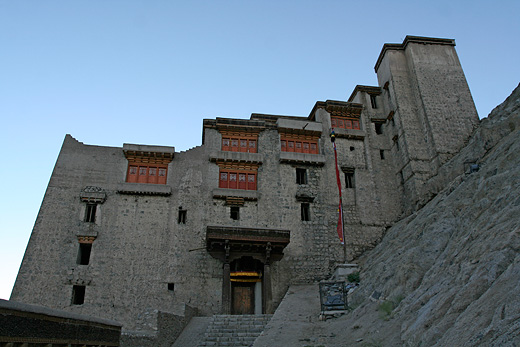
Leh Palace. The nine-story palace is built on a hill overlooking the main market. The palace was built in the first half of seventeenth century, and is probably the largest building in Leh (and hence entire Ladakh) even today. It was built by Sengge Namgyal, one of the well known rulers of Ladakh. The palace is now under renovation and is mostly empty inside. Guidebooks and ASI sign may claim that the palace is open from 6am to 6pm. But you might find the doors closed if you come at the hour of sunrise.
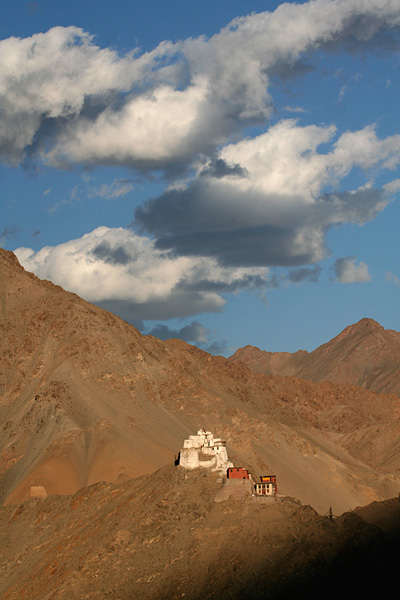
Old Castle and Namgyal Tsemo Gompa. The two structures are adjacent to each other on a tall hill, and are visible from anywhere in the town. They were built by Tashi Namgyal, the king of Ladakh three generations before Sengge Namgyal. The castle is a small building, and is closed for visitors. The gompa (Buddhist monastery) doesn’t have any lamas living and studying there. A monk from Sankar Gompa comes here every morning to perform daily puja.
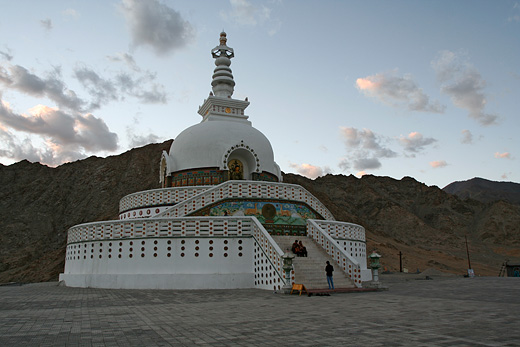
Shanti Stupa. This is a relatively new structure built on a hill on the side of the town opposite to Namgyal Tsemo. It is a good place to spend an evening looking down at Leh town and the Indus Valley, and to watch sunset over the mountains.
Soma Gompa. Soma Gompa is one of the newer monasteries in town. The prayer hall here lacks the rich decorations seen in older monasteries in rest of Ladakh. Visit the monastery to watch the gathering of monks for early morning prayers.
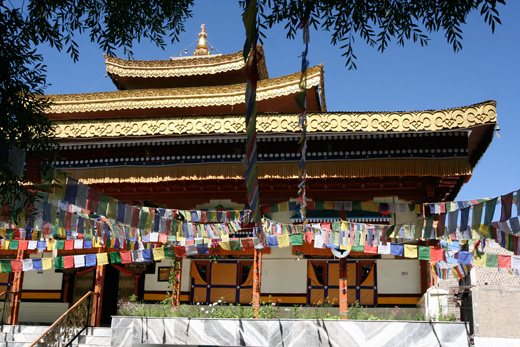
Sankar Gompa. A 15-minute walk from the main market is Sankar Gompa, located in the quiet village of Sankar. The monastery is open to visitors only for a few hours in the morning and evening. Get to know the timings before you go.
MORE INFORMATION
The town is centered around the main market, a small road where tourist amenities can be found. Most travel agents in Leh are located here, and can help you with your travels in Ladakh. If you are planning to go on a trek or jeep ride to any of the tourist destinations (like Pangong, Nubra, Tso Moriri), but can’t afford to hire a jeep on your own, you can register with one of the agents who might bundle a few more tourists with you to spread the cost. You will see signs posted in front travel agents offices about planned schedule of treks and tours for which they need more people.
Most upmarket hotels are located on Fort Road, which begins from one end of the market. Budget guesthouses can be found in changspa (or chanspa). If you prefer a quiet place with no traffic, noise or people, look for accommodation in Sankar Village. It is far from the main market compared to Fort Road or Changspa, so you would be better off there only if you are staying for a longer duration.
Ladakhi Food is hard to come by anywhere in Leh. Restaurants in the market serve Indian, Italian, Israeli and continental food and little else. If you are looking for something Ladakhi, try the cafe at Women’s Alliance on Sankar Road. Their preparations are not entirely authentic local cuisine, but they try. If you walk on a narrow lane next to SBI on the main market, you can buy freshly prepared Ladakhi Bread.