Angadi Village and the origin of Hoysala Dynasty
This is a guest post from Lakshmi Sharath, a travel writer who has been researching on the Hoysala Dynasty for some time now. Lakshmi blogs at backpakker. Stay tuned to this page to know more on the Hoysala dynasty. Text and photographs by Lakshmi.
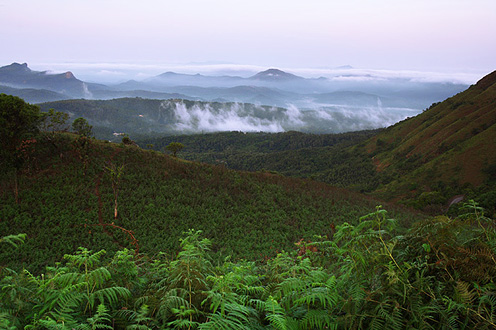
The meandering roads snaked around a green fabric of coffee plantations and dense forests. The leaves of the pepper crops curled around the silver oak trees. It had rained a bit but the afternoon sun was now shining in all its glory. The snowy white blossoms of the coffee plants glistened even further . The dusty hamlets interrupted this green mosaic as they emerged one after another . It was late afternoon and the roads were empty .
We were in Malenadu or the hilly regions of Karnataka looking for a humble beginning of a dynasty which had ruled this region more than thousand years ago. This was not a pleasure trip, but a journey that took us down eons of history , a quest in search of folklores and myths that gave an identity to the Hoysala Dynasty .Our destination was Angadi, a small hamlet lost in the hills of Karnataka, enveloped by coffee plantations and lush green fields. Nestled in the Western Ghats, in South India in the heart of coffee country, this nondescript village was once the birthplace of a powerful dynasty which ruled South India thousands of years ago.
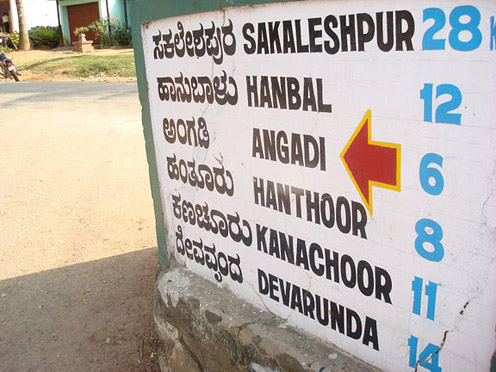
We stopped by at a small town, Janapura to have some tea and take in the fresh air. The directions were loud and clear. Angadi was a further seven kms away. In about ten minutes we were there. A small village with a few houses scattered here and there , a couple of shops, a lone bus stand and green fields. At first glance, it looked like just another hamlet lost to the world. And yet, it was the cradle of a dynasty that built beautiful temples and made several conquests . However to our eyes, there was nothing historic about it. And then we took a short stroll, wondering if we had indeed come to the right village. To prove us right, stood a faded old relic under the shade of a tree ..a Hoysala inscription . We were indeed on the right track.
Angadi in Kannada means shop, but we hardly found any shops around . Surrounded by coffee plantations and open fields, it seemed to be a sleepy market . We finally found a small shop and asked them the route to the “ Devasthanam “ meaning temple in the local lingo. A couple of hands pointed uphill which took us through a coffee plantation which led to mud roads which split into two. There was not a soul around. We followed the road going upward and encountered steep hairpin bends which curved through the coffee plantations and led us to the Durga or the Vasantha Parameshwari temple . And this was the setting of the origins of the Dynasty. It took us to a scene enacted thousand years ago.
The origin of Hoysalas
Hoy Sala ” ( Strike Sala ! ) said the guru Sudatta Muni to his student , Sala who was in an armed combat with a tiger . The beast had just attached the duo who were immersed in rituals at a Durga or Vasantha Parameshwari temple in a village called Sasakapura or Sosevur. The student struck the animal in one blow, immortalizing himself and his victim . The guru was so pleased that he asked Sala to establish a kingdom and the Hoysala dynasty was established with Sosevur as the capital . The folklore became so popular that every temple of the Hoysalas has this story carved in stone and it became the royal emblem of the dynasty.
Historians however attribute the sculpture to the victory of the Hoysalas over the Cholas by Vishnuvardhan, one of the Hoysala rulers . The tiger, being a symbol of the Cholas is shown subdued by a soldier. The incident , nevertheless is believed to have happenned at Sasakapura or Sosevur which is today identified as Angadi, a small hamlet in Chikmagalur district in Karnataka. The temple of the Goddess , along with the ruins of more temples and basadis is the only proof of this myth .
The Hoysalas were not born kings but they ruled for 300 years . They were natives of Malnad, Karnataka and were tribal chiefs who were subordinates of the Western Chalukyas. Some inscriptions show them as lords of the Male (hills) while some indicate that they were descendants of the Yadava clan. Historically though the first Hoysala family record is dated 950 and names Arekalla as the chieftain, followed by Maruga and Nripa Kama I (976) .
But the kings who shaped the dynasties were Vishnuvardhan and Veera Bhallalla who became independent from the Chalukyas . They are remembered today for their patronage to arts along with their exploits on the battlefield – a baffling 1500 temples built in 958 centres, of which the two famous ones are Belur and Halebid which were the capital cities of the dynasty. However, hardly a 100 survive today. Our trail had taken us down to 25 villages including Angadi , the original capital of the empire, where it all began.
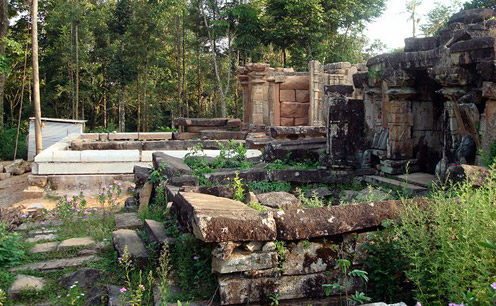
The Durga temple was renovated and was well maintained . It did not look like a typical Hoysala temple either , going by their style . A tall structure supported by pillars with sculptures stood close by. The priest explained to us that the temple, which has been renovated recently was the original temple where Sala had killed the legendary tiger. The pillars he said were used as a swing to cradle the Gods during festivals. I had read that there was the ruins of a Chennakesava temple here similar to the Belur temple . We asked him where the ruins were and he told us to follow the roads that went below. We were told that there were three temples as well as basadis .
The ruins of Angadi
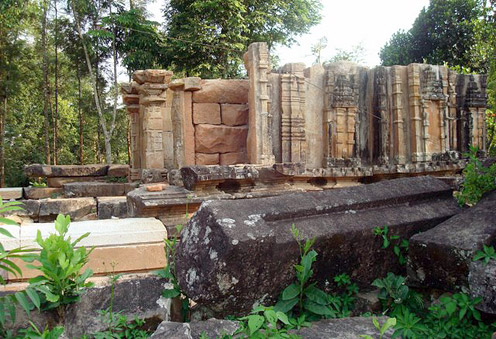
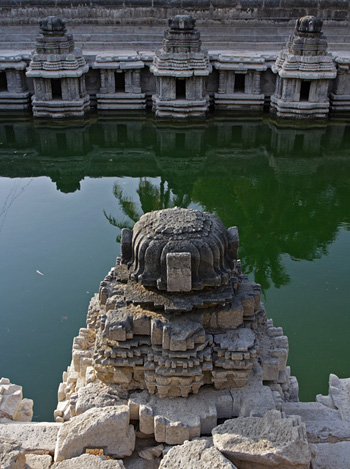
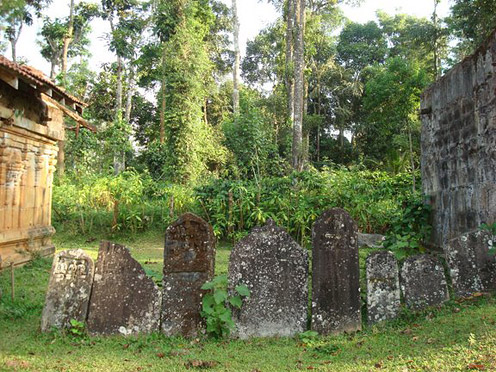
The priest guided us and we followed the road below until we came to almost a deadend. There seemed to be a rugged path above as we climbed on the rocks that led us inside the coffee plantation. We saw a few basadis with some sculptures inside while a few were left wide in the open. It was silent except for some parakeets which were shrieking in excitement. We almost thought the place was to ourselves when we heard some voices . We squinted through the trees and found some workers. We went down and climbed another path where the ruins of the three temples awaited us . The Chennakesava temple , along with Patalarudreshwara and Mallikarjuna lay absolutely in ruins..The structures were being laid by the ASI workers who had just begun restoring these temples. The idols and sculptures were kept safely, especially the Chennakesava which stood in all its glory in the glare of the setting sun. As the sun touched down, we sat a while on the broken pillars gazing at the strewn idols and wondering about the times when a dynasty was laying its foundation stone in a small village. It dawned on us at that very moment, that we had just walked into a historic moment.