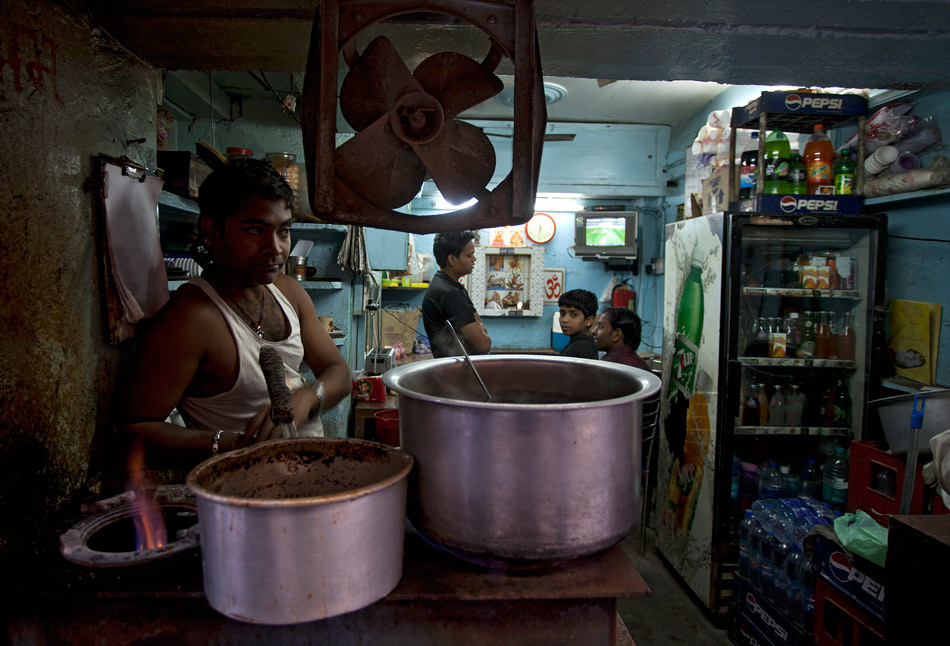
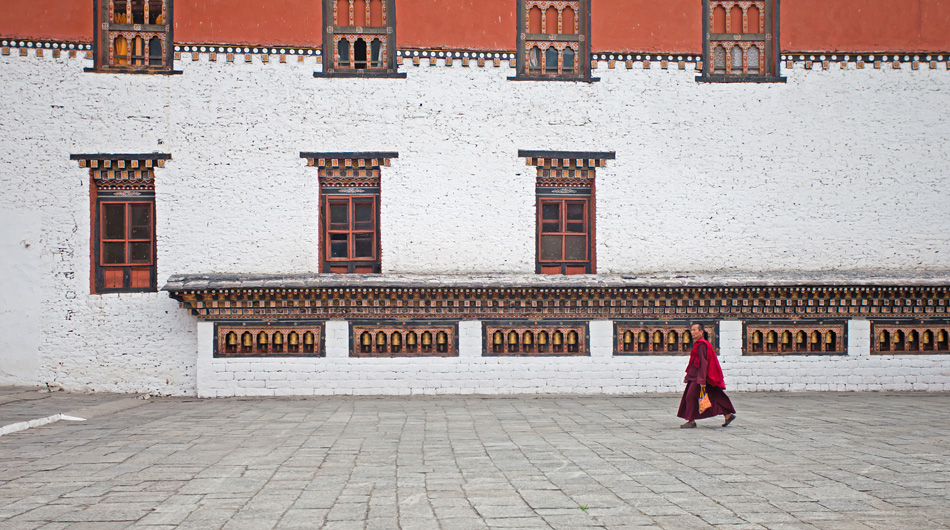
The first thing that comes to your on seeing Tashichho Dzong (dzong: fortress) is its size. It must be easily of the size of three football fields put together lengthwise. Once inside, its tall utse (central tower) and surrounding buildings trying matching its height makes everyone in the dzong appear smaller. The imposing scale of the building repeatedly tells you that it is the power center of Bhutan, while the line of prayer wheels remind you the religious nature of Bhutan’s everyday life.
A part of Tashichho Dzong hosts the government secretariat and the offices of the king, while another part hosts the central monastic body of the country.
“I’d rather take a 12-day trip and spend $100 per night on hotels than a four-day trip where I spend $300 per night on accommodations.” – on Gadling, commenting on a list of Conde Nast Traveller’s ‘best new hotels’, which is full of very expensive hotels.
A statement like this shows how an online magazine or a blog may be able to go extra length in being candid about travel than a print magazine. You will never see such words uttered in a print magazine, where expensive services and products are usually a big source of advertising revenue. If they do, they will probably see their advertisers run away from the next issue, and the magazine closing doors in the subsequent one.
Very often, the mantra of print media is to promote the most expensive – the stuff for which sellers pay to advertise and not necessarily what is best for the traveller. I am often baffled to see ‘Chic clothes for your summer travel, cool things to pack, the list of finest hotels to stay in, and so on..’ in the magazines. The local experience? Of course, the chef at the restaurant in 21st floor of the hotel will dish out some of the finest local dishes. The organized group tour to the local village help you take pictures of people who specially pose for your cameras wearing local clothing..
To be fair for them, the expenses of running a magazine may make publishing such content essential for their survival. And to add further, not all stories tend to have a similar angle. Magazines often do a great deal of research and publish plenty of authentic, original and unheard travel experiences that benefit the travellers. And here in India, a good number of travel magazines, including Outlook Traveller and Lonley Planet, do offer plenty of down to earth and real travel experiences. But it also requires the reader to be alert, who should consciously work to filter the true recommendations against content that is merely a bait for the advertisers.
The above thoughts were scribbled down impulsively when I reflected on Gadling’s story, initially written aggressively and toned down later to look at things analytically than emotionally. I started with an intent to deliver a message about how travel blogs are probably much better off than magazines. But reflecting more on the topic, I realized that blogs do come with their flaws as well. While it is essential for the reader of a travel magazine to analyse the content and see what is good for him/her, perhaps the same applies to blogs too.
A magazine like CNT can afford to work on a list of ‘best new hotels’ by sending their correspondents and stringers to visit the place, perhaps rate them on a set of qualities and parameters, have the editors pour over the reports and eventually produce the list. Not all print magazines may do such extensive work, but there is a good chance that they have done some hard work. But blogs, which too often produce their ‘top 10 lists’ — top 10 honeymoon destinations, top 10 things to do in place X — are more often than not a result of secondary research (hail Google!) or created with limited personal experience (I have seen only place A, B, C in a destination, let me enhance them by calling it the top 3 places to see in the destination). Travel blogs tend to be usually rich in personal experiences, but in many occasions, may not match the quality of the content in a magazine.
Blogs too, especially popular ones that get noticed by a lot of people, may be vulnerable to posting content in favour of a place, service or a product in exchange of some benefits. I must admit here that I have personally accepted invitations to travel at invitees cost and have written about invitees offerings (I must add here that I have limited my stories only to facts and/or personal experiences in all such occasions). I also receive frequent emails where I am offered a payment for a review, post on certain topics or for contextual links within my posts without declaring the sponsor (aka paid news) — something I have never accepted till date. When I was first offered these gigs, I politely wrote back to them on advertising options that I permit on the blog, which never came in favour from the buyers compared to paid posts (now I simply ignore those emails). But blogs may often be tempted by such offers, considering that it takes a lot of time, effort and sometimes even money to regularly maintain a blog.
I began this story in approval of Gadling’s take on print media’s obsession on the expensive, on why blogs may score better in content and why readers may have to filter the content in print media. But as the story progressed and I reflected on all angles to it, I realized that a lot of it may apply to online media as well. What is your experience, and take on this?
I spent a lot of time travelling through Rajasthan, Agra and Varanasi in the winter of 2012-13. In some visits, the focus was all-round photography in the city and in some occasions we wandered the streets aimlessly, holding a camera. Here is a collection of images from the streets, taken during these and earlier visits.
—
The narrow lanes adjoining the ghats in Varanasi offer unlimited street photography opportunities. A part of people’s lives here is lived outside four walls, and they are more often than not happy to share their way of life with strangers. Shops and working spaces in the lanes have an amazing diversity that is perhaps not seen anywhere else in the world in such a small place. Sweet shops, silk handlooms that work in very tiny spaces where you can barely step in, vendors on bicycles crisscrossing the tiny spaces, chai shops, guesthouses, grocery stores, lassi shops, statue-makers,… the list is endless.
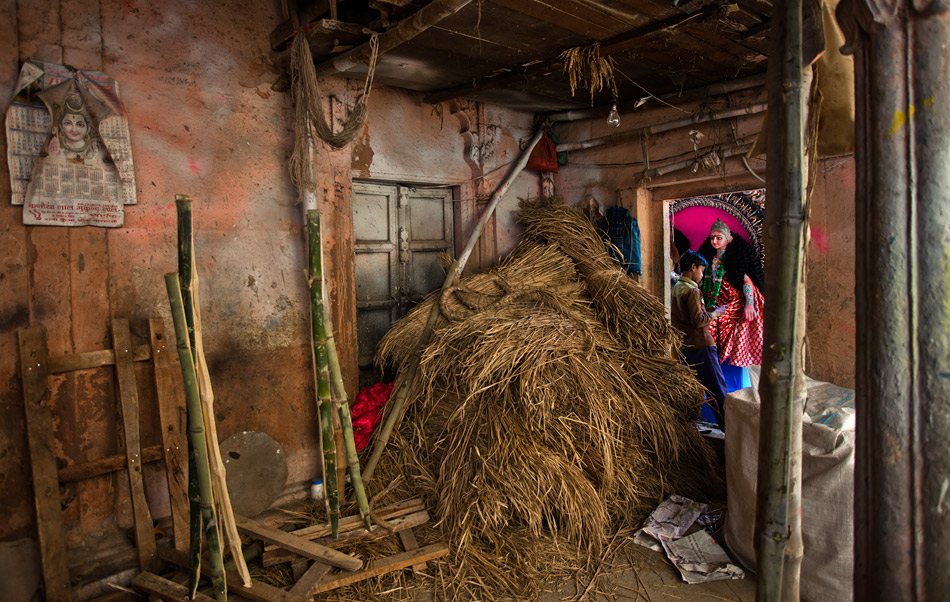
A goddess in the making..
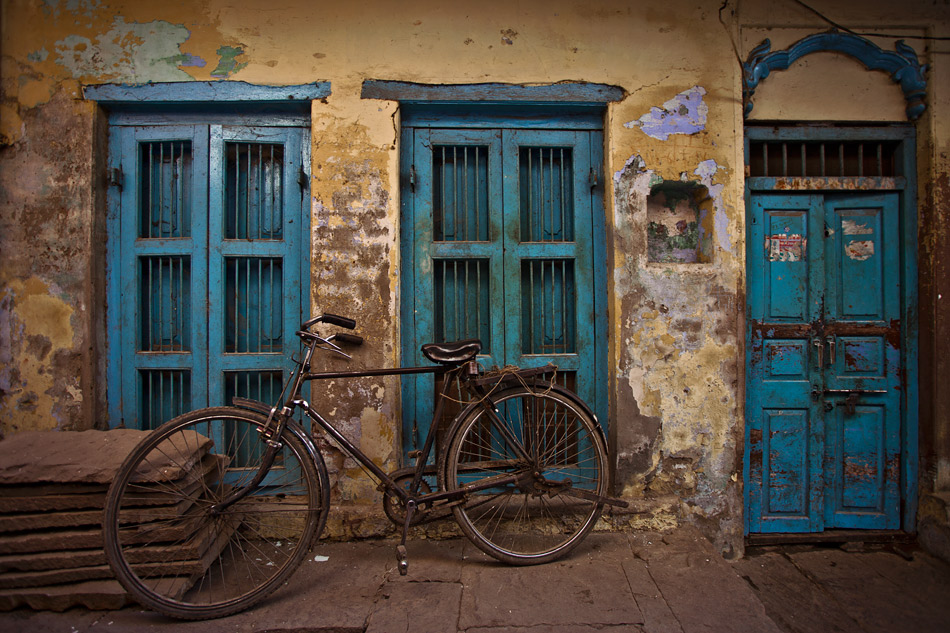
Aging wheels and an aging wall. Bicycles are a convenient tool for crisscrossing the incredibly busy traffic and constrained spaces of Varanasi.
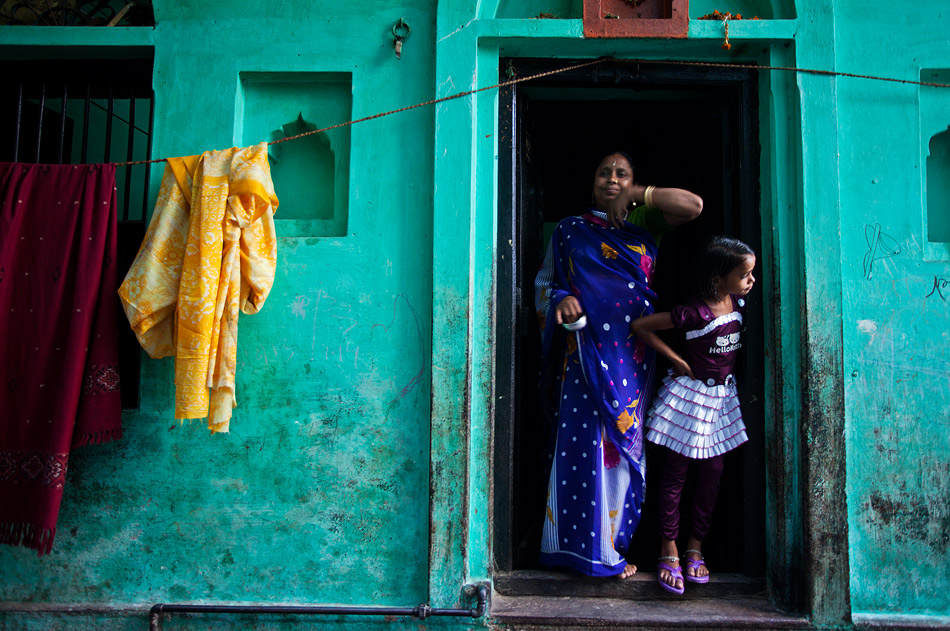
Time to go to school, but friends have not yet arrived..
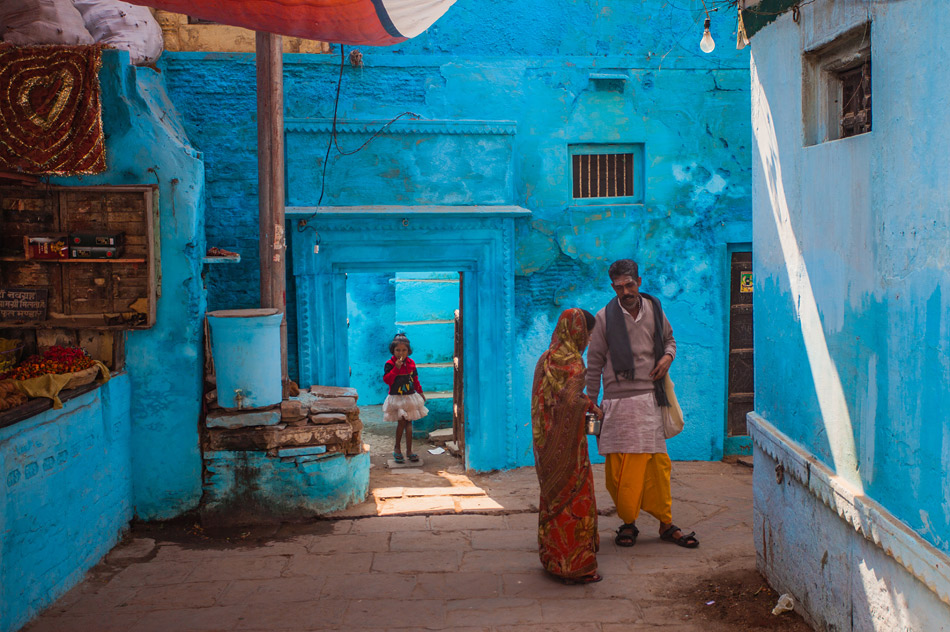
Shy, curious..
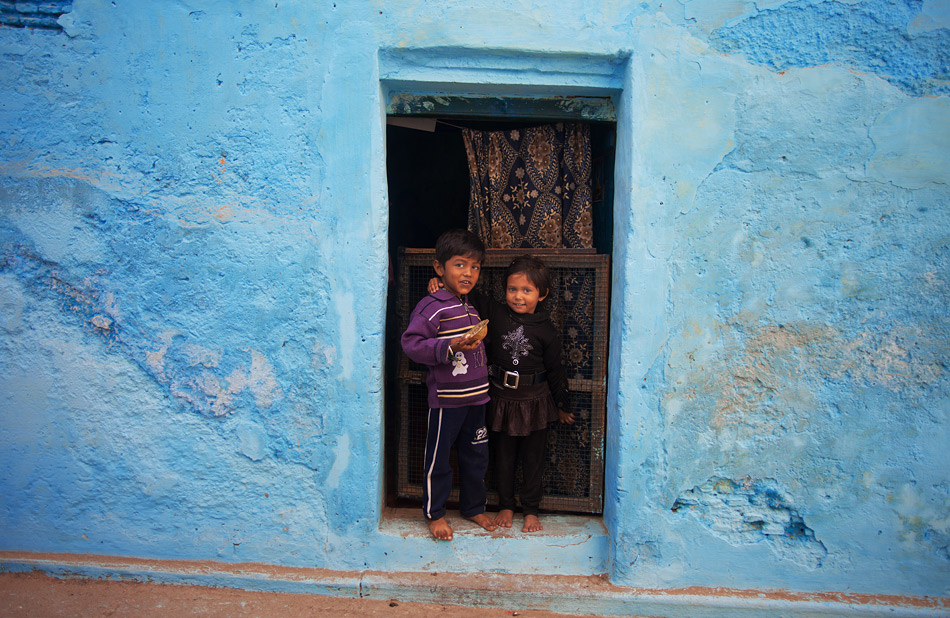
Shy, happy..
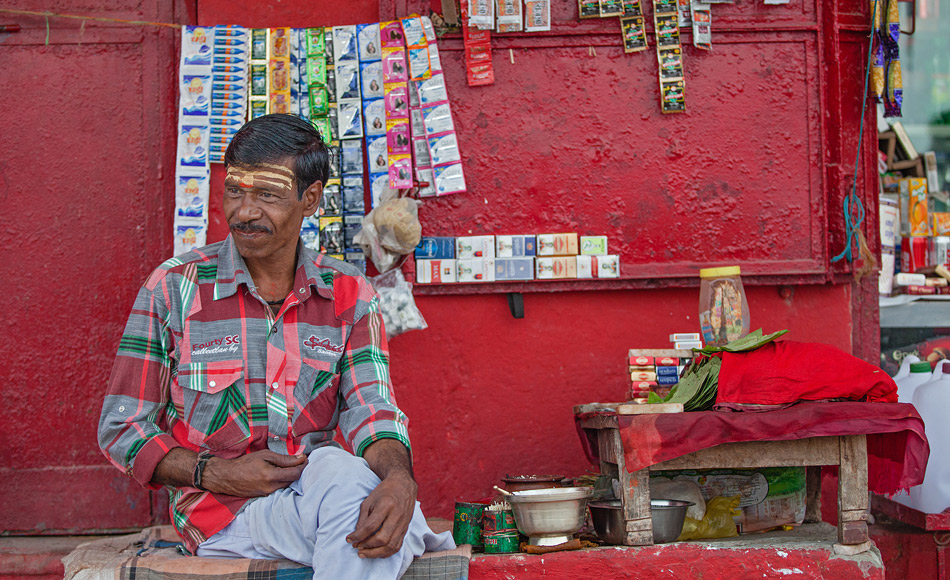
Red! lips, shirt and the wall..

Every second shop in Varanasi seems to specialize in some eatables. Savouries, tea, lassi,..
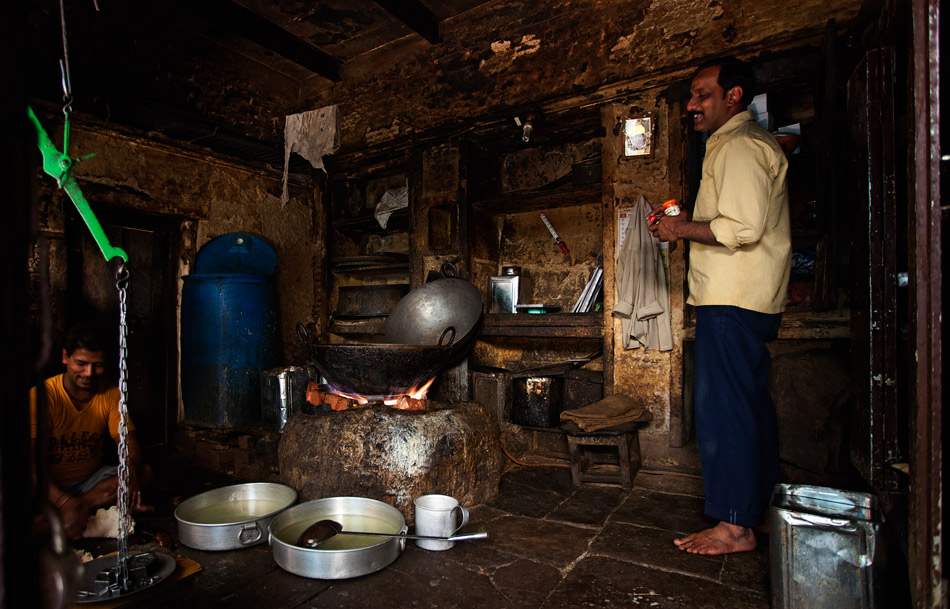
Smiles laced with sugary stuff..
While the diversity of Varanasi seems to be confined to narrow patch of a few kilometers length, the entire state opens up to myriad possibilities in Rajasthan. The old never seems to fade though the new continuously attempts to change the system. In Jaipur, the old city area still mirrors much of its past – its pink facades, turbans, big moustaches, old temples and monuments haven’t yet lost there space to tall glass facades.

Life outside the famous Hawa Mahal, Jaipur. The means of mobility may have changed, but the commotion we see today is perhaps the same that queens witnessed from the windows of Hawa Mahal once.
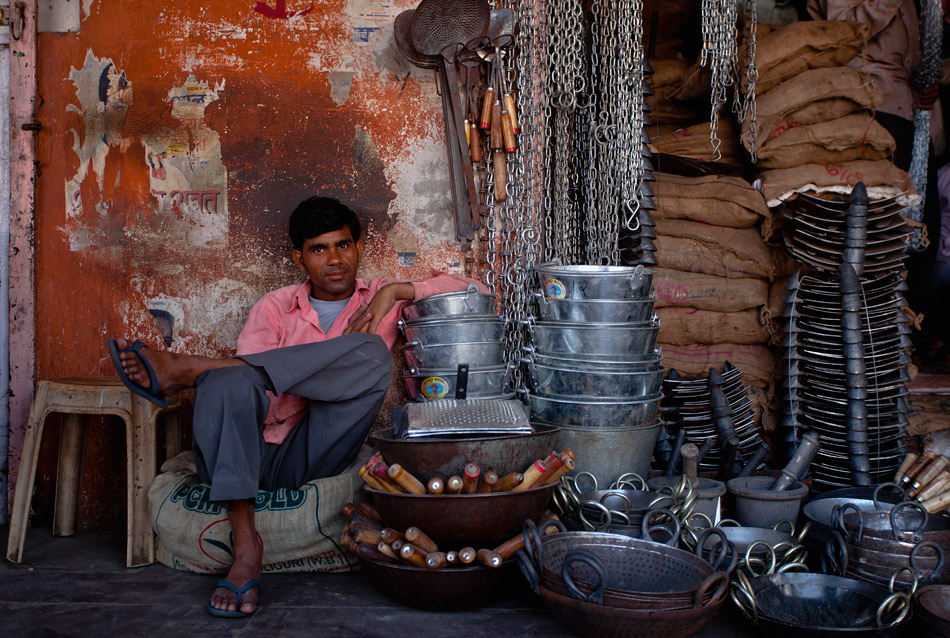
Undecided! Do I smile.. or not? A hardware shop in Jaipur’s old city.
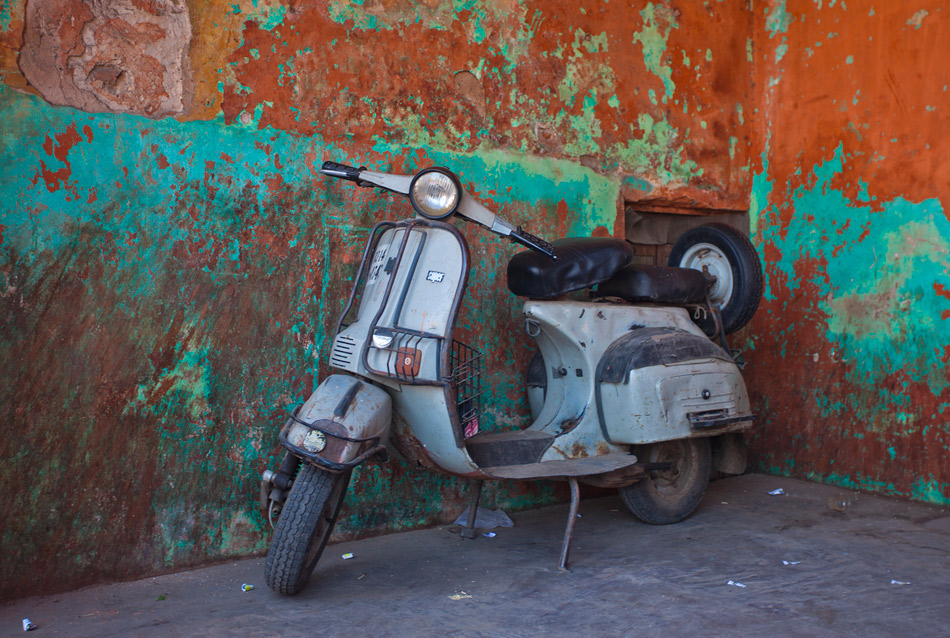
The scooters, once believed to be extinct! Now, the old ones are being brought back on the road and new releases are coming out from factories as well. A case of classics. Photographed somewhere not too faraway from the hardware shop above.

Jaipur’s fetish with pigeons may not be as legendary as its forts and palaces. But it should be. Everyone, everywhere wants to feed them and see them proliferate.
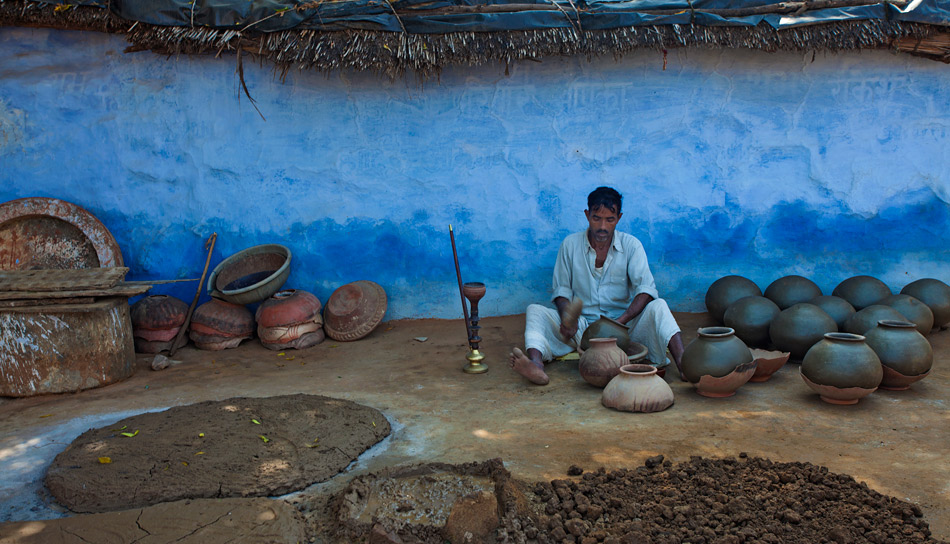
Somewhere on the way from Jaipur to Agra, mud pots still rule over steel utensils.

..and the good old tailors are preferred over ready-to-wear stuff.
Delhi’s Chandni Chowk is another area where, similar to Varanasi, a small place is home to amazing diversity. Ever heard of anything you wanted that is not available in Chandni Chowk?
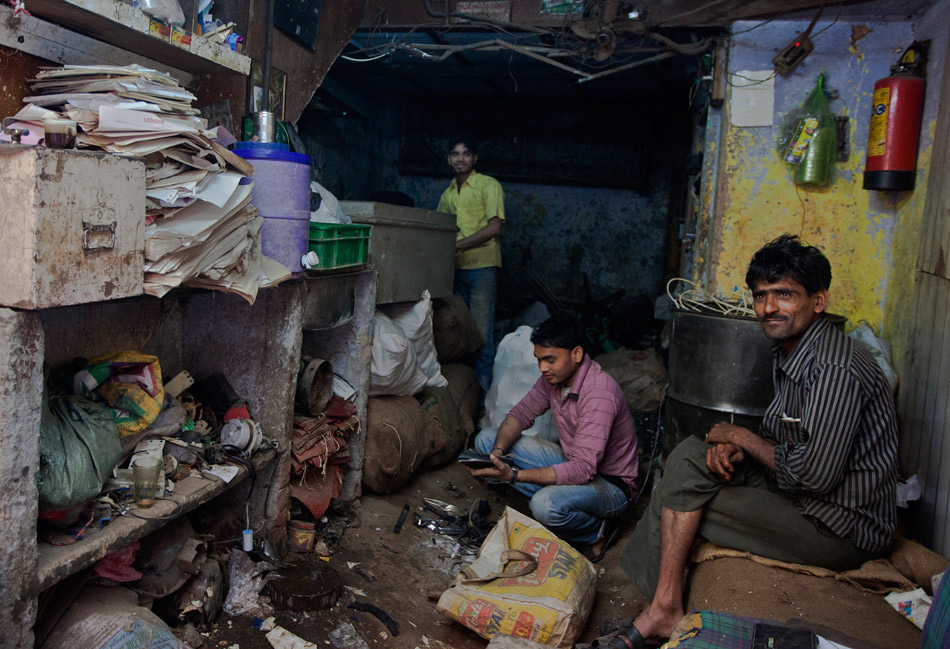
A scrap yard.. Everything can be recycled.