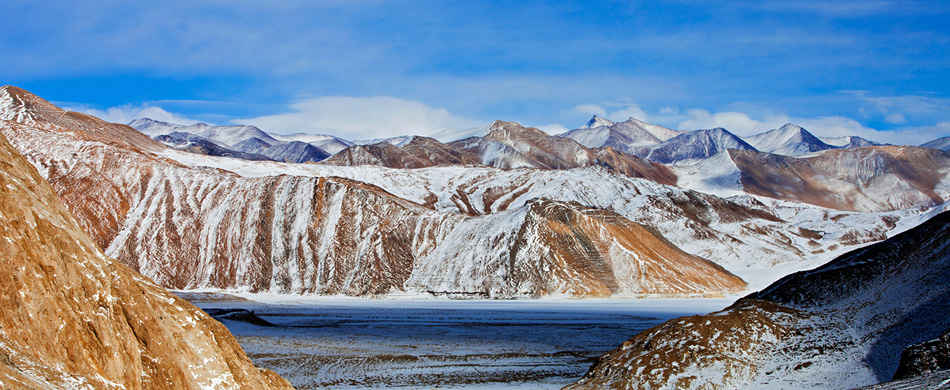
Ladakh wears a white blanket in winter months. Post October, when the temperatures start dipping below the freezing point, the brown and barren mountain slopes get decorated with powdery snow. Mercury dips quickly in November and December months, often going below -30C in the high Changthang Plateau located in western parts of Ladakh bordering Tibet. The huge high altitude lakes in this region that paint the landscape blue in the summer months freeze and turn white. The weather is unforgiving but the landscapes is dressed in bridal wear. Here is a photograph of Pangong Lake made during the harsh winter of January 2013.
My eyes light up every time I walk through the narrow lanes adjoining the rock-cut temples of Badami. Out there, I see the everyday life unfolding in various ways from morning to evening. I see children laughing and running behind each other, little boys making their way to school, women gathering water from the street-side tap, more women cleaning the grains sitting on the veranda, cows wandering aimlessly and goats leashed to prevent them from wandering aimlessly, men busy at work or lazing with a pack of cards… The small area that can crisscrossed in less than 10 minutes has so much life in it, that I don’t tire of walking back and forth a million times. Here is an image, made on one such long walk through the small alleys.

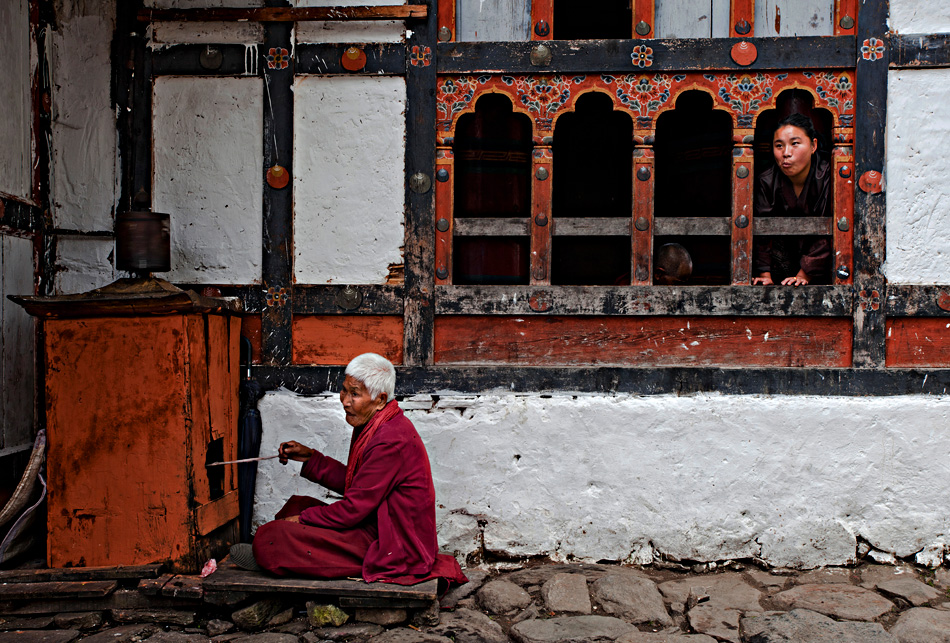
An elderly woman turns a prayer wheel at Kyichu Lhakhang in Paro, Bhutan.
In Bhutan, it is a tradition to retire from everyday life after a certain age and spend rest of the life wearing a monk’s robe in a spiritual quest. A small group of elderly men and women usually congregate in Paro’s Kichu Lahkhang every day, spending their time turning the prayer wheels.
Kichu Lhakhang (lhakhang = temple in dzongkha) is one of the oldest living temples in Bhutan, and played an instrumental role in spreading Bhuddhism to Bhutan.