Travel Photography: Slow shutter speeds

This article appeared in August issue of Terrascape, a travel magazine for which I am an editorial consultant and also write a column on photography. Read all the earlier earlier travel photography articles on India Travel Blog.

The technology of capturing images has come a long way since the time photography was invented. However, despite the advances, they still remain a long way behind the nature’s image capturing technology – the eyes. Cameras have not yet become as sensitive to light as our eyes are. While this poses several limitations, this also allows the cameras to capture some interesting images that eyes can’t witness.

When photographing objects in low-light, such as a landscape well after sunset or a dimly lit room, it takes a long time for a camera to record the image, thanks to the limited sensitivity of the cameras to the light. This means the shutter has to remain open for not just a fraction of a second that we are normally used to, but a few seconds to even a few minutes before the picture gets taken. Due to this, objects in motion register blurred or as streaks in the image, creating interesting effects. Let’s explore how we take advantage of this.

To be able to make images with long exposure duration (typically called slow shutter speeds), you require camera that permits you to set the shutter speeds manually. This feature is available in all DSLR cameras and many advanced aim-and-shoot cameras. You also require a sturdy tripod, as the camera can’t be held steady with your hands for such long durations.

Let’s explore some subjects that offer some interesting effects with slow shutter speeds.
slow shutter speeds

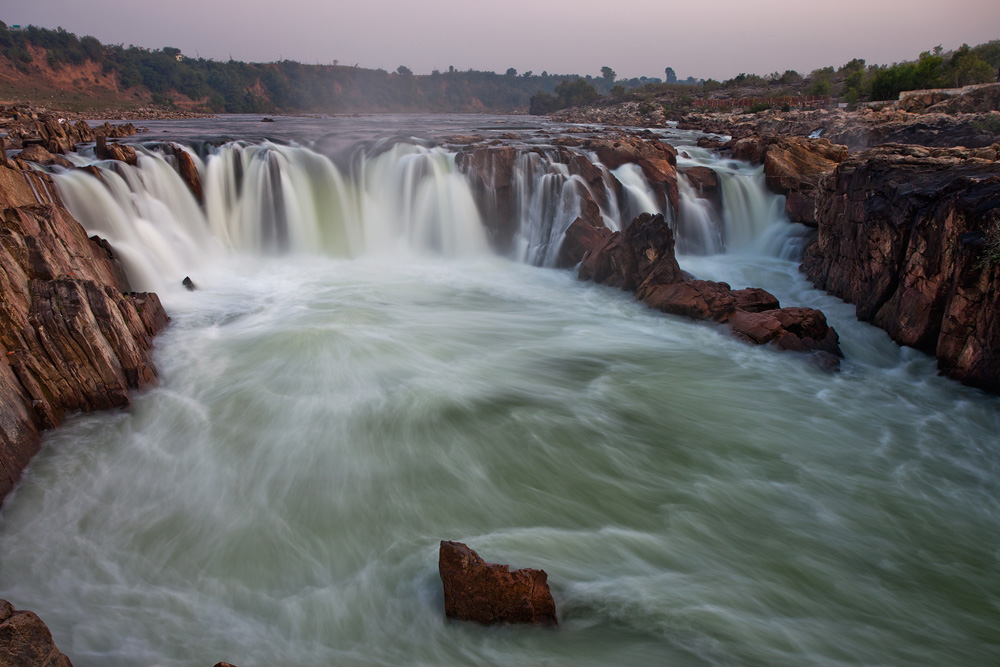
Waterfalls. When you photograph a waterfall at shutter speeds in the range of 0.2 to 2 seconds duration, the movement of the water gets captured in your image and the flowing water gives a silky effect. This looks much more beautiful than waterfalls photographed at normal shutter speeds, where the fall appears frozen, as if the water is hanging mid-air and not moving.
slow shutter speeds

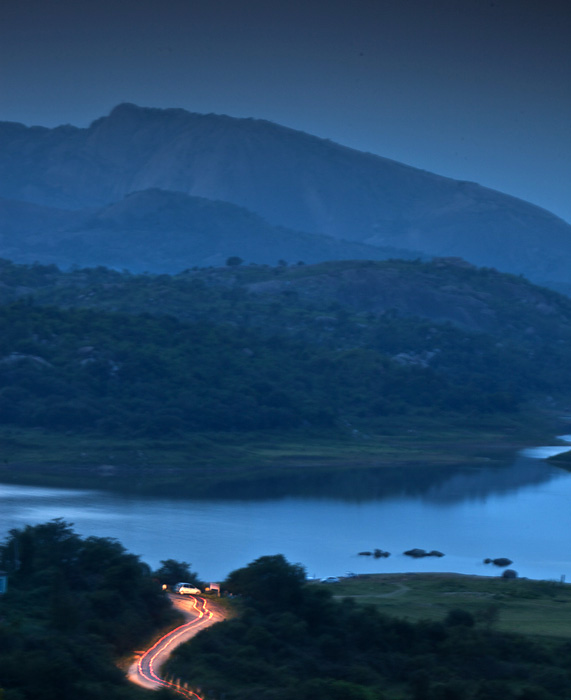
Moving Vehicles. The headlights and tail lights of moving vehicles in the night appear as glowing streaks when you photograph them at slow shutter speeds, typically longer than a few seconds. In a road with two-way traffic, you see the lights divided into red streaks for vehicles moving away from you (due to the colour of tail lights) and white streaks for vehicles moving towards you (due to headlights). The moving vehicles themselves may not appear as defined objects in the image, but the buildings and immovable objects in the frame appear perfectly normal.

slow shutter speeds

Star Trails. This is an extreme case of photographing at slow shutter speeds, where the duration of exposure can stretch for as long as ten minutes to even a few hours. Due to earth’s rotation, the position of stars keeps changing in the sky every moment, similar to the way the position of the sun shifts during the day. If you point your camera towards the sky in the night and leave the shutter open for more than five minutes, you can register this movement of stars, which appears as bright lines in a dark sky. Make sure you are at a dark place without too much light pollution, which allows you to capture maximum number of stars in the sky.


Photography in Melukote – A Darter Day Out

I have had several requests all through last year to conduct photography-centric day-trips out of Bangalore. Here is the first of a series of them to come.

You will recognize a fragrance of heritage in every corner of Melukote. The old temples, the large Kalyani that has hosted several movie shoots, the smaller Raya Gopura that also has its beauty tested in the movies, a Sanskrit Academy, two ancient temples, a Vaishnava heritage that is preserved as good as it was a few centuries ago and several houses, temples and structures that have a stamp of past all over them — a quick glimpse of Melukote for you.

melukote melukote melukote

See full details of the event – photography in Melukote.


Travel Photography: Power of Simplicity

This article appeared in August issue of Terrascape, a travel magazine for which I am an editorial consultant and also write a column on photography. Read all the earlier earlier travel photography articles on India Travel Blog.

Anyone who is serious about making good images would spend a lot of time working on the composition thinking about various angles, elevations, what to include and what not to include in the frame and many other aspects that define a photograph. While a lot of thinking and observation do work in favour of making good and distinct composition, sometimes very simple frames can create plenty of drama in the picture. Here is a look at the power of simplicity in making eye-catching images.

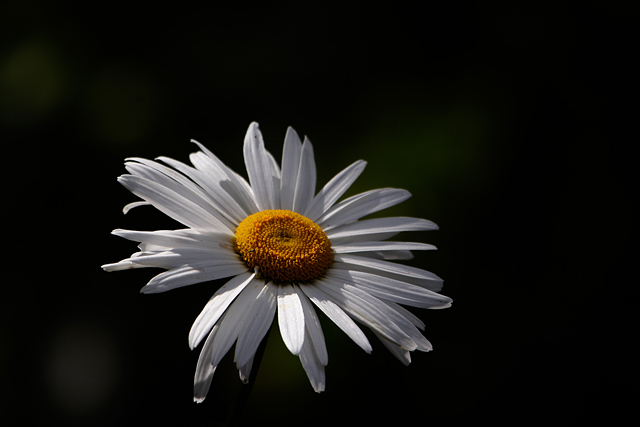
Just one subject. A frame that has just one attractive subject and not a thing else—no clutter in the background and nothing else in the foreground—can help highlight the subject dramatically. Some examples: a beautiful white flower with completely dark background, portrait of a person, bird or animal with uniform background that contrasts the colour of the subject, etc. Do keep in mind that it is important in such cases that the subject be charming in itself. A colourful bird or a beautiful flower has the power of attracting the viewer with ease.

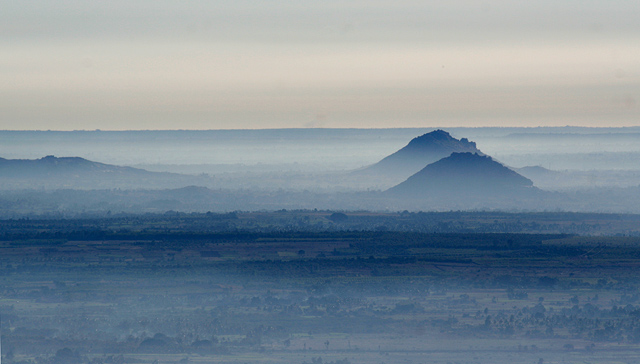
Small aberrations. A uniform frame with one small distraction will immediately catch the eye of the viewer. It could be the image of a small hillock in an otherwise plain territory, a small colourful boat in the calm blue lake or a person wearing colourful clothes in a lush green field. In all these cases, the background colour and texture help highlight the subject very well and immediately attract the attention of the viewer to the subject, even if it occupies a small portion of the frame.

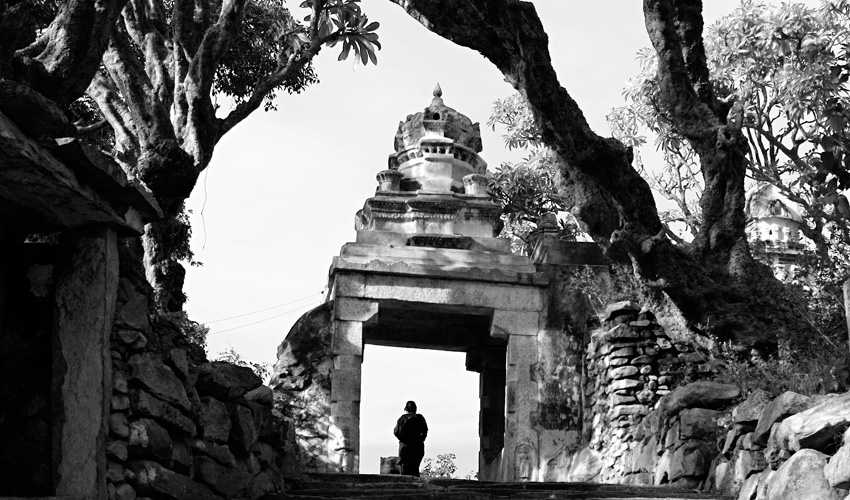
Go Black and White. In some occasions, converting to black and white can help in making simplistic images. Use this technique when the colour of the subject itself is not important, but the surroundings have bright colours that may unnecessarily distract he viewer away from the subject.

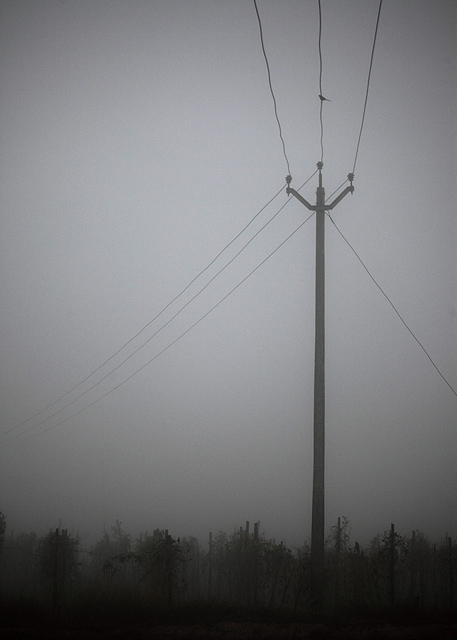
Minimalism. Minimalism can perhaps be defined as simplicity taken to the extreme. A picture that may comprise of just a few lines that catch the viewers interest, shapes that have very little complexity in them but present a uniformity that is attractive (such as the towers of a temple, ridges of a mountain), a small portion in an image that offers very high contrast from rest of the frame are some examples of minimalism.