This article was originally written for Terrascape, a travel magazine where I write a monthly column on photography.
As photographers, we often travel far and wide in search of beautiful subjects. We take time off from our schedules to visit mountains, beaches, wildlife sanctuaries and other places where we find enough photography opportunities to come back with memory card full of appealing images. While it is a good effort in discovering a fulfilling hobby and grow our expertise in photography, there comes a time when we should move to the next level. One such avenue beyond making beautiful images is to work on making your photography contribute to the society, focus on documentation that helps in someway to make life better for people around us.

When I propose this to photographers around me, the first question I get is – ‘how do we get started?’ It is not always easy to become a one man army that goes around with a camera to change the world. But it is always possible to join people who are already at work in making a better world.
A good start can be made by approaching NGOs in your neighbourhood. From my past experiences, more often than not, non-governmental organizations tend to be working with very limited in resources. They have their hands full working on their cause and have little time for documenting their work and spreading the word about what they are doing. But documentation is important for them to spread awareness of what they are doing and go back to funding sources who need a good understanding of the work being done. This is where you can pitch in, with your camera.
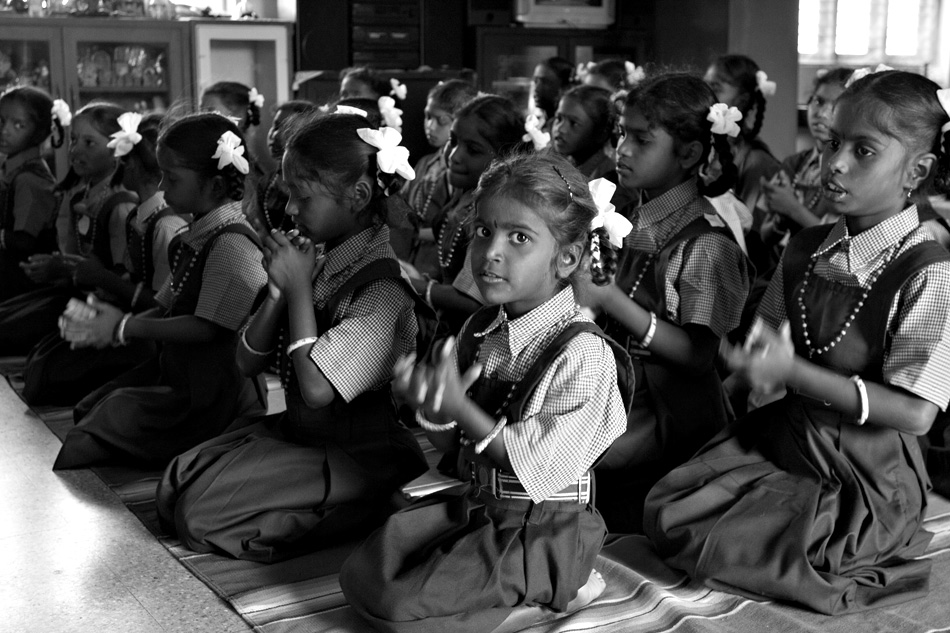
Approach a non-governmental organization that is doing some good work in your area and offer to do a visual documentation of their work. More often than not, they will be happy to accept an offer of help. To begin with, try to find an organization that you may be already familiar with. This helps you in quickly understanding the work that they are doing and merge with the flow of their activities.
When you eventually start working with an organization, be prepared to work for months together without expecting any immediate rewards. You may choose to dedicate time whenever you have a bandwidth available, but stick with an organization or one project until you have a body of high quality work that tells a story of their efforts very effectively. At the end of it, you will see that this work is far more fulfilling compared to making images that only have a visual appeal.
It may often happen that you go to a place, make a few images there and come back, feeling that you did not manage to capture the essence of the place. The place you visited may have been interesting and beautiful, but your photographs may not reflect the same. May be the place wasn’t photogenic, may be there were some missing elements, may be you weren’t there at the right time of the day (for photography), or may be there are some other reasons. In some occasions, a good subject or a good place may need some kind of supplementing to enhance their appearance. It could be some people walking by, a spot of sunlight that falls in the right moment or a few pigeons flying past. These supplementing entities, of course, are not available at your disposal all the time. It pays to be ready, wait and watch.
About a month ago, I was at Bikaner leading a photography tour, exploring the ancient havelis in the old ramparts of the town. The havelis are colourful and beautiful, but are a tough subject to photograph. They are located in narrow lanes with not enough space to step back and capture the entire stretch of the building. Very little sunlight enters the lanes where the havelis are, making it impossible to make use of light play.

After deliberating at the location for a while, I decided to drop the idea of photographing the havelis themselves, but use them as a background instead. Now, I needed an angle where there isn’t any distraction besides the road and the uniform colour of the havelis in the background. A bit of walking around solved the problem easily. But I still needed a matching foreground that could throw the havelis into the background.
Choosing the right subject was important here. The havelis are centuries old and clearly showed signs of past. It would be perfect, if something equally ancient could be found to become the foreground subject. But in the absence of it, something traditional would have worked as well, such as a man or woman in traditional clothes, a camel-cart passing by or so on. Similarly, something that appeared old relative to its peer group, but not necessarily as ancient as the havelis would also work as well.
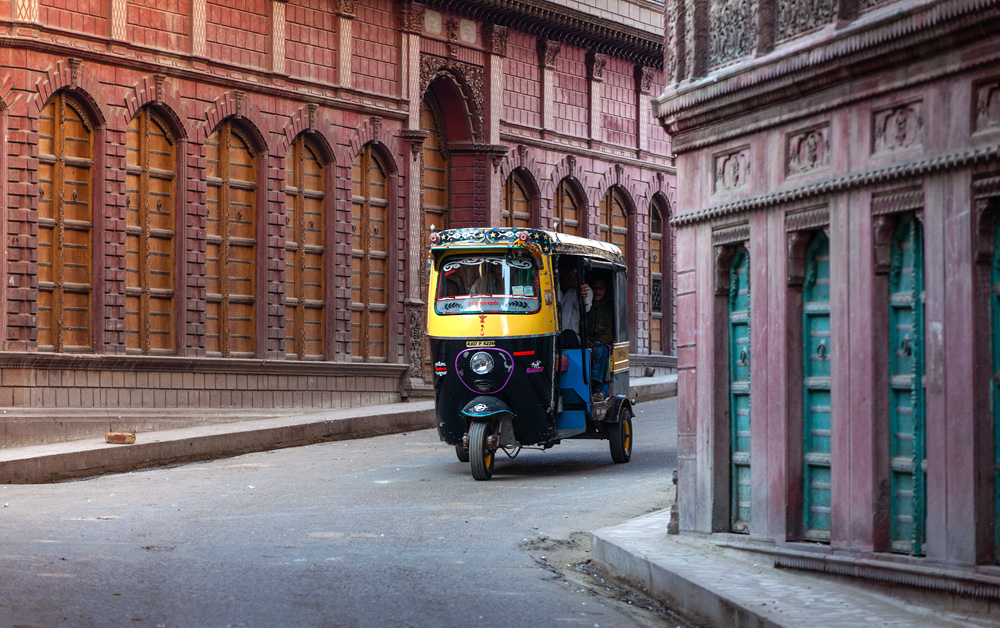
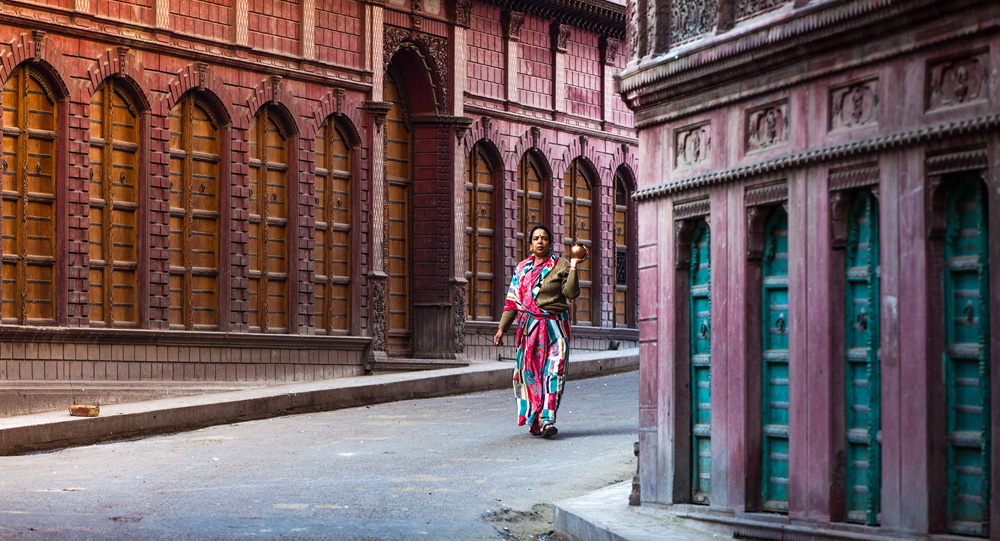
Naturally, I had no control on who/what moved on the roads in front of the haveli. So, it was time to just wait and watch, and hope that some one or some thing interesting will pass by. The result is the images below. It took me less than an hour of waiting time to make these photographs.
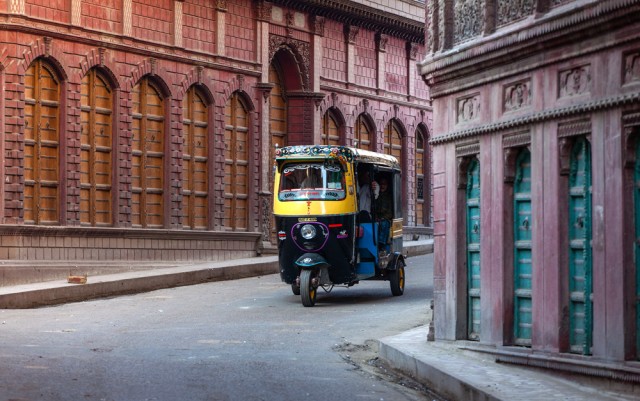
A colourful auto-rickshaw with havelis in the background.
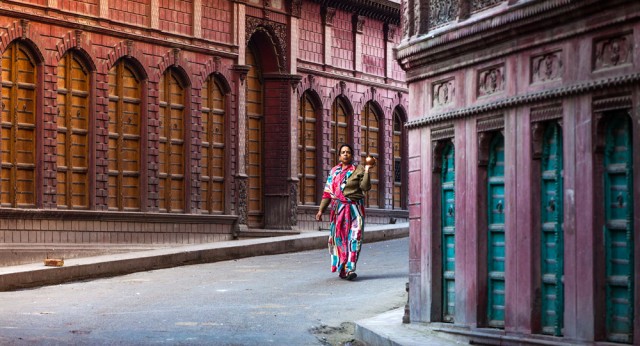
A lady walking through the havelis
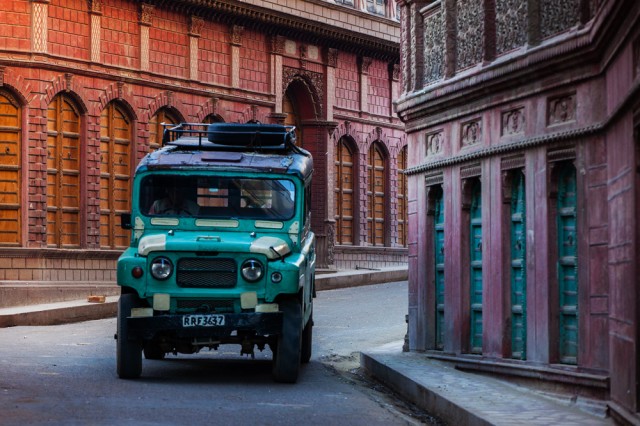
An old vehicle – a Jonga Jeep manufactured by the Indian Army, and the havelis behind.
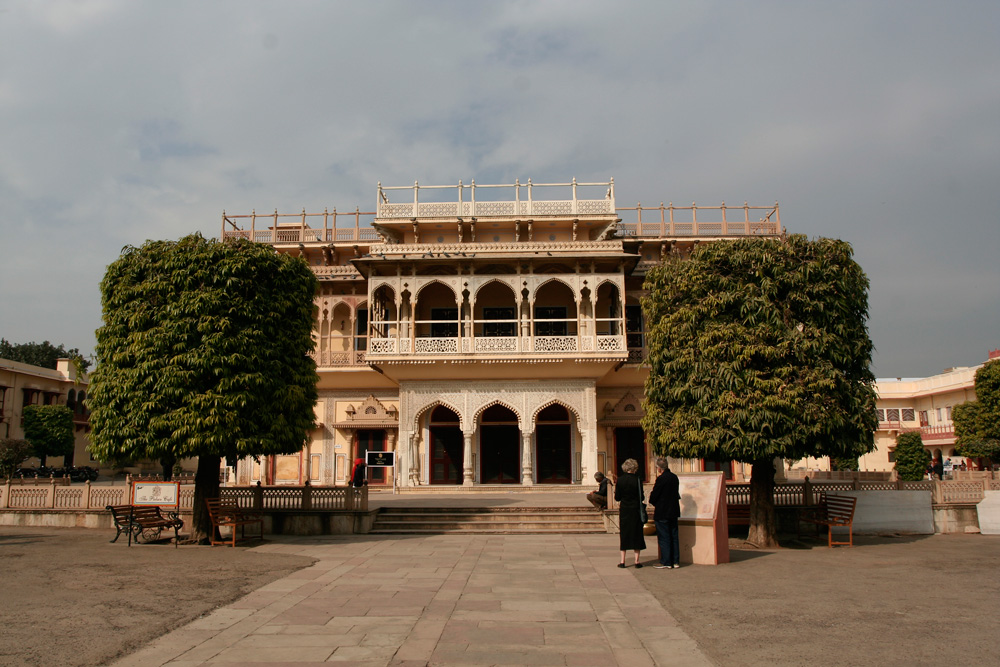
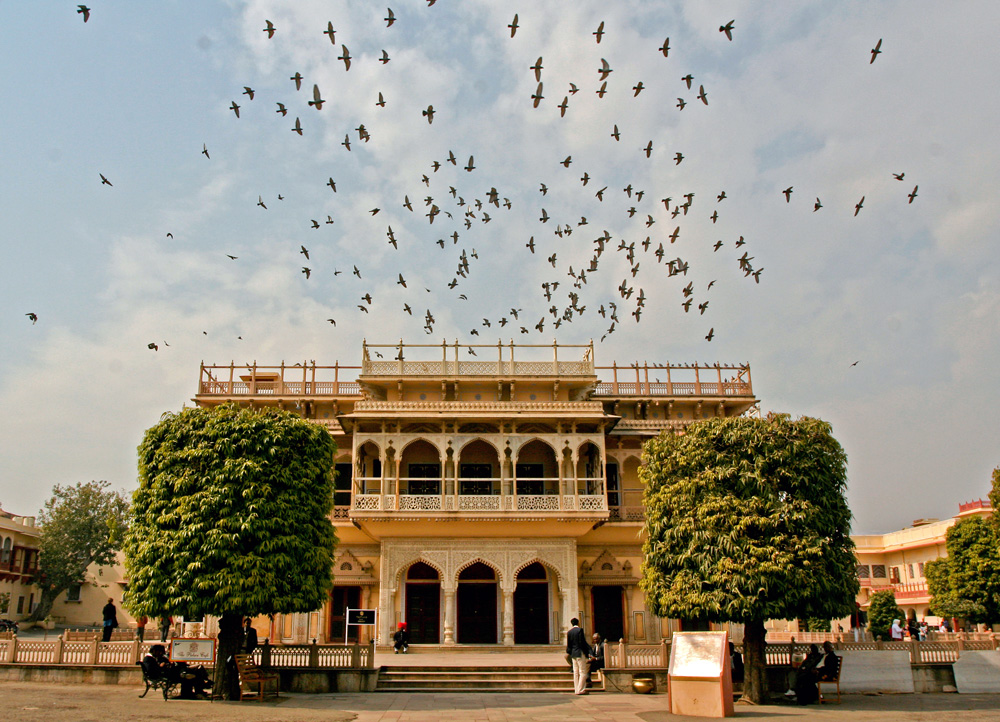
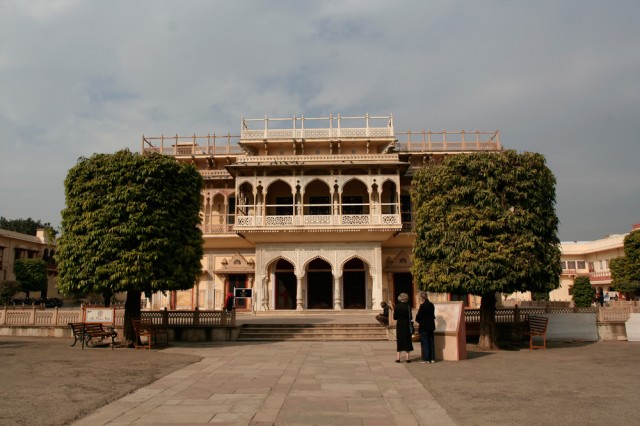
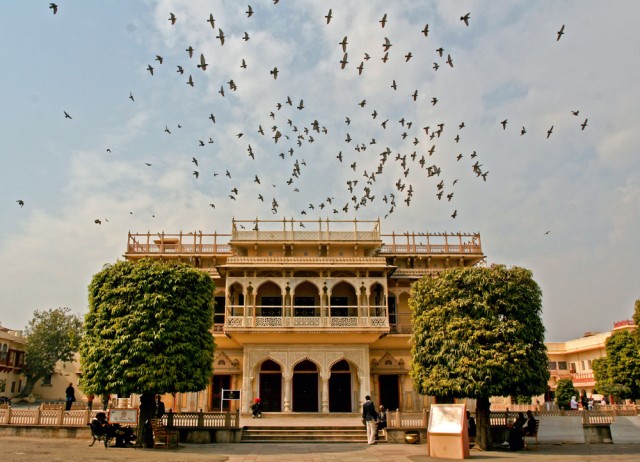
In many occasions, it pays to wait and watch for something interesting to emerge. Such as this photograph below, which would not have been very interesting without the pigeons. It was worthwhile waiting for those pigeons.
This article was written for Terrascape, a travel magazine where I write a monthly column on photography.
For most travellers, it is a natural tendency to look for popular and well-known subjects when it comes to photography. So, when we travel to a beach-side holiday destination, we aim our cameras at the colourful sunset over the sea. In a town known for its rich heritage, we are likely to come back with photographs of famous monuments. The list can go on to subjects like waterfalls, mountain peaks, etc. But have you ever thought about photographing that small tea-shop next to your viewpoint? Or did you ever try exploring traditional occupations of people at a destination with your camera? Such digressions can often help you discover an unseen beauty that is not mobbed by every person with a camera.
The best way to explore such less-known options is to allow yourself ample time and take a walk with your camera in a new place. It helps, if you have already done some research on the place and have some idea on what to expect. Some of the best sources of such information can be other photographers or travel journalists who may have visited the location in the past.
Personally, one major subject that fascinates me is crafts and workmanship from a region. The more complicated these are, the more appealing they are likely to be for the camera. For instance, I was spending a few days travelling around Thiruvananthapuram and photographing its locales for a story. In my first visit to the city, I went around Kovalam Beach and Padmanabhaswamy Temple– the well-known places to see. The next time, I spent some more time researching for interesting locales, and found a fishing town and a colony of traditional handloom weavers just south of town. These places not only showed me interesting faces of the city, it helped me make images that not every photographer will come back with.

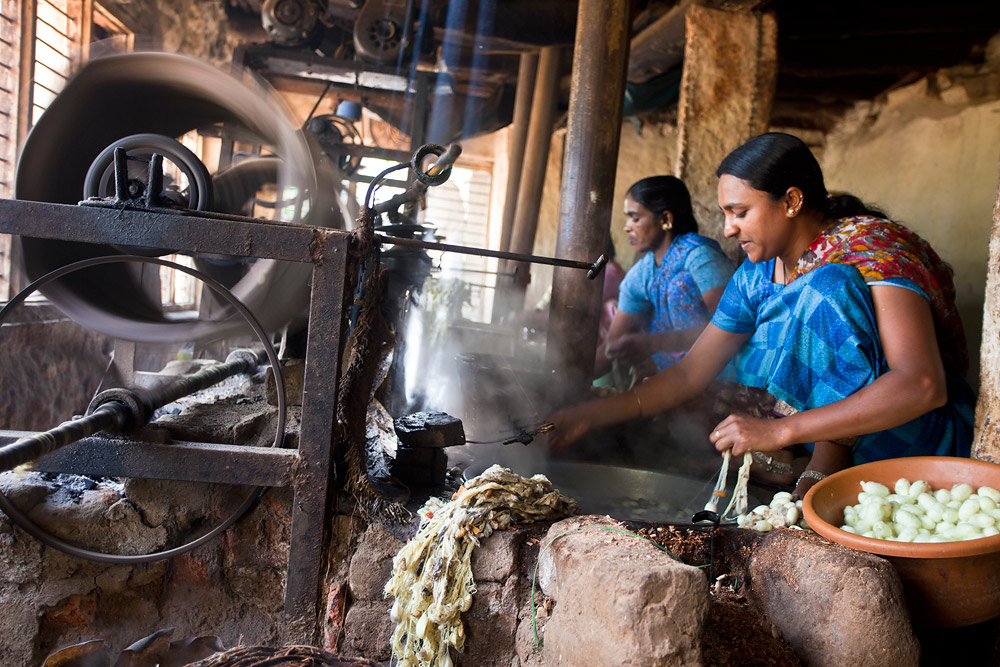
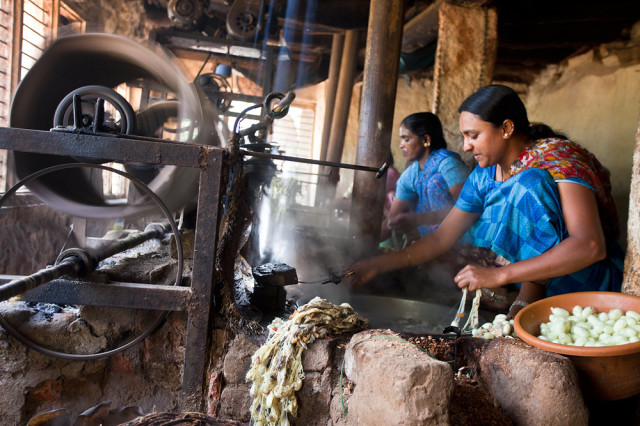
Another instance I recollect is from Nandi Hills, a picnic place near Bangalore. Most photographers go to Nandi to capture the landscape or birds in the area. But not far from this favourite picnic destination of Bangaloreans is a village that offers many unusual photography opportunities. One such place was a cottage industry, where half-a-dozen women worked extracting yarn from silkworm cocoons. It was an unusual place where rusted wheels were turned by a sooty motor, which accumulated shiny fiber of silk extracted from the cocoons.
Very often, such crafts are limited and specific to a locale that you may not find everywhere. And you will always find something interesting no matter you go. For example, you may find people making kites in the lanes behind Taj Mahal in Agra. Just outside Jaipur city is a well-established business of making hand made paper. Seek such occupations that make excellent digressions from the main scenes that attract everyone’s attention.