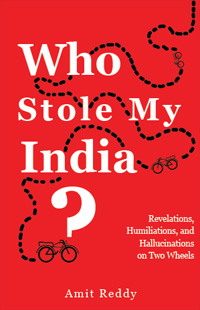
 Book Title: Who Stole My India
Author: Amit Reddy
Pages: 453
Amit Reddy was probably born in the wrong place. Even his mother thinks so when she says, ‘You should go away to America, You are nothing like Indian.’ As Reddy finds it difficult to understand and live a life that his society and surroundings expect him to, and unable to comprehend the diktat of a Hindu Indian society, he decides to fix the problem. The way he decides to do it is by travelling across the country to discover its soul, and perhaps discover his own soul that might fit within an Indian context.
As he puts it, “It’s all so frightfully confusing, but I intend to rectify this situation. The plan is ingenious, and quite simple. I’m going to explore India like few people ever have, by taking an inordinately long journey around the country; 40,750 kilometers long, to be precise… If everything goes accordingly, by the end of this journey I hope to be the complete Indian.”
He begins from Hyderabad on Kaya–a much loved motorcycle that is usually addressed as an animate being–and rides into nearly every Indian state. The journey takes him through wilderness, rugged terrains, temple-towns, remote villages, mountainous landscapes, deserts and the sprawling cities. This book isn’t about those places though, but on people Reddy meets and the way of life in India as witnessed by him.
During my visit to Fort Kochi last month, I stayed in 16th and 17th century bungalows that also hosted the likes of Vasco da Gama, governers of Portugese and Dutch administration, a French Admiral and a British Major.
About a month ago, universe conspired that I should take a holiday in Fort Kochi. I had scheduled a work-related visit to Cochin and my air tickets were all booked. Just as the dates approached–I still hadn’t planned my accommodation–I was invited by Neemrana to visit and experience their two non-hotel hotels in Fort Kochi. And two days before departure, all my work commitments in Kochi were cancelled, enabling me to enjoy an undisturbed beach-side holiday.
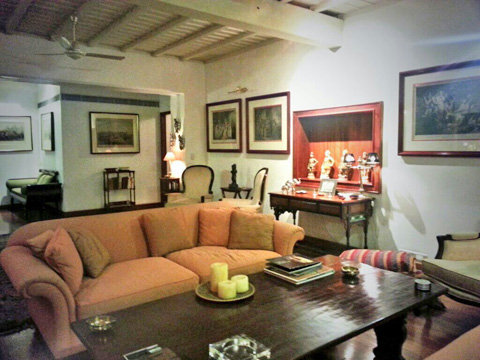
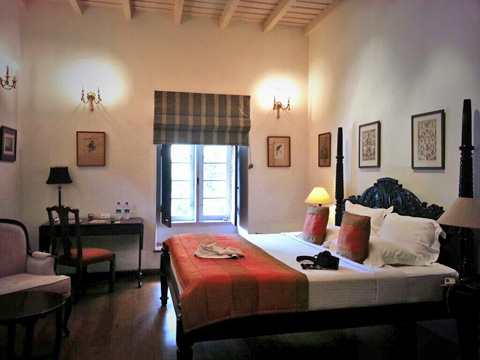
My first day at Fort Kochi was spent at Le Colonial, a 16th century bungalow that has witnessed much of Kochi’s recorded history. It was established as the governor’s residence when the then small fishing village was gifted by Raja of Kochi to the Portuguese. It continued to serve the same purpose more than a century later, even after the area came under Dutch control . Fort Kochi changed hands again and came under British rule another one-and-a-half centuries later, in the last decade of 18th century, and remained in their hands until the day of independence.
Now a boutique hotel since it last changed hands into Neemrana, Le Colonial has just seven rooms carefully decorated to reflect the days of it’s past. The rooms aren’t numbered, but named after personalities associated with the building. My room was named after Mahe de la Bourdonnais, who happened to spend a night here on his way from Pondicherry to Mahe.
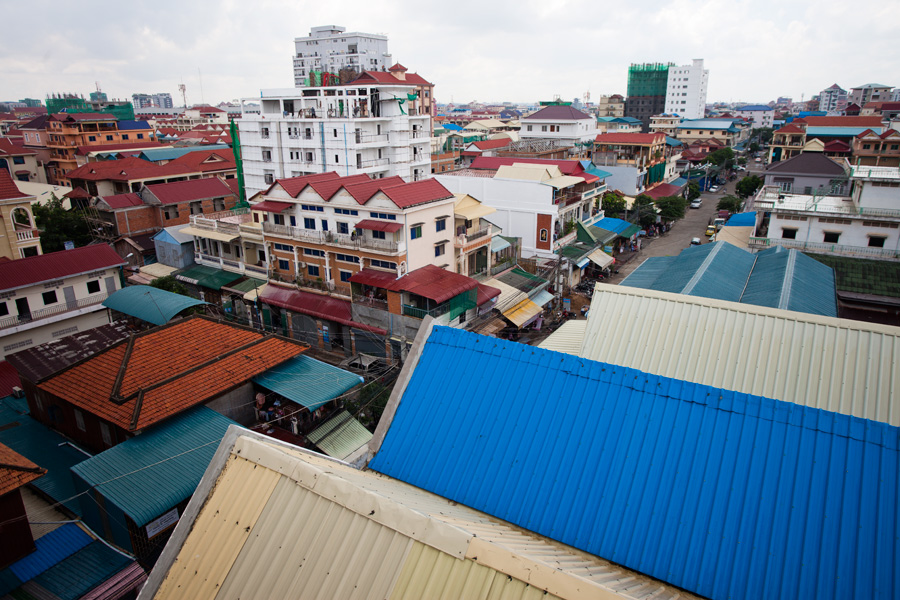 I was visiting Phnom Penh, Cambodia, last week and stayed in the city for four days. Everyday, I was surprised how much this city resembled Bangalore–the city of my residence–in many ways. Back home, I decided it is worth making a list of things that I found very similar in both the cities. They are not necessarily nice things, but similar, nevertheless. Here they are.
1. Tree lined avenues. Both cities have many tree lined avenues, and there has been an attempt to continue the tradition. Bangalore was once famous for its trees which are slowly getting the axe, thanks to growing traffic and subsequent widening of roads. Nevertheless, you can still see saplings on both sides of the road in new localities and new roads. Thankfully, the trees in Phnom Penh continue to stand tall. But they are seen more in numbers in older areas near the Royal Palace and closer to the river. I have seen saplings planted along the road in some newer parts as well. In both cities, trees also frequently dominate the footpaths and force the pedestrians into the road.
2. A traffic dominated by two-wheelers, and chaos. Two wheelers make up for a significant part of the traffic on the roads in Phnom Penh as well as Bangalore. As in Bangalore, drivers and riders of Phnom Penh strongly believe that road rules are meant for other people. The best way to cross a road is to continuously watch out in all directions. Never make the mistake of believing that traffic in certain direction sticks to certain side of the road (left in Bangalore, right in Phnom Penh). Bangalore’s traffic these days is increasingly seeing more four wheelers, but not so much in Phnom Penh. Another dominating feature of Bangalore is the auto-rickshaws, whereas remorks (tuk-tuk) takes that position in Phnom Penh. Whatever constitutes the traffic on either cities, you are assured of chaos.