A few days ago, a good friend asked me to share five landscapes images in five days on a social media platform. This, I did dutifully. Photographing landscapes has always been a meditative experience for me. People who know me often call me a lazy photographer, something that I wholeheartedly agree in most occasions. But when it comes to photographing landscapes, I am willing to go to the world’s end, climb a mountain or swim with the sharks if that’s what it takes. Well I haven’t gone swimming with the sharks, but I have endured frostbitesy weathers and stood on ice until my feet ached with cold, have walked for days in unforgiving places, have endured dozens of kilos on my back and dragged myself up on passes and sacrificed a million sugary morning dreams. And every single time I did this, I came back deeply satisfied, with renewed wish to do more of it. So when someone tags me to post image of landscapes there is only one thing to do – comply!
Here is the collection of images I posted in five days, put together.
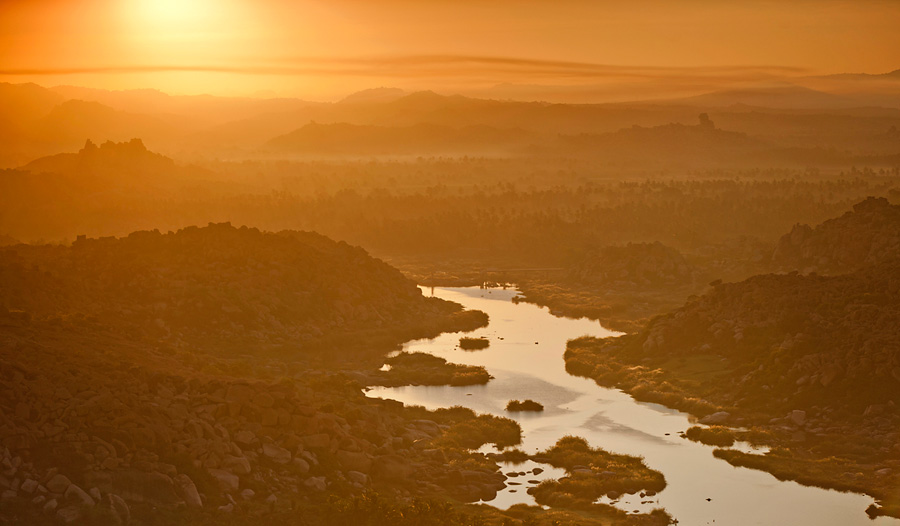
1. Sunrise from Anjanadri, Hampi.
Here is first of the five images, made in Hampi. I thought it was going to be a simple, easy-to-shoot image catching the sun coming up on the hills of Hampi overlooking Tungabhadra. But I had to spend pretty much all of my brain and endure a bit of panic (about fast loosing the time) before finally managing this image.
2. Winter Landscape, Ladakh
Here is an image from Ladakh, during the winter months. Coping the cold in winter’s Ladakh is a big challenge. The weather is unforgiving. But the rewards are plenty as well. There is so much snow around that it can hurt the eye. Frost makes beautiful shapes. Frozen lakes form gigantic flat fields. Mountains are sprinkled with powdery snow. Most importantly, photographing landscapes here in the winter months is a gratifying experience.
Also see: Our photography tour to Myanmar
Yangon’s circular train serves local commuters by connecting the city with its surroundings. The passengers on board are usually workers who travel to the city from their homes in the suburbs or traders who sell farm produce in the markets. Much of Myanmar’s railway system is fairly old and the age shows in the coaches and the tracks. Until last year, the coaches with bench-style seating were very dated, but some of them are now replaced by new carriages. The atmosphere inside, however hasn’t changed much, making the ride still worth it.
The stations inside the city see urban population commuting on work, which slowly gets replaced by vegetable traders from the villages as the train approaches suburban wholesale markets. Occasional non-homo-sapience passengers are known to hop on board, mostly the harmless white winged variety rendered even less harmless by tying their legs. Other vendors walk in and out, often selling beetle nut leaves, quail eggs and cut fruits. The insides of the train gain a lot of colour in the suburbs, especially at a busy market that is so crowded that even the train tracks are occupied by sellers, briefly emptied for the passing train.
Apparently they now have air-con trains targeted at tourists, but taking one of those defeats the purpose of being there.
Here is a collection of images from Yangon’s Circular Train.
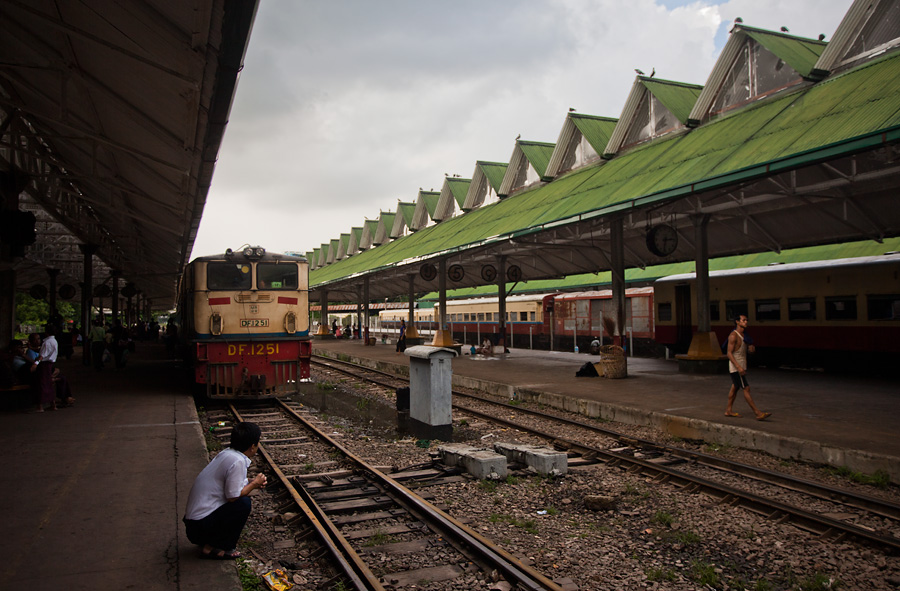
Trains begin and end at Yangon Central station, although strictly speaking, being a circular train there is no beginning and end. The train stops only a few minutes at Yangon Central before continuing to make another circle. In other stations, it stops barely long enough for the passengers to quickly alight and board.
Happy Diwali everyone! May the days ahead be filled with high quality light to all of you!
I just got back from a month of travelling in South East Asia, and it is good to be back home in time for the festivities.
The first ten days of of my trip was spent on the photography tour to Myanmar, after which I was in Cambodia, exploring the country for two weeks. Those two weeks in Cambodia were full of surprises, a lot of luck in terms of photography and a few choices made that led me to pots of gold.
These choices were part accidental and part through meticulous planning. Making much deliberations before departure, I had decided to engage the services of a local photographer for two days in Cambodia. It was going to cost me equivalent of ten days of four-star accommodation in the country.
But reflecting on those two days, the places I saw and people I met contributed to such high quality experiences that I would call that price a heavy discount. Of course, very satisfying images followed from those visits and experiences. Reflecting further on the way my traveling has evolved from a decade-long wanderings, I also realized that I wouldn’t have engaged this photographer ten years ago. I once travelled in search of deeply personal experiences, almost always searching for the finest natural beauty in complete solitude and never wanting anyone to interfere in this. Over the years, I understood how people contribute to the journeys, how interactions enrich the experiences and people with expertise can add a great value. And all this, without really compromising the deeply personal nature of the experiences.
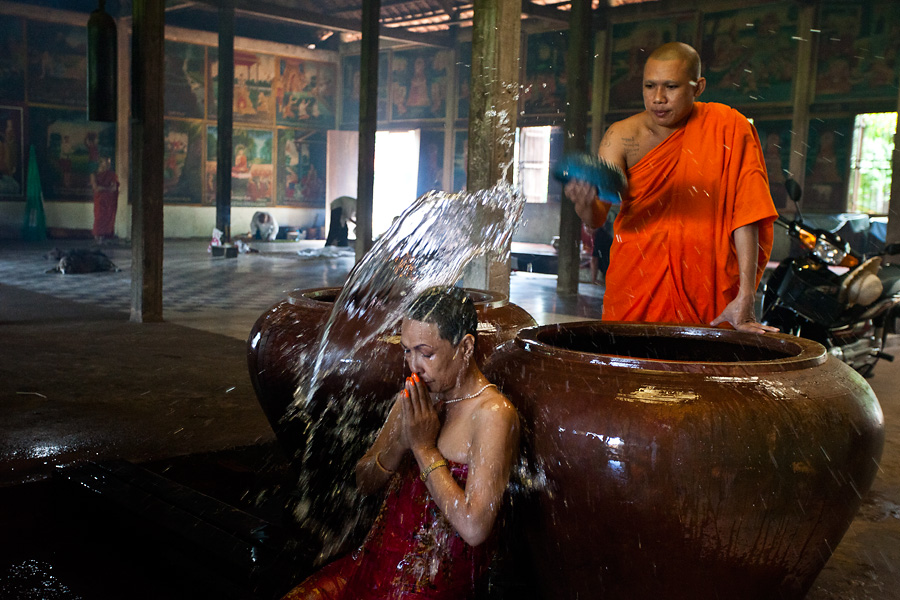
How these change occurred are perhaps worth a much longer story, so let’s put that aside now. Here’s is one of the images made on the first of those two days, at a monastery. In the few hours we spent at this place, we also had many conversations with this monk, with our photographer friend playing interpreter’s role. This monk had recently come back from a long pilgrimage across India, trying to understand and interpret many traditions in Cambodia that originated from the cultural influence from India that Cambodia has had for nearly a millennium. Only a few minutes into our conversation, I realized that this monk understood and interpreted many traditions and practices in India better than me, perhaps better than most of us.
The luck part came later. Outside the main tourist areas, in smaller and remote provinces of Cambodia, I ended up meeting some very fine tuk-tuk drivers who were able to take me to places that offered gem of experiences. In the process, I learnt a great deal about many crafts and traditional occupations in the Cambodian countryside.
It’s at the end of my trip that I realized how rich and offbeat were my experience. Speaking to a British expat over a meeting at Phnom Penh at the end of my trip, we were discussing about all things beautiful in Cambodia and he spoke about things he knew from two years of his living in the country. He also went about suggesting me about the best experiences of the country. When I told him about where I was and what I saw in my two weeks, he suddenly became thoughtful, retracted a bit and deeply appreciated everything I talked about. It took me by surprise.
Image details: A monk throwing water on a lady as part of a blessing ceremony. The lady was at the monastery to rid herself of bad dreams that were troubling her.