A version of This article appeared in October issue of Terrascape, a travel magazine for which I am an editorial consultant and also write a column on photography. Read all the earlier earlier travel photography articles on India Travel Blog.
As the monsoons recede in October and make a way for winter, overcast skies are replaced by a clear blue expanse. The sky turns into deeper hues of red and orange during sunrise and sunset hours, adding a drama to the landscapes. Mild fog in the early morning hours hides the details of the landscape and highlights beautiful contours. This is the time of the year to see and photograph landscapes, especially mountain vistas.
Morning and Evening. The golden light of early morning is the best time to take pictures. The warm light makes the landscape look beautiful. Fog diffuses the light and adds a magical effect. A picture shot in the harsh afternoon sun can look dull and flat, but the same shot in the morning may look magical. If not in the morning, the next best time of the day is evening. Avoid the times when the sun is high.
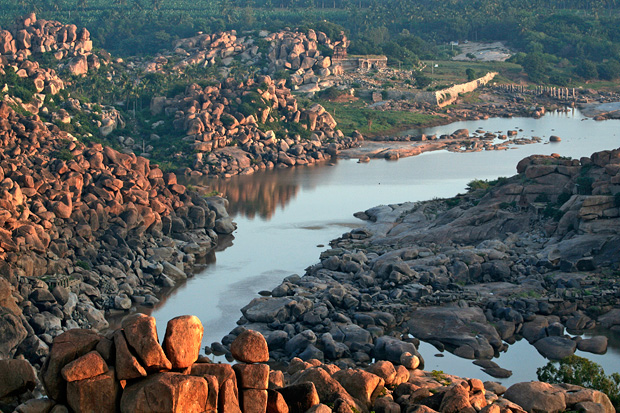
Include a foreground. Include a foreground element in your frame that offers a minor distraction from the main subject. For example, have some rocks in the foreground when you take picture of a lake. Include some flowers, plants or boulders in the foreground if the subject of the image is a mountain. The choice of foreground has to be made wisely and it must fill in just the amount frame not to distract the viewer from the main subject.
Remember the rule of thirds. For an image which has some sky and some earth, avoid composing with horizon in the center of the picture. If the sky has a lot of drama, allow it to take nearly two-thirds of the frame and let the earth take up a third of the space at the bottom. Do the reverse if the sky is uniform but there is a spectacular scenery on ground.
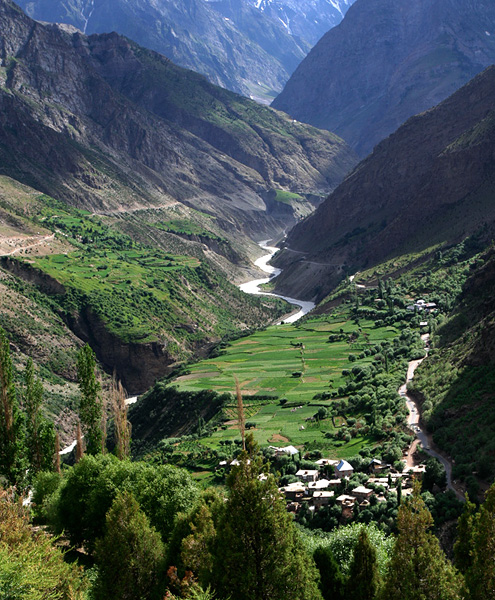
Find a vantage point. Standing on a plain surface often limits your views. Find a good vantage point that helps you see a wide vista. A higher position not only helps you get all the important elements of the landscape within the frame, it also gives you a completely different perspective than seeing things from below. Shooting hills and mountains from a height similar to your subject helps a great deal in emphasizing the scenery.
‘
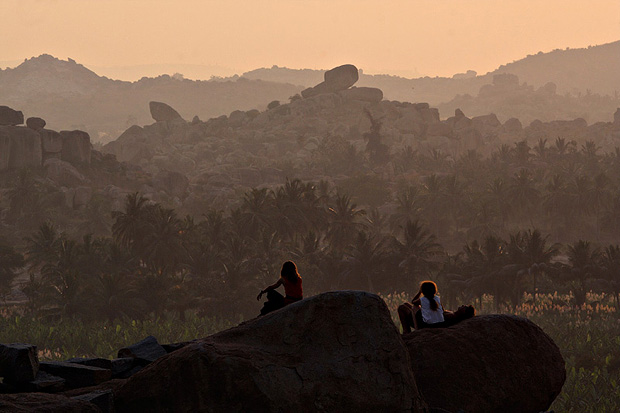
Show the scale. Include some elements in the picture that depict scale. A picture of a hill will have an added drama with a man walking towards the top. A small boat somewhere in the picture can help in understand the expanse of a lake.
Technical aspects. This is for those of you who understand the basic camera controls that affect the image recorded. Use a small aperture to keep the whole frame in focus. An aperture f/11 or smaller is preferable. A sturdy tripod can make a lot of difference to the quality of the image.
Prints of all the images available. Request for prints.
I am often told that when you desire something strongly, the entire universe conspires to give it you. I do not know if the universe does so, but a group of unknown travelers certainly took care of something that was bothering me.
Despite having planned two months in Ladakh, we still could not fit Tso Kar anywhere in our itinerary. We had given up on it and consoled ourselves with a ‘there is always a next time.’ After spending four days in Tso Moriri and witnessing the celebrations at Korzok Gustor Festival, we were searching for transport back to Leh. We had hired a one-way transport to Tso Moriri and had left the return journey to chance. Now we were asking everyone in the village if there is a vehicle leaving for Leh tomorrow with two seats to spare.
Tso Moriri is a place far away from everywhere else. Not everyday can you expect to find a vehicle heading out of the village. The one bus that connects the lake with Leh operates once in every ten days, and that tenth day was still far away. Our hope was in connecting with tourists returning to Leh, who may have some additional space available in their cab. We inquired everyone whom we bumped into and left a message at the restaurant where we always ate. That’s how we stumbled into a group of four Israeli travellers who were planning to leave the next day. The good thing: they wanted to take the longer route to Leh and spend a night at Tso Kar on the way. We could not ask for more.
—
Journal entry on the brief visit to Tso Kar.
The road to Polo Kongka pass is a smooth ascent. It almost feels like driving on a plateaued land. Unlike the dry lands of Ladakh that we are so used to until now, there is a lot of grass and greenery all along the way. We occasionally stumble upon road workers and tents of changspa nomads. A steady descent from the pass takes us to Tso Kar lake in the middle of a wide, flat terrain.
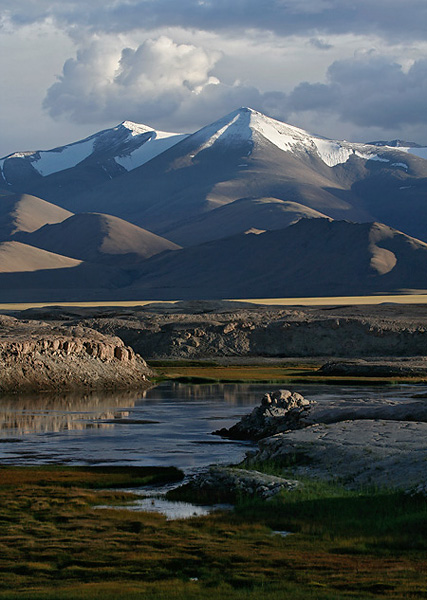
Tso Kar is not an expanse of blue waters like Tso Moriri and Pangong. It is more of a marsh in a wide valley with deep waters here and there. It is miles wide and so long that I can’t see the other end. After being used to the constantly undulating terrain in Ladakh for a month, seeing such a vast flatland comes as a surprise.
The grass around Tso Kar is tall and grows densely at places. There is plenty of bird life along the lake. We see kiangs, the Tibetan Wild Asses, getting on their feet and sprinting away at the first sight of us. Tall snowy peaks dominate the western bank while the peaks to the south are smaller and have an reddish-brown hue.
Tujhkse, a small village on the bank of the lake, appears devoid of people but for a couple who run a parachute-tent restaurant. They show us to one of the several houses with signs that read ‘home stay.’
We left early next morning, driving through Morey Plains and Tanglang La. In our earlier journey on this road when we were arriving from Manali to Leh, it was already dark when we crossed Tangland La. This time we get to see the landscapes that we had missed earlier: another wish fulfilled by the conspiring universe. The mountains here are rocky and unlike the loose soil on the slopes in most parts of Ladakh. The rocks are dark and have unusual hues varying from maroon to chocolate brown. There are queer formations all over the mountains – super sharp and jagged ridges; peaks shaped with sharp upward projections like tridents put next to each other. They are often so steep that they project like walls of rock on either side of the road.
We made the downhill journey after Tanglang la quickly and were back in Leh before noon.
Prints of all the images available. Request for prints.
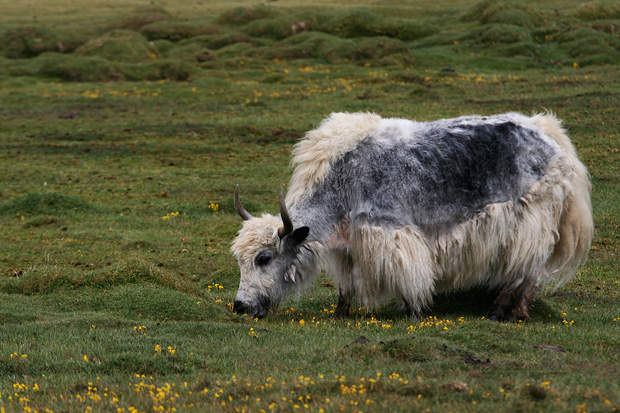
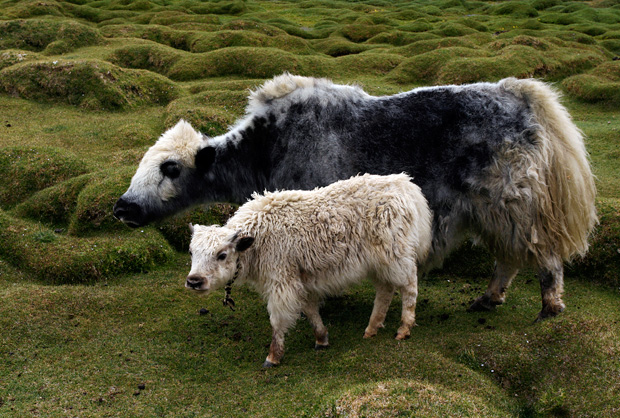
Images of Yaks at Korzok Fu
Prints of all the images available. Request for prints.