We waited at Manali’s bus station, reluctantly taking one of the grimy seats for lack of better options. We were planning to be at Keylong that evening, stopping for a few days on our way to Leh. We only knew that Keylong is going to be our next stop, but had not taken the trouble to plan how long. After Keylong, we would just hop to the next place we would feel like staying at. It could be Sarchu, Pang or any other lone parachute tented hamlet on the long road across the Himalayas.
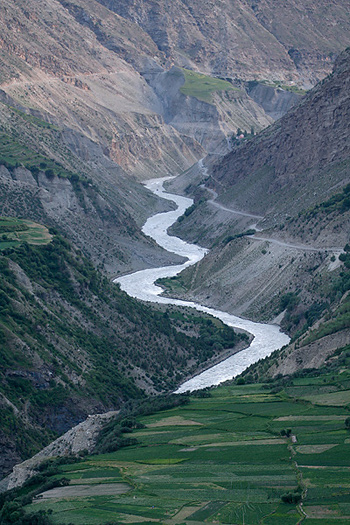
Bhaga River Valley at Keylong. To the right of the valley is the road we took to Keylong.
Keylong is one of the major towns across Rohtang Pass and is the district headquarters of Lahaul. Manali happens to be a tourist hub and the gateway to further north. We took it for granted that there will be many buses linking the two. Bad thinking! The 10am bus had left Manali fully loaded a little before we got to the bus stop. The next bus would arrive only at 2pm and it was likely to run full too. The grimy seat at the bus stand was going to be our associate for longer than we wished for.
A few inquiries for alternate transport resulted in the obvious suggestion – hire a taxi. We did not want a cab for ourselves and there were no shared taxis heading to Keylong. A few people waited along with us, looking for a faster way to get to Keylong. In an hour or so, one of them came back with a good news – there was Tata Sumo heading towards Keyong.
The driver of the Sumo was a young boy, probably in early twenties. He thought for a while when we asked him for two seats. He had to calculate the tourist rate by assessing our clothes, the manner of speech and then guessing the depth of our pockets. After a pause of few seconds, the premium on our seats was set at Rs.50 above the price quoted for the rest. But I knew what the others were paying, which made negotiating easy. We agreed to pay a premium of Rs.25 and bargained for the best seats at the front in return. We were ushered into the Sumo, and I expected to get going in a few minutes, heading out of Manali towards the mountains with five figure altitudes.
It turned out I was wrong. Filling up rest of the seats in the Sumo took more than an hour’s work. In fact, while the driver went around in search of passengers, a few who were already in the jeep went away, tired of waiting. The vacated seats prolonged our wait but thankfully it did not result in a chain reaction. When we finally left, we had just 30 minutes lead time from the 2pm bus.
The journey was a breeze once we took off. In the next two hours, we climbed up Rohtang pass and got down to Chandra Valley, stopping at Khoksar Village for a break. It was just after sunset when we arrived at Keylong, and all that was left to do was to find a place to stay and rest for the night. It turned out to be a job not as simple as it seemed to be.
I had heard a little about Devadasi system in northern parts of Karnataka. Often it was in deeper sections of newspapers and was usually about some matters of government policies. Nevertheless I did not know much about the practice. William Dalrymple’s informative story on The New Yorker speaks about the Devadasis of South India, and explores some history and mythology of the tradition. Dalrymple visits some Devadasis and describes their life in the story.
I got a glimpse of the tensions in the devadasi’s life when we arrived in Saundatti. We had gone to a tea shop near the lake, at my suggestion. Devadasis are a common sight in Saundatti, where they often beg in the bazaars on Yellamma’s holy days of Tuesday and Friday. But they don’t usually brave the tea shops on the main street.
Read Letters from India: Serving the goddess
Join expedition leader Manish Lakhani on Chadar Trek – January 2012
This is a guest post from an avid traveller Manish Lakhani. Manish lives in Baroda and works in the telecom industry. He has traveled extensively in the Himalayas, including Ladakh and Sikkim. He went on Chadar trek last winter, and hopes to return again in the coming winter.
Chadar Trek is an unusual expedition of walking on ice. The Zanskar River freezes in winter, enabling walking on the ice sheet along the area that is inaccessible in summer. As you can see from pictures, a warm weather can break the ice, forcing the trekkers to climb over the mountains or walk in the frigid water.
Text and Photographs by Manish.

Mighty mountains and clouds that hide Sun on a cold morning before the trek started. We spent two days visiting places around Leh to acclimatize.

Walking on thin ice? Yes, there is no choice. This is part of day to day trek. A small mistake and you are in freezing water. Porters do this like walking in garden… amazing !

A frozen stream! I was thinking how it must have been flowing in summer. Imagine the temperatures required to make it into ice. There are lots of mineral in the ice that make it look colorful in direct sunlight. Nature is amazing isn’t it ?

It was a very hard day on the way back. After lots of snowfall, there was a shiny day. There was alway risk of melted ice and broken Chadar. A wrong step directly takes you into frigid water. The water is deep, and cold enough to take bring death.

During the return.. There was heavy snowfall, and the next day was sunny. Snowfall takes the temperarte up, resulting in in broken Chadar. We were walking in an ice slurry. I walked almost halfday with my wet feet, a horrible experiense. For the entire night, I was trying to dry my shoes near the fire. Yes i would like to experience this again.

Near Neraks camp site which is near Neraks village. We were wating here for 3 days to get clear snow . These goats belonged to a villager who was staying nears camp site. One day, a fine morning few of the villagers came to my tent to say good morning.

Going Home, a late evening. I was very much tired after after hard day. We walked two days’ distance in one, walking between avalanches. But in the evening, we had some hot soup and delicious food.

The amazing flight. Aerial view of Leh-Delhi route on the way back.
Join expedition leader Manish Lakhani on Chadar Trek – January 2011